If you’re mainly looking to reduce your fat intake, compare oven-baked and labelled light paprika crisps with regular paprika crisps by checking the fat content per 100 g. Also look at energy, saturated fat, salt and the serving size shown on the pack: less fat doesn’t automatically mean these values differ to the same extent. If you prefer a particular flavour or bag size, regular paprika crisps are still an option.
Who might find this comparison useful?
Crisp lovers keeping an eye on fat
You want to keep eating paprika crisps, but mainly compare options by their fat content per 100 g. A label such as oven-baked or light is a starting point; the nutritional information shows what applies to the product you’ve chosen.
People who compare labels
You don’t want to look at fat in isolation from energy, saturated fat and salt. Compare the same quantity of paprika crisps, then decide what serving size you’d like.
Shoppers who consider flavour and bag size
You’re looking for paprika crisps for a regular shop and want to choose between a familiar option and an oven-baked alternative. The flavour and the amount in the bag are important too.
What should you look for when choosing?
Oven-baked describes how the crisps are made, while light is a claim about their composition. So compare the nutritional information for the specific paprika crisps you’re considering, rather than relying only on the wording on the front of the bag.
| What to consider |
What to check when buying |
Who it matters to |
| Fat content |
Compare the fat per 100 g and check which option the claim refers to. |
I want to keep eating paprika crisps and prioritise lower fat over other differences. This is the main priority for around 42% of consumers. |
| Overall nutritional values |
Check the energy, saturated fat and salt per 100 g; also check the stated serving size. |
When comparing labels, I want to know how the products differ in ways beyond fat. Around 33% of consumers give this broader comparison the highest priority. |
| Flavour and bag size |
Check the flavour and the bag size before comparing products. |
For sharing a snack with others, I want to choose a paprika flavour and quantity that suit the occasion. This combination matters most to around 25% of consumers. |
Common mistakes
-
Focusing only on light or lower-fat claims
A difference in fat content doesn’t automatically mean there’s an equally large difference in energy. The Voedingscentrum advises checking the other nutritional values on light crisps too.
Compare the energy, fat, saturated fat and salt per 100 g, then check the serving size on the pack.
-
Treating Nutri-Score as a verdict on crisps as a whole
According to the Dutch government, Nutri-Score helps you compare products of the same type. The score doesn’t automatically mean that a particular paprika crisp is right for everyone’s preferences.
Compare Nutri-Scores only between similar crisps, and check the nutritional information as well.
-
Relying on a product page you viewed earlier
Albert Heijn notes that ingredients, nutritional values and allergen information can change. So a product page you viewed earlier may not match the bag you buy.
Check the current label when you buy, especially if an ingredient or allergen matters to your choice.
Brands and ranges compared
Lay's
Lay's Oven Baked Roasted Paprika is an oven-baked paprika variety that Albert Heijn and Jumbo list in their lower-fat ranges.
- According to Lay's own product information, this specific variety contains 50% less fat than regular potato crisps.
- That brand claim alone says nothing about an equivalent difference in energy or salt, and doesn’t automatically apply to other Lay's varieties.
Chio
Jumbo lists Chio Oven Chips Paprika Flavour both among its paprika crisps and in its lower-fat crisps range.
- This is another oven-baked paprika variety you can compare with regular crisps.
- Check the current label per 100 g before drawing conclusions about fat, energy or salt compared with another variety.
Albert Heijn
Albert Heijn’s range offers a way to browse paprika crisps and options in the lower-fat or lower-salt category.
- Albert Heijn lists Lay's Oven Baked Roasted Paprika in its lower-fat or lower-salt category.
- A listing for lower-fat plain crinkle-cut crisps tells you nothing about the composition of a paprika variety; always check the label for the flavour you choose.
Oven-baked paprika crisps at Joybuy
This selection is designed to help you compare oven-baked paprika crisps with regular varieties. Use the pack to compare the nutritional values of the specific bag with other paprika crisps.
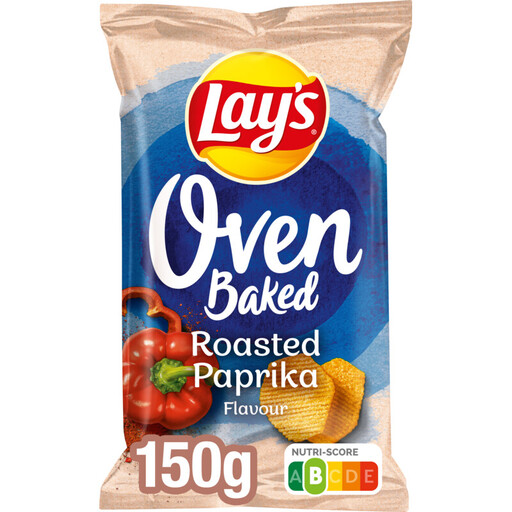 Image unavailable
Lay's Oven Baked Paprika – 150 g
For anyone who wants to compare oven-baked paprika crisps with regular varieties. Check the current pack for fat, energy, saturated fat and salt per 100 g before assessing any difference in nutritional values.
Pack size: 150 g.
View at Joybuy
Frequently asked questions
Does light automatically mean far fewer calories in paprika crisps?
No. The light label alone doesn’t tell you how much the energy content differs. According to the Voedingscentrum, light can refer to less fat, sugar or energy than in a comparable product. Check which reduction is stated on the bag and compare the energy per 100 g.
Can I use Nutri-Score to compare paprika crisps?
Yes, as long as you’re comparing products of the same type. According to the Dutch government, Nutri-Score is designed to show differences within a product group like this; also check the nutritional information and serving size on the pack when making your choice.
Are claims such as ‘lower fat’ subject to regulations?
Yes. The Netherlands Food and Consumer Product Safety Authority states that EU rules apply to nutrition claims on food. Also check the nutritional values for the specific paprika crisps: a claim about fat doesn’t automatically tell you the energy or salt content.
What nutritional information should I check when buying?
Read the label on the bag you’re buying, especially if an ingredient, allergen or exact nutritional value matters to your choice. Albert Heijn notes that this product information can change, so a product page you viewed online earlier is no substitute for checking the current pack.


