
Lunchbox snackers who measure out portions
If you want to pack paprika crisps as a small addition to lunch, compare both the energy value per 100 g and the amount that actually goes into the container.


When comparing paprika crisps for a school-holiday lunch, look at both the calories per 100 g and the amount you pack. Of four products listed by Albert Heijn, Chio Oven chips paprika has the lowest energy value at 405 kcal per 100 g. Under the EU rules published by EUR-Lex, the ‘low calorie’ claim for solid foods applies only to products with no more than 40 kcal per 100 g. With these crisps, also check the salt, allergens and the rest of the lunch.
If you want to pack paprika crisps as a small addition to lunch, compare both the energy value per 100 g and the amount that actually goes into the container.
If you’re considering an oven-baked variety, compare the salt and allergens as well as the fat and calories. How they’re made doesn’t, by itself, tell you which variety is right for lunch.
If you’re putting together lunch for children, treat crisps as a snack rather than a substitute for lunch. The Netherlands Nutrition Centre recommends including vegetables, fruit and wholegrain products in a packed school lunch.
First, compare the same quantity of each product. Then decide how much you want to pack and check the ingredients and where the snack fits into the rest of the lunch.
| What to consider | What to check before buying | Who it matters to |
|---|---|---|
| Energy and portion size | Compare calories per 100 g and check how many grams you’ll actually pack. | If I’m packing crisps with lunch, I want to know how many calories are in the portion I’ve measured out. For around 50% of consumers, portion size and energy value come first. |
| Salt and allergens | Check the salt content per 100 g and the allergen statement on the packaging. | When I’m choosing for someone with an allergy, I want to be able to check the ingredients; the salt content can also affect my choice. For around 30% of consumers, ingredients matter most. |
| Where it fits into lunch | Decide what else you’ll pack and check whether the school or after-school club has any rules about food brought from home. | When I’m filling a lunchbox, I want crisps to be an addition, not the main part of the meal. For around 20% of consumers, the snack’s place in the lunch is the priority. |
A product can contain less fat than regular crisps and still provide far more than 40 kcal per 100 g. Albert Heijn lists Lay’s Oven Baked Roasted Paprika at 427 kcal per 100 g; EUR-Lex sets the EU threshold for a low-energy claim on solid foods at no more than 40 kcal per 100 g.
For this choice, use the energy value per 100 g and the portion you plan to pack, rather than comparing fat content alone.
According to Albert Heijn’s product information, Chio Oven chips paprika contains 405 kcal and 1.6 g of salt per 100 g; the allergen information lists barley and gluten. The lowest energy value among the four products compared doesn’t make the rest of the label any less important.
If there’s a relevant allergy, read the statement on the packaging and compare the salt content per 100 g too.
The 200 g bag of Lay’s Paprika listed by Albert Heijn contains more than one portion. The energy value for a single portion tells you little about how much someone might eat from the whole bag.
Measure out the amount you’ve chosen into a separate container or bag before you leave, and leave the original packaging at home.
The Netherlands Nutrition Centre also recommends foods such as vegetables, fruit and wholegrain products for a packed school lunch. A portion of crisps doesn’t replace these.
Put the lunch together first, then decide whether to add a small portion of paprika crisps.
Lay’s sells both regular Paprika crisps and Oven Baked Roasted Paprika. This makes it possible to compare products under the same brand, as long as you assess each variety separately.
Chio Oven chips paprika is an oven-baked paprika snack to consider when comparing energy values per 100 g.
Proper Paprika lentil chips are made from lentils, not potatoes. Bear this in mind when comparing flavours and nutritional information.
Albert Heijn lists nutritional information for the four paprika snacks featured in this comparison.
Jumbo lists Lay’s Paprika and Lay’s Oven Baked Paprika, among other products. They’re different varieties, even though they share a brand and flavour.
These paprika crisps are options if you want to measure out a snack portion for a school-holiday lunch. To compare energy values, use the nutritional information on the packaging; the products below aren’t ranked by calories.
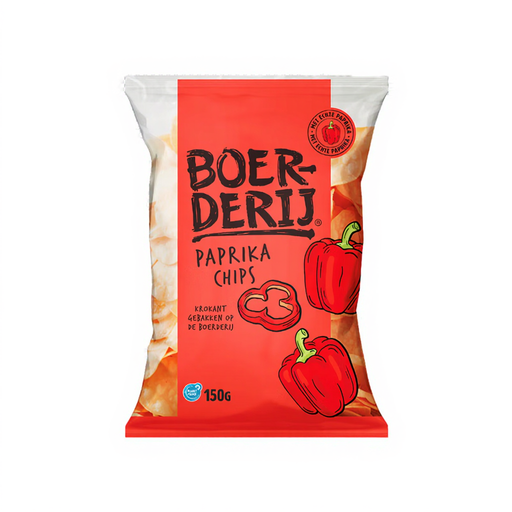 Image unavailable
For anyone who wants to pack a measured portion of paprika crisps as an addition to lunch. Before eating, check the portion information and allergen statement on the packaging.
Pack size: 150 g.
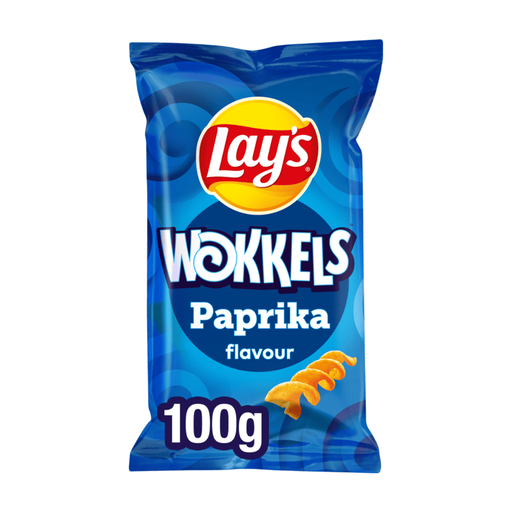 Image unavailable
For anyone who wants to divide a smaller bag of paprika crisps into snack portions for lunch. Check the packaging for the weight per portion and the latest allergen information.
Pack size: 100 g.
No. Under the EU rules published by EUR-Lex, the low-energy claim for solid foods can only be used for products with no more than 40 kcal per 100 g. According to Albert Heijn, the four products compared here contain between 405 and 507 kcal per 100 g.
No. How they’re made doesn’t determine that on its own. Compare the energy values per 100 g for the specific varieties and check the salt and allergens too: Albert Heijn lists Chio Oven chips paprika at 405 kcal and 1.6 g of salt per 100 g, while the Lay’s Oven Baked Roasted Paprika listed contains milk.
If you wish, pack a pre-measured amount as an addition, not a substitute for lunch. The Netherlands Nutrition Centre recommends including vegetables, fruit and wholegrain products in a packed school lunch.
Check whether the school, after-school club or holiday childcare provider has any rules about food and drink brought from home. This lets you choose a snack that’s suitable for where the lunch will be eaten.
Product information can change, so the label on the packaging you receive is the best source for current nutritional information and allergen details. Albert Heijn notes that nutritional values and allergy information may change.