
Snackers keeping an eye on calories
You fancy something savoury after exercise, so you compare the energy and fat values of paprika crisps per 100 g. The amount you actually eat is also part of the decision.


If you want to choose lower-calorie paprika crisps after exercise, compare oven-baked and regular varieties per 100 g and decide in advance how much you want to eat. Check the energy value on the current packaging: Jumbo and Joybuy list different kcal values for Lay's Oven Baked Paprika. After an intense workout, crisps are no substitute for fluids and a proper meal with enough protein, as the Netherlands Nutrition Centre explains.
You fancy something savoury after exercise, so you compare the energy and fat values of paprika crisps per 100 g. The amount you actually eat is also part of the decision.
You feel like a snack after an intense workout, but don't want to mistake it for a meal. The Netherlands Nutrition Centre recommends getting enough fluids, carbohydrates and protein when eating around exercise.
Before buying, you check for allergens or other ingredients that matter to you. This information can vary between paprika crisp products, so always check the current packaging.
First decide whether you’re looking for a snack or still need a meal after your workout. Then compare paprika crisps per 100 g and think about the portion you want to have.
| What to consider | What to check when buying | Who it matters to |
|---|---|---|
| Calories and fat | Compare the kcal and fat per 100 g on the current packaging; don't rely only on terms such as ‘light’ or ‘oven-baked’. | I want paprika crisps after exercise, but I also want to take their energy and fat values into account. For around 36% of consumers, this is their main buying priority. |
| Meal after exercise | Decide whether you need a meal and something to drink as well as a snack; don't treat crisps as a replacement. | After an intense workout, I mainly want to know what else I should eat and drink alongside a savoury snack. Around 29% of consumers give this question top priority. |
| Ingredients and allergens | Read the ingredients list and allergen information for the specific product, even if you already know the brand. | If I need to avoid certain ingredients, the packaging matters more than a difference in kcal. This is the main concern for around 21% of consumers. |
| Portion and packaging | Check the pack size and decide how much you want to take out of the bag. | I want to be able to set aside a snack portion in advance, even when I buy a larger bag. Portion planning is the main buying priority for around 14% of consumers. |
According to the Netherlands Nutrition Centre, light crisps contain less fat than regular crisps, but the difference in calories is small.
So compare the kcal and fat per 100 g of the products you’re actually considering, then decide on your portion.
A bag of crisps won't automatically provide what you need to eat and drink after an intense workout. The Netherlands Nutrition Centre recommends a proper meal with enough carbohydrates and protein as part of eating around exercise.
Decide separately whether you need a meal and something to drink as well as your snack.
Ingredients vary by product. For example, Jumbo lists milk and sulphites as allergens in Smiths Sticks Paprika; that doesn't tell you anything about other paprika crisps.
Check the allergen information on the current packaging every time you buy, especially if you have an allergy or intolerance.
Portion sizes listed on packs can vary. This means values per portion aren't a consistent basis for comparing two products.
Compare the products per 100 g first, then take the amount you want to eat out of the bag.
A relevant option if you want to compare an oven-baked variety with regular paprika crisps.
Smiths Sticks Paprika is a shaped snack with paprika flavour, not the same type of product as flat potato crisps.
The range includes various paprika crisp products, each of which should be assessed individually.
A supermarket own-brand option to include as a separate paprika crisp product in a per-100-g comparison.
ALDI lists Sun Snacks Paprikachips in a 250 g pack.
These are paprika snacks for anyone choosing a portion of crisps after exercise: one oven-baked variety and two other paprika snacks. Compare their current nutritional information individually; together, these products do not make a post-workout meal.
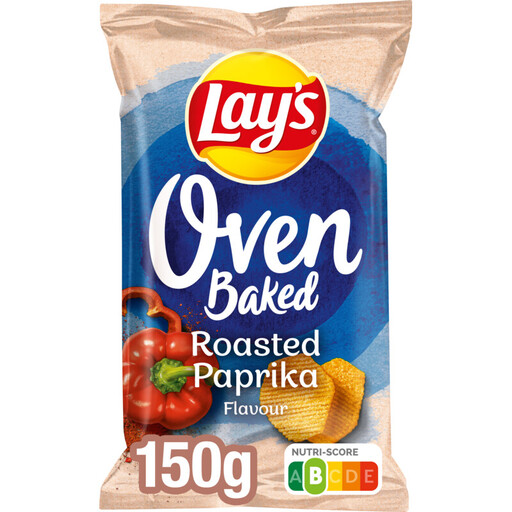 Image unavailable
An oven-baked paprika crisp variety to consider if you want to compare its nutritional value per 100 g with regular crisps.
Joybuy lists 13 g of fat and 440 kcal per 100 g; Jumbo lists 427 kcal per 100 g for Lay's Oven Baked Paprika. Check the energy value and allergens on the current packaging.
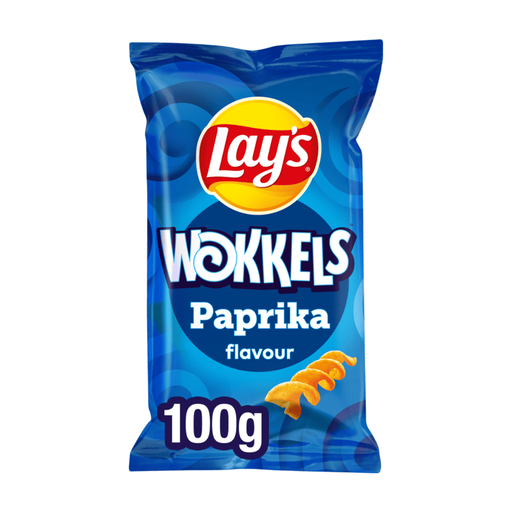 Image unavailable
A paprika snack for anyone considering a 100 g bag as a post-workout snack portion.
Wokkels are a different shape from flat paprika crisps. Check the nutritional information and allergens for this specific product on the packaging.
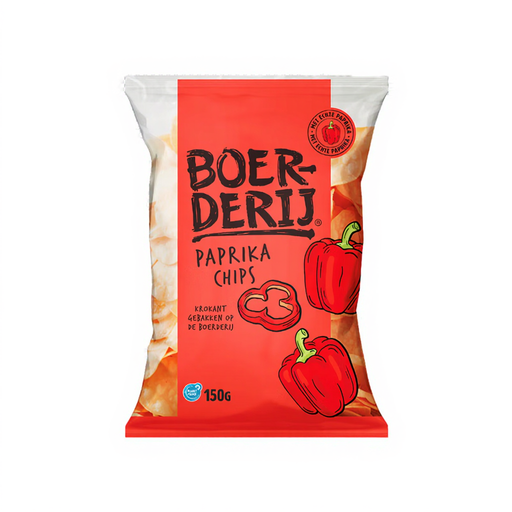 Image unavailable
A paprika crisp variety to consider if you want to take a portion from a 150 g bag.
Use the nutritional information per 100 g on the packaging to compare these crisps with another variety, and check the ingredients if they matter to your choice.
No. Choose crisps as a snack and consider separately what else you want to eat and drink after your workout. The Netherlands Nutrition Centre recommends a proper meal with enough carbohydrates and protein when eating around exercise, especially after intense activity.
Not necessarily. According to the Netherlands Nutrition Centre, light crisps contain less fat than regular crisps, but the difference in calories is small. Compare the kcal per 100 g of the specific products, then consider your portion.
Start with the nutritional value per 100 g; this lets you compare the products on the same basis. Only then decide how much you want to eat, rather than comparing only the portions suggested by the manufacturers.
Yes. If you have an allergy or intolerance, check the current allergen information for the specific product. Ingredients vary between paprika crisp varieties; the Netherlands Food and Consumer Product Safety Authority explains that allergens must be listed in the ingredients list.