
Vandaag of morgen in huis

Kwaliteit gegarandeerd

Welkomstaanbiedingen ontgrendelen: GRATIS bezorging | Tot 80% korting | Gratis 30 dagen JoyPlus-proefperiode
Download de app
Paper tissues may seem straightforward, but the differences between packs are noticeable in everyday use. One pack may look cheap yet run out quickly. Another may feel soft but tear as soon as you use it when damp. Terms such as “sensitive skin”, “extra strong” or “sustainable” also need to be considered alongside the actual product specifications.
For families, households and people who are often out and about, these three pitfalls are particularly important:
The number of layers partly determines how thick and strong a tissue feels. Three-ply and four-ply tissues generally provide more material per sheet than single-ply options. Also check the size. A large sheet may be more convenient for the face, while compact pocket tissues are designed to be easy to carry.
Do not just look at “pieces per pack”, but also check:
A family pack of tissues is practical for a household with several users. If you mainly want to keep a few tissues in your coat, bag or car, tissues for on-the-go use will be more useful than a large box.
Many paper facial tissues are made from cellulose or wood pulp. The product information may state, for example, 100% virgin pulp or 100% virgin cellulose pulp. This describes the main material, but on its own it does not tell you everything about softness, thickness or absorbency.
Also look out for added ingredients:
Not every tissue sheet stays intact when wet. Products described as suitable for both dry and damp use are more versatile for the face, hands and light cleaning tasks. However, “damp use” does not mean that you can flush them down the toilet. Paper tissues, wet wipes and cotton facial tissues belong in the bin unless the packaging explicitly states otherwise.
Store opened packs in a dry place, preferably not next to a shower or washbasin for extended periods. Moisture can affect the product’s structure and hygiene.
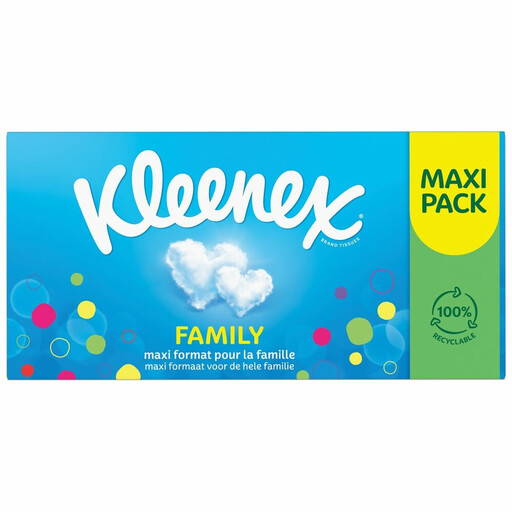
Why it suits this profile: A clearly presented pack containing 128 tissues for general household use, for example in the living room, bathroom or car.
The stated quantity of 128 pieces makes it easier to compare your supply and the price per tissue.
128 tissues; variant for general family use; product description states that it is soft and strong.
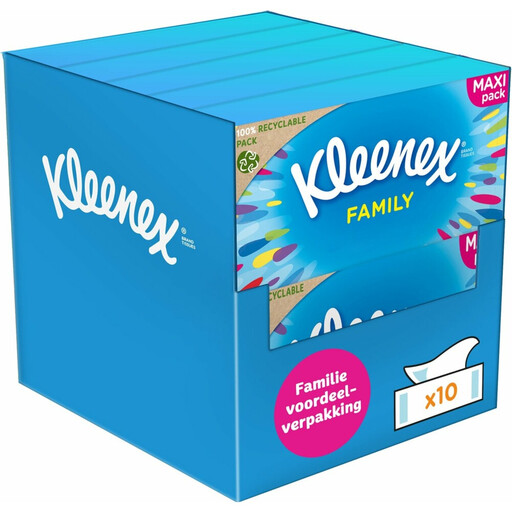
Why it suits this profile: Suitable for households that want a generous supply while also prioritising convenient everyday use.
The pack contains 10 packs of 128 tissues. This makes the available supply clearer than with a single small pack.
1280 tissues in total; 100% virgin cellulose pulp according to the product information; FSC certification is stated.
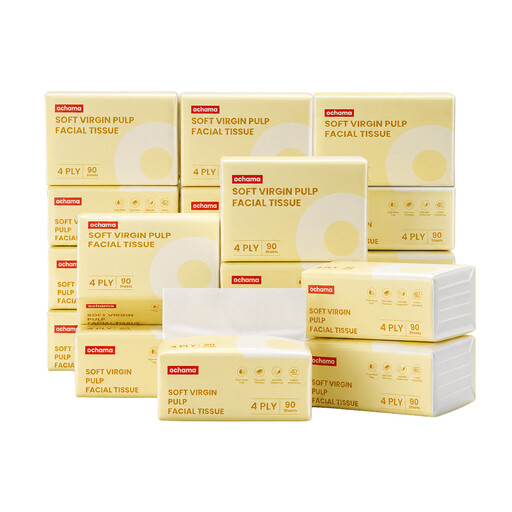
Why it suits this profile: Handy for families, offices and households that use a lot of tissues and also want the option of damp use.
The specifications state four layers, 90 sheets per pack and 20 packs. This provides more to go on than a claim about softness alone.
1800 sheets; four-ply construction; according to the product description, suitable for dry and damp use.
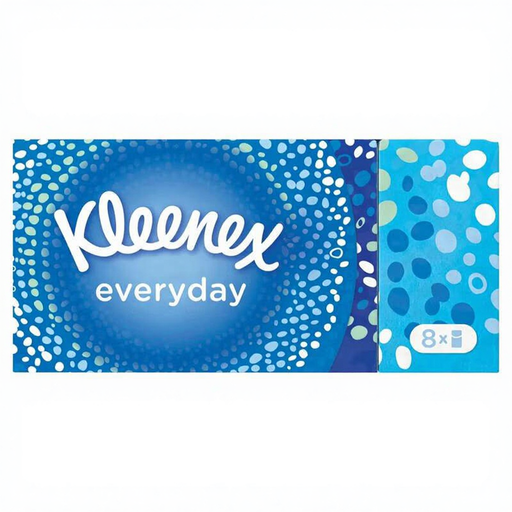
Why it suits this profile: A compact choice for a coat pocket, handbag, rucksack, car or train journey.
The product details list eight pocket packs containing 72 tissues in total, allowing you to balance portability and quantity.
Eight compact packs; 72 tissues in total; designed for use on the go.
We have put together a complete, up-to-date list of products that fully meet these strict selection criteria and the applicable European safety regulations.
Facial tissues are generally designed for use around the nose and face and are often available with multiple layers, lotion or a softer texture. Ordinary paper tissues can be used more broadly for hands or minor spills. Always check the size, ply thickness and product description.
This varies from product to product and from person to person. If you want to avoid fragrances, preferably choose a variant without added perfume. The term “sensitive skin tissues” is not a general guarantee. Based on a brand’s own research or claims, a product may be described as mild or dermatologically tested, but this should not be interpreted as a medical assessment. Stop using the product if irritation occurs and follow the information on the packaging.
Paper tissues often do not have a short shelf life like food products, but storage is still important. Store unopened and opened packs in a dry, cool place away from direct sunlight. Lotion or wet facial tissues may dry out more quickly after opening, so follow the instructions on the packaging. Use tissues once only and dispose of them in the bin, not down the toilet.
