
Photographer of complete creations
You want to photograph complete folded creations from a fixed angle and switch easily between compositions.


For photographing complete folded creations, a mirrorless camera with a standard zoom is a useful starting point, provided the lens can focus from the distance you can maintain at your table. If you want to fill the frame with small folds, pay particular attention to maximum magnification and the space in front of the lens for lighting. A compact camera with a fixed lens saves you changing lenses, but gives you less flexibility to choose a different lens later.
You want to photograph complete folded creations from a fixed angle and switch easily between compositions.
You want to fill the frame with small folds and need to balance magnification against the space left for lighting.
You photograph several creations using the same set-up and want consistent framing and true-to-life paper colours.
First decide whether you mainly want to capture the whole creation or focus on small details. Then choose a lens and set-up to suit the available distance and space for lighting.
Choose this if: you mainly photograph complete models and different crops, and want an interchangeable lens.
Bear in mind: a standard zoom is not automatically suitable for filling the frame with small folds.
Choose this if: you want small folds or the texture of the paper to appear large in the frame, and are happy to use an additional lens.
Bear in mind: the short working distance may limit the space beside the paper for lighting. Check that the lens mount is compatible with the camera body, too.
Choose this if: you want to use one camera without changing lenses.
Bear in mind: check in advance that the fixed lens can frame both the whole creation and the details you want from your camera position.
| What to consider | What should you check? | Who is this important for? |
|---|---|---|
| Framing complete models | Check that the lens focuses at your set-up distance and that the camera and tripod fit around the table. | If I want to fit creations in different sizes fully into the frame, I need a suitable crop without putting the camera awkwardly close to the subject. Around 33% of consumers prioritise framing complete folded creations. |
| Magnifying small details | Compare maximum magnification, lens mount and working distance from the front of the lens. | If I want a small fold to fill the frame, I need both enough magnification and room to light the subject. Around 33% of consumers prioritise capturing small folds. |
| Taking consistent photos | Check how to position the camera securely, view the screen from that position and assess white balance when the light changes. | When photographing a series of paper creations, I want to keep framing and colour as consistent as possible, even when the light changes. Around 23% of consumers prioritise repeatable photos. |
| Avoiding lens changes | Check whether a fixed lens can achieve the wide and close-up framing you want. If you’re considering a kit, check exactly what’s included. | If I’d rather not change lenses, I want to know in advance which crops are possible with a single camera set-up. Around 11% of consumers prioritise a simple set-up without changing lenses. |
Minimum focusing distance is measured from the image sensor; working distance is the space from the front of the lens. For the Sony E 30 mm F3.5 Macro, Sony gives a minimum focusing distance of 9,5 cm and a minimum working distance of 2,4 cm. These measurements therefore describe different amounts of clearance.
Compare both distances with the space where you want to position lights beside the paper.
Canon specifies a maximum magnification of 0,16× with autofocus for the RF-S 18-45mm at 45 mm; Sony gives 1,0× for its dedicated E 30 mm F3.5 Macro. These specifications apply to the lenses mentioned and are not a general comparison between camera bodies.
Decide how small the detail is and how large you want it to appear in the frame. Then check the magnification and whether the lens fits your camera body.
If a standard zoom cannot make the detail large enough in the frame, you may need a dedicated macro lens for that purpose.
The Dutch Nikon Z50II kit page states that a charger is not included. What’s in the box can vary between versions.
Before buying, check the contents of the exact kit you’ve chosen and see whether you already have the items you need for your set-up.
The EOS R50 with RF-S 18-45mm is a mirrorless camera set-up for photographing complete models and using different crops.
The Z50II with NIKKOR Z DX 16-50mm is a mirrorless camera kit for photographing complete folded creations and trying different compositions.
Within the APS-C E-mount range, the E 30 mm F3.5 Macro is a dedicated lens for filling the frame with details.
The Tough TG-7 is a compact camera with a fixed lens for anyone who doesn’t want to change lenses.
These cameras are suited to photographing paper art with different crops, from wide compositions to varying frames. Check which lens and accessories are included with each version.
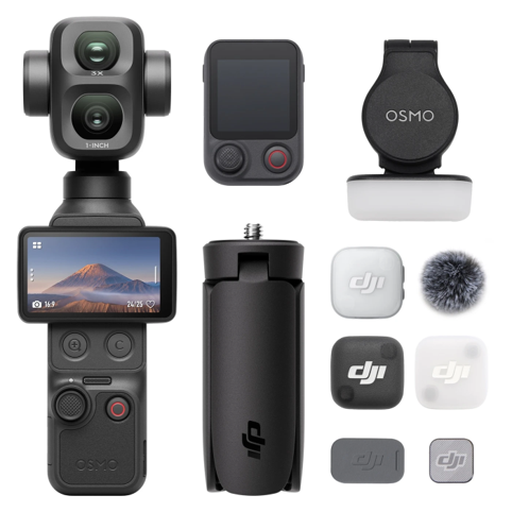 No image available
The stated 20mm wide-angle lens is suited to wide compositions of paper art.
The product description lists a 1-inch CMOS sensor and a 20mm lens. According to the description, 4K/240fps is only available in slow-motion mode.
 No image available
The stated optical zoom may be useful if you want to try different crops. Check that the camera focuses as you’d like from your table set-up.
The product description lists 10× optical zoom and an IPS screen.
 No image available
The included zoom lens offers a range of focal lengths for framing paper creations.
The product description lists a vari-angle LCD screen. It also states that an adapter or charger and an SD memory card are not included.
 No image available
The stated 16–50mm zoom lens is designed for anyone who wants to try different crops with the same kit.
The product name lists the 16-50mm f/3.5-5.6 OSS II lens. Check the focusing distance for the crop you want to achieve at your table.
 No image available
This version may suit you if you already have a compatible Sony E-mount lens.
This is the camera body only; no lens is included. The product description lists a tilting LCD screen.
Not necessarily. First check that a standard zoom can focus from your set-up distance and frame the whole creation well. If you want a small fold to fill the frame, compare the maximum magnification of a suitable macro lens.
Keep your lighting set-up and camera position as consistent as possible, and reassess the white balance when the light changes. Nikon Netherlands recommends reassessing the white balance when lighting conditions change; keeping the tripod in a fixed position also helps you maintain consistent framing.
Check the contents of the exact version you’re choosing, and see whether you also need a suitable memory card, power supply, tripod or separate lens. For example, Nikon Netherlands states that the Z50II zoom kit reviewed does not include a charger; this doesn’t necessarily apply to other kits.
According to the Dutch government, the seller must provide a solution if a product is faulty. There is no fixed statutory warranty period in the Netherlands; what you can expect from a product depends on the circumstances. Any manufacturer’s warranty is in addition to your statutory rights.
CE marking may be mandatory for product groups covered by applicable harmonised EU rules. The European Commission emphasises that the rules must be determined for each product and the requirements that apply to it. A CE mark is a declaration by the manufacturer, not a certificate issued by a central EU authority.