
Vandaag of morgen in huis

Kwaliteit gegarandeerd

Welkomstaanbiedingen ontgrendelen: GRATIS bezorging | Tot 80% korting | Gratis 30 dagen JoyPlus-proefperiode
Download de app
A pan that works well on gas is not automatically suitable for induction. Induction hobs only heat pans with a magnetic base. Weight, diameter, material and cleaning method also play a major role in everyday use.
If you only look for terms such as “non-stick” or “suitable for all hobs”, you could still end up buying a pan that is not right for your kitchen. These checks will help you avoid common purchasing mistakes.
A pan may be described as suitable for induction, gas, ceramic and electric hobs. Even so, it is important to check that the base diameter matches the cooking zone. A base that is too small will heat less efficiently. With an oversized pan, the heat may be distributed unevenly.
Pay attention to the shape too. A wok with a round base will not always sit properly on a flat induction zone. For most Dutch induction hobs, a flat magnetic base is more practical.
A ceramic non-stick pan, or any other coated pan, usually needs careful maintenance. Abrasive sponges, sharp utensils and high temperatures can damage the coating more quickly. “PFAS-free” only says something about the stated composition; it does not mean that a pan will not wear out without proper care.
According to the Brabantia Onyx product description, this sauté pan has a PFAS-free ceramic double non-stick coating. The manufacturer still recommends washing the pan by hand and allowing it to cool first.
A large cast-iron casserole retains heat well, but it is heavy. You will notice this when moving the pan, draining it and cleaning it. A lightweight aluminium pan is easier to handle, but may respond differently to high temperatures.
For one person or a student, a pan measuring 18 to 20 cm may be sufficient. For a family, a 24 to 28 cm sauté pan, a 4 to 6-litre cooking pot and a wok measuring around 28 to 32 cm are often useful sizes.
Bear in mind that claims about heat distribution, lifespan or non-stick performance come from the manufacturer. According to information provided by the brands concerned, certain constructions may heat faster or more evenly, but your experience in practice will also depend on the hob, temperature and maintenance.
Before buying, check whether the pan is suitable for:
A pan set for all hobs can be useful when moving home or when you use several cooking methods. However, check the maximum oven temperature for each pan. A glass lid, plastic handle or silicone protection may have a lower temperature limit than the pan itself.
A frying pan with a lid or sauté pan is more versatile for frying, slow cooking and making sauces. A well-fitting glass lid allows you to keep an eye on your dish without letting unnecessary heat escape. Also check:
A saucepan with a pouring rim is practical for milk, sauces and small portions. A cooking pot with a wide base is better suited to potatoes, pasta and vegetables.
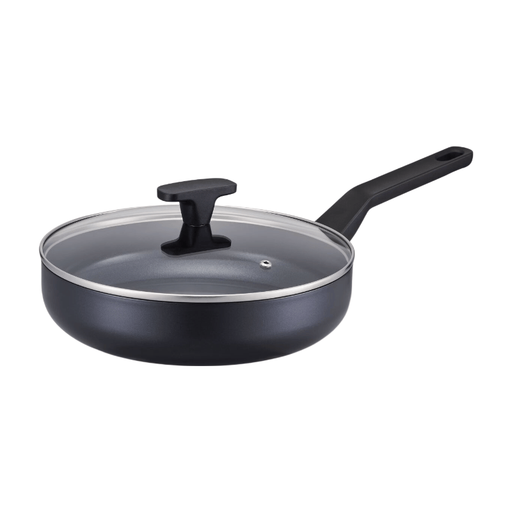
Why it suits this profile: A practical choice for everyday frying, simmering and making sauces. According to the product description, the pan is suitable for induction, gas, electric, ceramic and halogen hobs.
The stated hob compatibility and 26 cm diameter make it easier to compare the size with your induction zone beforehand. Hand washing is recommended to protect the ceramic coating.
26 cm, glass lid, lightweight recycled aluminium and, according to the product information, a PFAS-free ceramic coating.
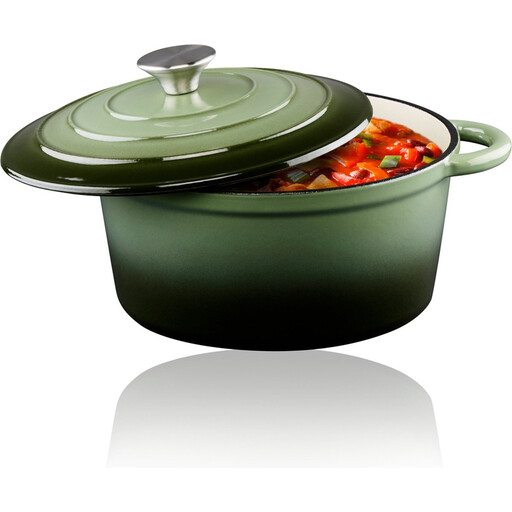
Why it suits this profile: Suitable for anyone who makes casseroles and slow-cooked meals and is looking for a lidded pan that can also be used in the oven.
The specifications state 3.8 litres, a glass lid and compatibility with induction, gas, ceramic, electric hobs and oven use. The weight of approximately 4.8 kg is clear in advance, so bear in mind that it will be less manoeuvrable.
Enamelled cast iron, 24 cm, 3.8 litres, lid included and, according to the product description, dishwasher-safe.
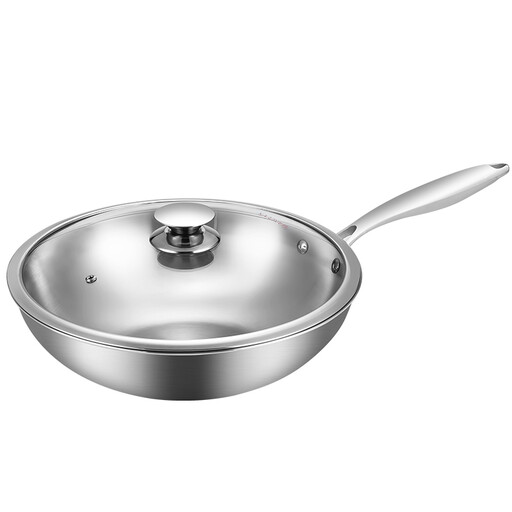
Why it suits this profile: A good choice for stir-frying, searing and cooking at higher temperatures without a non-stick coating. According to the product description, the pan is suitable for induction, gas, electric and ceramic cooking.
The product information clearly states that there is no chemical non-stick coating. If you choose this wok, you should therefore use the hot-pan-cold-oil method and remove any residue with a soft sponge.
304 stainless steel, tri-ply base, 28 cm, glass lid and dishwasher compatibility according to the product description; hand washing is still recommended.
We have put together a complete, up-to-date list of products that fully meet these strict selection criteria and the applicable European safety regulations.
For coated pans, use a soft sponge, mild washing-up liquid and wooden or silicone utensils. Allow a hot pan to cool down before washing it. This helps to minimise thermal shock to glass, enamel and ceramic coatings.
A stainless-steel pan can discolour because of minerals or salt. According to Maxcook’s product information, white marks or rainbow-coloured stains can be removed with a little vinegar or lemon. With carbon steel, drying the pan immediately is important to help prevent rust.
No. The pan must have a magnetic base and, according to the product information, be suitable for induction. A simple magnet test can provide an indication, but always check the product specifications and base diameter as well.
A 16 to 18 cm saucepan or a small 18 to 20 cm cooking pot is often sufficient for sauce, porridge, milk and single portions. For larger portions, a 24 to 26 cm sauté pan is more practical.
The pan itself is not the only factor that determines energy consumption. A flat base that makes good contact with the cooking zone, a suitable diameter and a lid can help you use heat more efficiently. Also, do not set the hob higher than necessary; induction responds quickly to changes in temperature.
