
Vandaag of morgen in huis

Kwaliteit gegarandeerd

Welkomstaanbiedingen ontgrendelen: GRATIS bezorging | Tot 80% korting | Gratis 30 dagen JoyPlus-proefperiode
Download de app
Buying a new pan sounds simple—until you discover that a large frying pan does not work on induction, a pan set consists mainly of awkward sizes or a coating wears out sooner than expected. For home chefs, families, students and cooking enthusiasts, the right choice is therefore about more than appearance or the number of pieces included.
Pay particular attention to these common pitfalls:
A pan set for induction must have a suitable magnetic base. Check the product information to confirm that the pan is explicitly suitable for induction. Those cooking on gas, electric, halogen or ceramic hobs generally have more choice, but a flat base remains important in all cases.
A pan marketed as suitable for “all heat sources” should specify this clearly. The 32 cm Tefal Easy Cook & Clean frying pan is an important exception, for example: according to the product information, it works on gas, electric and ceramic glass hobs, but not on induction.
For a glass hob, a flat base, a suitable size and careful lifting are essential. You can also browse the latest selection of cookware for glass hobs.
Stainless-steel pans are suitable for cooking, braising and preparing sauces, and usually do not have a non-stick coating. A multi-layer base with an aluminium core can distribute heat more evenly. According to the product description, the 20 cm PURECOOK 304 triple-ply frying pan features three layers with an aluminium core. This type of pan may appeal to anyone looking for a compact option for eggs, vegetables or smaller portions.
Aluminium pans are often lightweight and heat up quickly. They are frequently combined with a coating. If so, check whether the pan is suitable for induction and which cleaning method is recommended.
With ceramic coatings, pay particular attention to operating temperature and care. A coating can be damaged by metal utensils, abrasive sponges or sudden temperature changes. The term PFAS-free pans should be stated explicitly in the product information. According to the manufacturer, the Brabantia Onyx sauté pan features a PFAS-free ceramic coating. For other pans with a non-stick coating, such as the 5five frying pan, the product information explicitly states that the pan is not PFAS-free.
A 16 cm pan is practical for sauces, milk or a small portion. For two to four people, sizes of approximately 20 to 24 cm are often the most versatile. A 28 cm frying pan provides more room for multiple ingredients, while a sauté pan with higher sides is suitable for one-pan meals, stews and sauces.
A frying pan with a lid is useful when you want to sear ingredients first and then allow them to cook through. Also check whether the lid is included or must be purchased separately. A large 30 cm wok is convenient for stir-frying, but requires sufficient space on the hob and a sturdy handle.
Also consider the weight. A heavy stainless-steel pan may feel stable, but is less practical if you regularly need to move a pan with one hand.
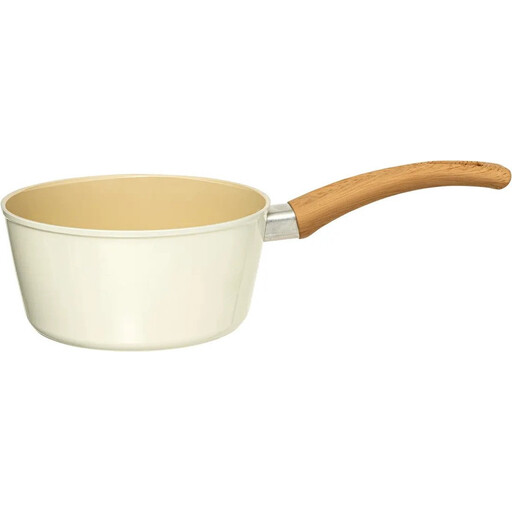
Why it fits: A compact 1.7-litre saucepan for students, single-person households and smaller portions.
You avoid buying a large set with unused sizes. The product information states that it is suitable for gas, induction, ceramic and electric cooking.
16 cm diameter, 1.7-litre capacity, recycled aluminium and dishwasher-safe according to the product information.
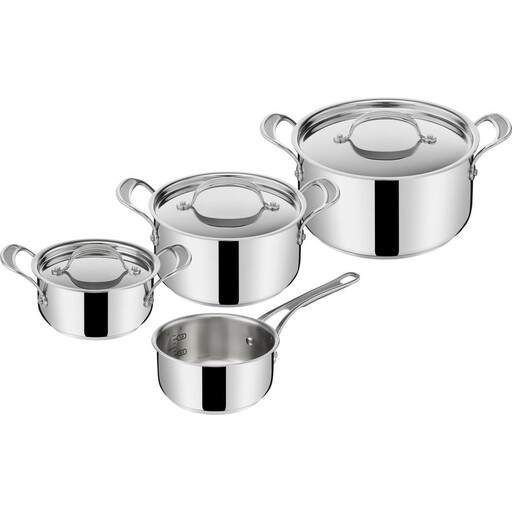
Why it fits: A cookware set for households that need several stainless-steel pan sizes.
The set lists four pans measuring 16, 20 and 24 cm, plus lids. However, check in advance which pan corresponds to each size.
Stainless-steel construction, suitable for induction and other listed heat sources, oven-safe up to 210 °C according to the product information.
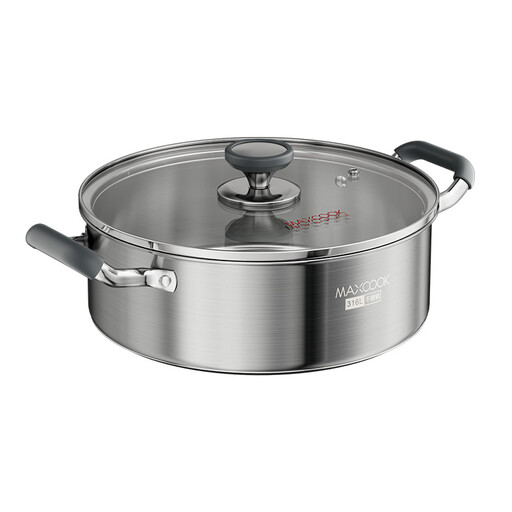
Why it fits: Plenty of capacity for soup, pasta, stews or cooking for several people.
The capacity is clearly specified. Allow for hand washing and preferably use low to medium heat, in line with the care instructions.
30 cm, 6.5 litres, glass lid and suitable for gas, induction, electric, ceramic and halogen according to the product information.
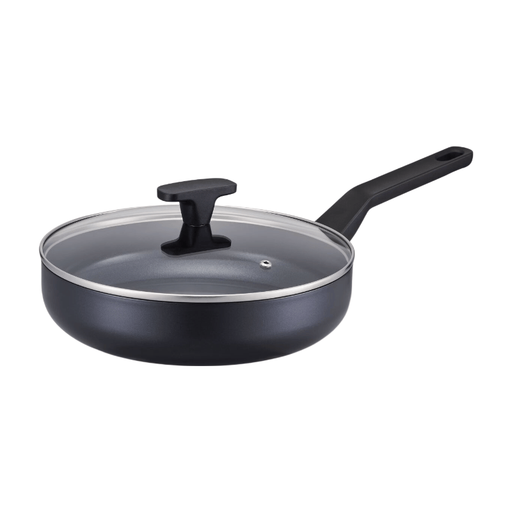
Why it fits: For families who frequently stir-fry, simmer or prepare one-pan meals.
The coating and PFAS-free designation are stated explicitly in the product information. Even so, the manufacturer recommends hand washing to extend the product’s service life.
26 cm, glass lid, ceramic coating, aluminium body and suitable for induction according to the product information.
For non-stick pans, preferably use wooden or silicone utensils. Allow a hot pan to cool before washing it and avoid steel wool. “Dishwasher-safe pans” can technically go in the dishwasher, but manufacturers sometimes recommend hand washing to preserve the coating, handles or colour for longer.
On stainless steel, white marks or a rainbow-coloured haze can often be removed with diluted vinegar or lemon juice. Always follow the manufacturer’s instructions. Also check whether a pan is oven-safe and up to what temperature; a wooden or plastic handle may not be suitable for oven use.
Browse our current range of pans and cookware for different heat sources, sizes, materials and care preferences.
Choose a set that explicitly states it is suitable for induction. Also check that the base is flat and matches the diameter of your cooking zone. An induction symbol alone does not always indicate how evenly the pan distributes heat or which size is ideal.
No. PFAS-free describes the absence of certain substances from the PFAS group; it does not automatically specify the pan’s material. A ceramic coating is a separate product specification. Read both details independently.
For a small kitchen, a 16 to 18 cm saucepan, a 20 to 24 cm cooking pot and a 24 to 28 cm frying pan are often sufficient. Families may want to add a larger cooking pot, sauté pan or wok. A set is especially practical when its sizes match your regular cooking routine.
