
Vandaag of morgen in huis

Kwaliteit gegarandeerd

Welkomstaanbiedingen ontgrendelen: GRATIS bezorging | Tot 80% korting | Gratis 30 dagen JoyPlus-proefperiode
Download de app
Choosing a new pan seems simple until you have to decide between a frying pan, stock pot, saucepan, wok or pan set. Marketing copy often emphasises terms such as “ultra-durable”, “healthy” or “suitable for all hobs”. These descriptions only mean something when you check the specific product specifications.
The right choice mainly depends on your hob, the size you need, the materials used and how you maintain the pan. The following points will help you avoid paying for features you are unlikely to use.
An induction pan needs a magnetically conductive base. This means that not every aluminium pan works on induction. One example is the Tefal Easy Cook & Clean frying pan: according to the product information, it is suitable for gas, electric and ceramic cooking, but not for induction.
Always check whether your hob is explicitly listed. For an induction hob, look for “induction-compatible” or a magnetic composite base. If you have a ceramic hob or gas cooker, you will generally have more options.
A non-stick pan is useful for eggs, pancakes and dishes requiring little oil. However, the coating remains vulnerable to scratches, high temperatures and thermal shock. Metal utensils, leaving an empty pan on high heat and placing a hot pan under cold water can shorten its lifespan.
“Dishwasher-safe pans” also require some nuance. A pan may be listed as dishwasher-safe, while hand washing is still recommended to help preserve the coating or finish for longer.
A 28 cm pan does not automatically have enough cooking surface for large portions. The shape, base diameter and depth determine how much food you can realistically prepare. For example, a deep 24 cm stock pot is suitable for soup or pasta, while a shallow frying pan of the same diameter is better for frying.
Also consider the weight, handle and storage space. A cast-iron pan retains heat well, but is heavier than aluminium. You will notice the difference particularly when you need to move the pan regularly.
Stainless steel pans are suitable for everyday cooking, sauces and soups. 304 stainless steel is described in several product listings as a material suitable for contact with food. It does not have a traditional non-stick coating, so controlling the temperature and using enough fat are important to help prevent food from sticking.
Aluminium pans generally heat up quickly and are relatively lightweight. Aluminium is often combined with a non-stick coating or a magnetic base for use on induction hobs. With a ceramic hob, also check that the pan base is flat so that heat is transferred effectively.
Enameled cast iron is heavy but retains heat for a long time. It is well suited to stews, slow cooking and dishes that go from the hob into the oven. Always check the maximum oven temperature and the instructions for the lid and handles.
When it comes to coatings, it is important to distinguish between a brand claim and a verifiable specification. According to SENSARTE’s product information, certain non-stick pans are made without intentionally added PFOA, PFOS, APEO, lead and cadmium. This is not the same as a general guarantee covering every possible substance or unlimited product life.
According to its own product description, the SENSARTE set with ceramic coating is free from PTFE and PFAS. If you are specifically looking for PFAS-free pans, it is best to check the exact product listing and care instructions rather than relying solely on the term “ceramic”.
A pan without a coating, such as some stainless steel stock pots, is less dependent on a vulnerable non-stick layer. The trade-off is that cooking technique makes more of a difference.
For a household, different sizes are practical:
A pan set can offer good value if you need several sizes. However, check that all the pieces are genuinely suitable for your hob and that the handles, lids and bases meet your requirements.
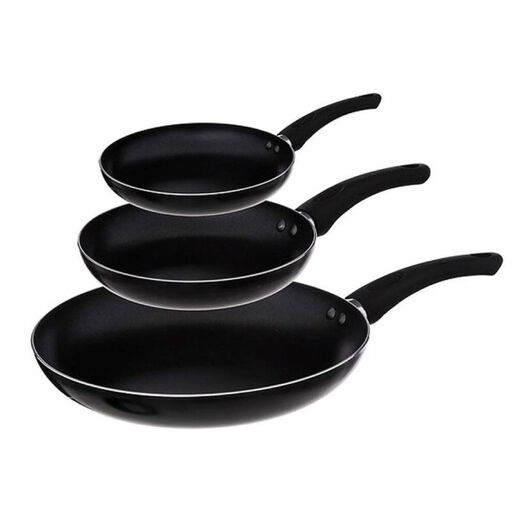
Why it suits this profile: Three popular sizes offer flexibility for small portions, everyday frying and family meals. According to the product information, the set works on gas, electric, ceramic and induction hobs.
You do not have to use one oversized pan for every dish. However, the coating requires careful use, and hand washing is recommended for a longer lifespan.
Set of three sizes; suitable for all listed heat sources; dishwasher-safe according to the product listing.
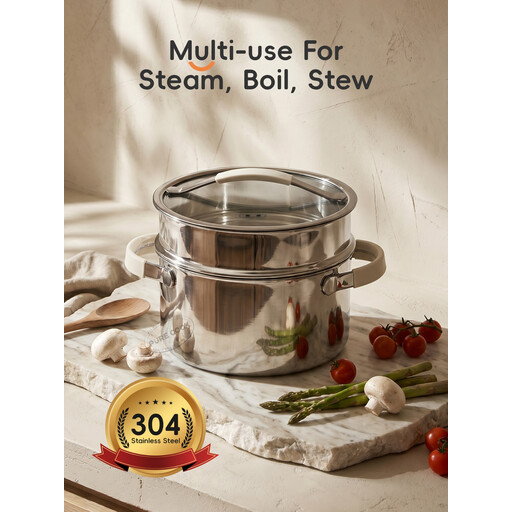
Why it suits this profile: The 24 cm stock pot has a deep body for meals serving around three to five people and combines cooking with a removable steamer insert.
Compatibility with gas, induction and ceramic hobs is clearly stated. However, the glass lid and handles require care at high temperatures.
304 stainless steel; multi-layer magnetically conductive base; two cooking functions in one pan.
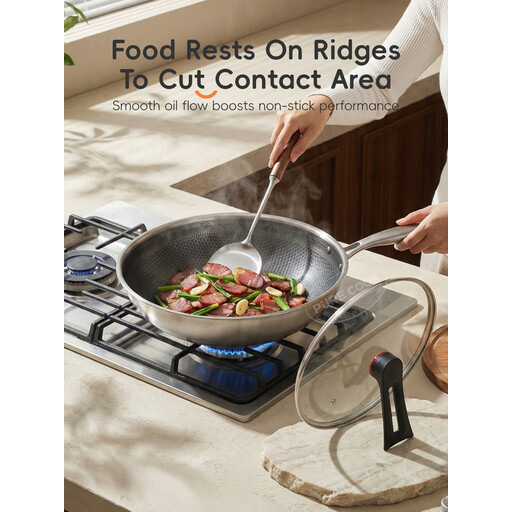
Why it suits this profile: This spacious wok is designed for stir-frying, searing, stewing and larger portions. According to the product description, its three-layer construction is suitable for gas, induction and ceramic cooking.
The product information refers to a honeycomb structure without a traditional chemical non-stick coating. Hand washing and avoiding sudden temperature changes are still recommended.
32 cm diameter; glass lid; suitable for metal utensils according to the product listing.
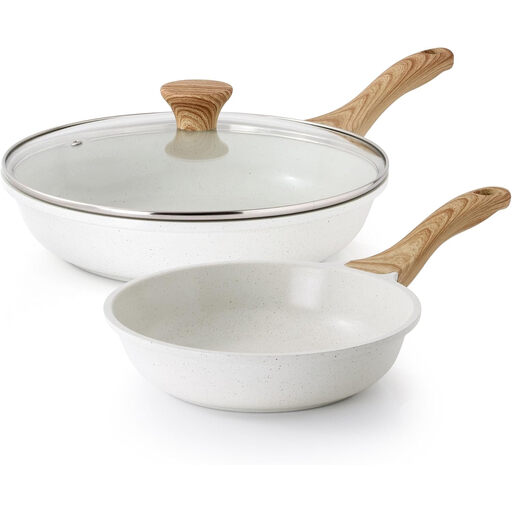
Why it suits this profile: The set includes a 20 cm pan, a 28 cm frying pan and a lid. According to SENSARTE’s own product information, the coating is free from PTFE and PFAS.
The relevant coating claim is specified rather than described simply as “healthy”. According to the product details, the pans are not dishwasher-safe and require hand washing.
Two sizes; lid included; magnetically conductive base for induction, gas and electric cooking.
We have compiled a complete, up-to-date list of products that fully meet these strict selection criteria and the applicable European safety regulations.
A practical basic selection consists of a 24 or 28 cm frying pan, a stock pot of around 20 to 24 cm and a small 16 to 18 cm saucepan. If you often stir-fry, you can add a 30 or 32 cm wok. A pan set is particularly useful when you want to replace several sizes at once.
No. Always check the product listing. Induction pans usually have a magnetic base. A pan may be suitable for gas, electric and ceramic hobs, but not for induction. If you have an induction hob, only use a pan with explicitly stated induction compatibility.
This depends on how it is used, the temperature and how it is cared for. Do not use metal utensils, do not heat the pan empty on high heat and follow the cleaning instructions. Once the coating is visibly damaged or heavily worn, replacing the pan is a sensible choice.
