
Vandaag of morgen in huis

Kwaliteit gegarandeerd

Welkomstaanbiedingen ontgrendelen: GRATIS bezorging | Tot 80% korting | Gratis 30 dagen JoyPlus-proefperiode
Download de app
An induction hob is fast and efficient, but not every pan is suitable for it. A pan can look sturdy and yet heat slowly, unevenly or not at all on an induction hob. Terms like “non-stick”, “ceramic” and “for all heat sources” don’t always tell you enough about everyday use.
So when you’re buying pans for induction hobs, it pays to look beyond just the price or appearance. Pay particular attention to the base, the material, the size and the maintenance. That way, you’ll avoid a bad purchase that warps, sticks or is difficult to clean after just a few months.
An induction pan needs a magnetisable base. This often consists of stainless steel, or the pan contains a separate induction disc. Also check that the base is flat. A convex or warped base can result in less efficient contact with the cooking zone.
An example is the 5five aluminium saucepan. The pan has an aluminium body and a stainless steel induction disc. According to the product information, it is suitable for gas, induction, ceramic and electric hobs. The stated capacity is 2.5 litres.
A non-stick pan can be handy for eggs, pancakes and delicate ingredients. However, the coating remains dependent on use and care. Metal spatulas, high temperatures and abrasive sponges can damage the layer. So you should always consider “scratch-resistant” or “long-lasting” in combination with the care instructions.
The same applies to ceramic coatings. A ceramic pan may be offered as PFAS-free, but that doesn’t automatically mean the pan is indestructible. Preferably use wooden, silicone or plastic utensils, and don’t heat an empty pan on a high setting for a long time.
A pan of 28 or 30 cm offers plenty of space, but not every induction zone heats the entire base. So look at the base diameter, not just the diameter at the top. A large pan with a relatively small base can heat less evenly.
For one or two people, a saucepan of 16 to 18 cm is often practical. A capacity of around 2 to 2.5 litres is suitable for sauce, soup, pasta or vegetables. For families, a sauté pan for induction of around 24 to 28 cm and a frying pan of 24 or 28 cm are useful sizes.
A wok for induction of 30 cm is suitable for stir-frying and larger portions, but check that the flat base makes good contact with the induction zone. For hotpot or shared dining, pans of 26 to 30 cm are more interesting.
A pan with a lid is practical for braising, rice, sauces and retaining moisture. Pay attention to the material of the handles and lid knob. Wooden parts, for example, are not always suitable for the dishwasher or oven.
Also check:
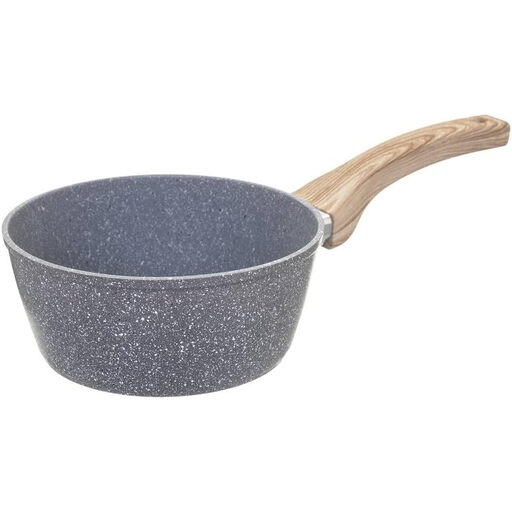
Why this fits the profile: A straightforward saucepan for everyday tasks like sauce, soup and vegetables, without immediately buying a complete induction pan set.
The product information explicitly mentions a stainless steel induction disc and compatibility with gas, induction, ceramic and electric hobs.
18 cm diameter, 2.5 litre capacity, aluminium body and a bakelite handle. Hand washing is recommended; the specification also mentions dishwasher safety.
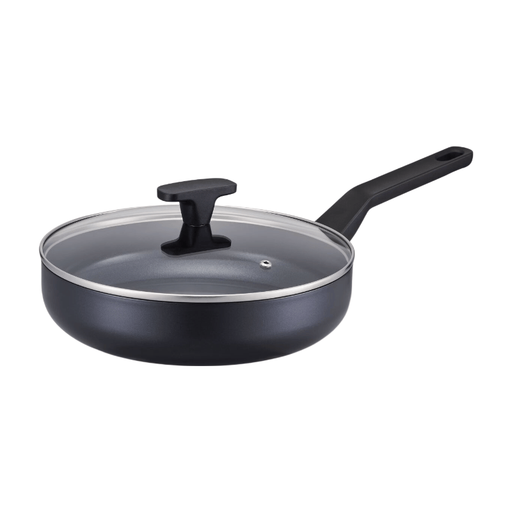
Why this fits the profile: A spacious induction sauté pan for families who want to fry, simmer and prepare sauces all in one pan.
The pan has a stated base diameter of 17 cm. This allows you to better match the size to the induction zone. According to the safety instructions, do not fill the pan more than 80 per cent.
26 cm size, glass lid, recycled aluminium and, according to the product description, a PFAS-free ceramic double non-stick coating. Suitable for multiple hobs.
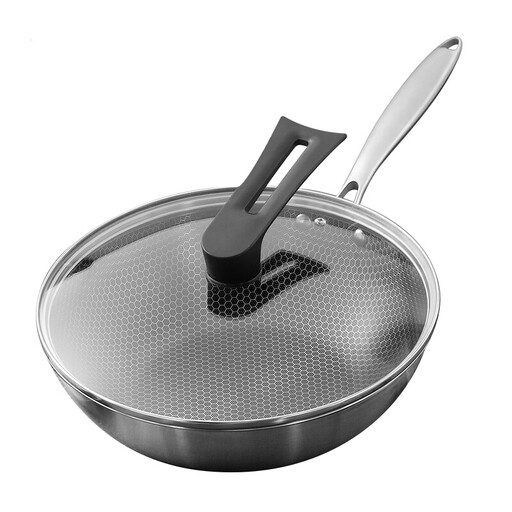
Why this fits the profile: For stir-frying, sautéing and larger portions when a standard induction frying pan doesn’t offer enough space.
The description mentions a stainless steel honeycomb surface without Teflon and compatibility with gas, induction and electric hobs. Do check the exact usage instructions before purchasing.
30 cm diameter, stainless steel construction and a matching lid. Suitable for stir-frying, sautéing and deep-frying according to the product description.
We’ve put together a full, up-to-date list of products that fully meet these strict selection criteria and comply with current European safety regulations.
Check the product information for “induction suitable” or “compatible with induction”. An induction symbol on the packaging is useful, but also look at the base construction. An aluminium pan without a magnetic base usually won’t work on induction. A magnet test can give an indication, but it doesn’t replace the product specifications.
For everyday cooking, 18, 20, 24 and 28 cm are common sizes. Choose an induction saucepan of 16 to 18 cm for smaller quantities. A 24 or 26 cm pan often suits family meals. Match the base diameter to the cooking zone to limit heat loss and uneven cooking.
Not necessarily. A PFAS-free pan may have a ceramic coating, but its lifespan also depends on temperature, utensils, cleaning and storage. Follow the manufacturer’s instructions, avoid metal objects with delicate coatings and let the pan cool down before washing it. This applies to an individual pan as well as to a complete induction pan set.
