
Vandaag of morgen in huis

Kwaliteit gegarandeerd

Welkomstaanbiedingen ontgrendelen: GRATIS bezorging | Tot 80% korting | Gratis 30 dagen JoyPlus-proefperiode
Download de app
Buying a new pan seems straightforward, until you have to choose between a wok, frying pan, pan set, saucepan or roasting pan. Marketing copy often focuses on terms such as “healthy”, “indestructible” or “suitable for all heat sources”. These claims don’t always tell you whether a pan is right for your kitchen.
So focus on features you can check: the material, hob compatibility, dimensions, coating and care requirements. This will help you avoid finding that a pan is too small, warps or is difficult to clean after just a few months.
A pan may technically be suitable for induction, but still heat less evenly if its base is much smaller or larger than the cooking zone. So check not only whether it says “induction”, but also the diameter of the base. For example, the Brabantia Onyx wok has a stated base diameter of 16 cm. That’s useful information if you have an induction hob.
A ceramic non-stick pan can be handy for cooking eggs, pancakes and vegetables with little fat. However, the coating will last longer if you avoid metal utensils, don’t overheat an empty pan and let it cool before washing.
According to product information from various brands, some coatings are PFAS-free or PFOA-free. Always check exactly which term is used. PFAS-free and PFOA-free are not automatically the same claim.
A set with several sizes may look appealing, but pans you never use take up cupboard space. For a household of one to three people, a set with 20 and 24 cm frying pans may be more practical than four large saucepans. Families often get more use from a 5-litre saucepan, a medium-sized frying pan and a wok.
Aluminium usually heats up quickly and is relatively lightweight. It’s suitable for frying pans and woks when you want to cook quickly. The coating then determines how delicate the cooking surface is.
A stainless steel pan without a non-stick coating is a good choice if you value a scratch-resistant surface and a long lifespan. According to the product description, the PURECOOK Tri-Ply pan has a three-layer construction of 304 stainless steel and aluminium. It comes with a lid and, according to the listed specifications, is suitable for gas, induction, ceramic hobs and ovens, among other heat sources.
Cast iron retains heat for a long time, making it a good choice for stews, roasting meat and slow cooking. An enamelled cast-iron pan needs less care than uncoated cast iron, but it’s still heavy. Avoid sudden changes in temperature to help prevent damage to the enamel.
A ceramic non-stick pan is handy for everyday cooking, but it’s best to use wooden, silicone or plastic spatulas. Hand-washing with a soft sponge can help extend the life of the coating, even if the manufacturer says the pan is dishwasher-safe.
If you’re choosing a PFAS-free pan, read the product information carefully. According to the manufacturer, the Brabantia Onyx wok has a 100% PFAS-free ceramic double non-stick coating. This is a brand claim in the product description; always check the current specifications on the product page before you buy.
A diameter of 20 to 24 cm is suitable for smaller portions. A 28 cm frying pan gives you more cooking surface for a family. A 28 to 32 cm wok is useful for stir-fries, but needs enough space around it.
For an oven-safe pan, check both the maximum temperature and the handle material. The Brabantia Dusk pan set is listed as oven-safe up to 200 °C. According to the manufacturer, the Redchef Gemstone set can withstand temperatures up to 842 °F, which is approximately 450 °C. Always check that the specific model and handle have the same limit.

Why it suits this profile: The 20 and 24 cm sizes cover many everyday cooking needs for one to three people, without having to buy a large pan set.
The product information states that the pans are suitable for induction, have a PFAS-free ceramic coating and are oven-safe up to 200 °C. This makes the main limitations clear before you buy.
Two practical sizes, suitable for all the listed hob types and fitted with oven-safe handles.

Why it suits this profile: This 28 cm stainless steel pan with a lid is a good fit for cooks who value control over temperature and cooking.
There’s no non-stick coating to care for incorrectly. The three-layer construction and hob compatibility are clearly described.
304 stainless steel, an aluminium core and a glass lid. According to the product information, it’s suitable for several types of hob.
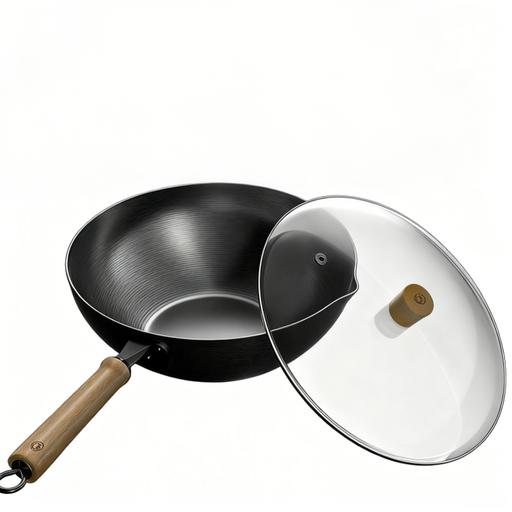
Why it suits this profile: This size is designed for stir-frying and larger portions. According to the product information, the pan is suitable for induction and gas and comes with a lid.
The specifications list the material, diameter and compatible heat sources. Before use, check the latest information about the coating and care requirements.
32 cm diameter, lid included and suitable for induction hobs and gas, according to the product description.
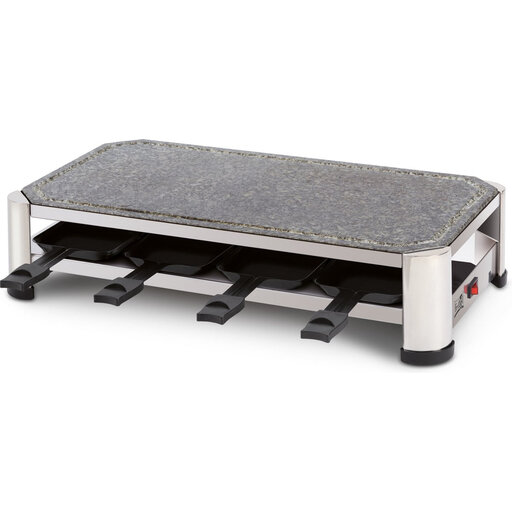
Why it suits this profile: This raclette grill is designed for dining at the table with two to eight people and comes with eight pans and spatulas.
The number of users, 1500 W power rating and pack contents are clearly listed. There are no temperature settings, so bear this in mind before you buy.
Natural stone grill plate, eight pans, removable parts and dishwasher-safe pans, according to the product information.
We’ve put together a complete, up-to-date list of products that meet these strict selection criteria and current European safety regulations.
A practical starter set consists of a 24 or 28 cm frying pan, a small saucepan and a medium-sized saucepan with a lid. Add a wok if you often make stir-fries. For families, a pan set with a range of sizes can save cupboard space and reduce the need to buy pans individually.
Choose a pan that’s explicitly listed as suitable for induction. Also check the base diameter, especially for a wok or large roasting pan. Not every pan distributes heat in the same way across every induction zone.
Its lifespan depends on the coating, temperature, utensils and cleaning. Don’t use metal utensils, don’t heat the pan when it’s empty, and follow the manufacturer’s care instructions. Replace the pan if the coating is visibly damaged or coming away.
