If you usually sit in the same spot and want a little extra warmth there for a while, a directional infrared panel is an obvious option. If you’d also like to warm the air for other people in the room, consider convection heating. Before buying, check the permitted installation method, clearance requirements and whether there’s an accessible wall socket. The power rating and the actual time the heater is switched on will determine its electricity use.
Who is this for?
Regular desk user
You want temporary warmth at your own desk without heating the whole shared living room. A directional infrared panel could be an option if the layout is suitable. Milieu Centraal describes infrared panels as heating for a specific spot.
Shared seating area user
You want other people in the room to benefit from the heating too. So look for a panel that warms the room air, and consider the space available. Duux describes its Edge range as convection heating.
Buyer with limited space
Your first considerations should be whether there’s a suitable place for the heater, enough clearance around it and an accessible socket. The Netherlands Fire Service recommends plugging electric heaters with high power consumption directly into a socket wherever possible.
What should you look for when choosing?
First decide whether you want to warm just your desk area or the shared seating area too. Then check that the required installation method and connection will work in the space available.
| What to consider |
What to look for |
Who is this most relevant to? |
| Directional warmth |
Check the permitted installation method and whether the panel can be aimed at your seat, as instructed in the manual. |
If I mainly want to warm my usual desk spot for a while, rather than the whole shared living room, I’ll consider the panel’s range and positioning. Around 31% of consumers say directional warmth is their main purchase priority. |
| Warmth for others |
Compare the heating method, stated power rating and permitted positioning of the exact model. |
If other people in the seating area also want warmer air, I’ll look for a heater that warms the room air rather than directing warmth at a single seat. Around 25% of consumers prioritise warmth for several people. |
| Positioning and connection |
Check the manual for installation and clearance requirements, and make sure a wall socket is accessible. The Netherlands Fire Service recommends plugging electric heaters with high power consumption directly into a socket wherever possible. |
If furniture or walkways limit the space, I’ll want to know in advance whether I can position or install the heater as instructed and plug it in directly. Around 25% of consumers put safe positioning and connection first. |
| Electricity use |
Compare the stated wattage and controls. To estimate consumption, divide the wattage by 1000 and multiply it by the actual number of hours the heater is switched on. Multiply the result in kWh by your own electricity tariff. |
If the heater might be on for several hours while I work, I’ll want to estimate its electricity use and factor in how long it’s switched on. Around 19% of consumers say manageable electricity use is their main priority. |
Common choices that can disappoint
-
Assuming all panel heaters work in the same way
An infrared panel directs warmth at a specific spot, while a convection panel warms the room air. That means the desk user may need something different from the other people in the room.
Before comparing models, decide whether you mainly want to warm your desk area or the shared seating area.
-
Looking only at a low wattage
Electricity use also depends on how long the heater is actually switched on. So the wattage alone won’t tell you how much electricity it will use in practice.
Compare heaters over the same period of use and calculate the cost using your own electricity tariff.
-
Choosing a spot where you’ll need an extension lead or multi-socket adaptor
Your preferred spot may be impractical if there’s no accessible wall socket. The Netherlands Fire Service recommends plugging high-power appliances, including electric heaters, directly into a socket wherever possible.
Check the connection and cable length before deciding where to put the heater.
Brands to consider
Eurom
The Mon Soleil range includes infrared panels. Eurom describes the Mon Soleil 350 Wifi as a 350 W wall-mounted model with a thermostat.
- Could suit a regular desk spot if wall mounting is possible and the panel can be aimed at your seat as instructed in the manual.
- The model mentioned is described as wall-mounted, not freestanding. A low wattage alone won’t tell you how much electricity the heater uses in practice.
Duux
Duux describes Edge as a range of convection panels, with 1000, 1500 and 2000 W models for wall-mounted or freestanding use.
- Could be an option if other people in the room would also like warmer air, provided the chosen model suits the space.
- Duux’s claims about room size and heating speed don’t, on their own, show how quickly a particular shared living room will warm up.
Mill
Mill describes the Invisible Smart WiFi PA600WIFI4 as a 600 W wall panel with a weekly programme.
- The manufacturer also lists a child lock, overheat protection and a 130 cm cable.
- Check that the cable is long enough for your chosen spot. Mill’s claims about lower energy use aren’t an independent comparison of savings.
Qlima
According to the manufacturer, the Qlima Sereno EPIH 5110 is a 1000 W panel with dry inertia heating and programmable controls.
- Qlima says it continues to give off heat after being switched off, which could be useful if you’ll be using the room for longer.
- The manufacturer’s claim of lower energy use while heating hasn’t been independently verified.
Joybuy products
This selection includes a standalone infrared heater, several fan heaters and a wall-mounted heater described as a bathroom heater. It isn’t made up exclusively of panel heaters for a shared seating area, so check whether each model’s stated use suits your space.
 No image available
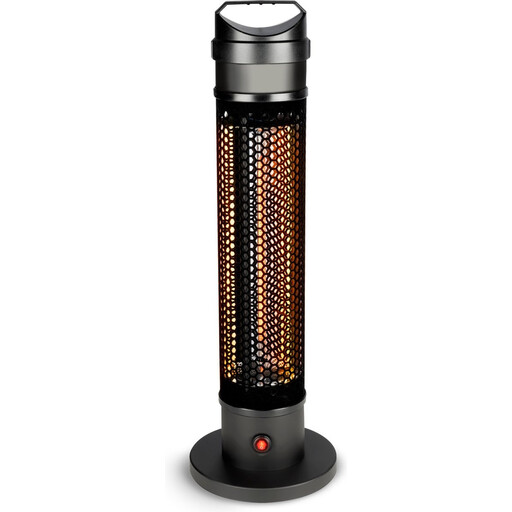
Alpina 800 W carbon infrared heater
Could suit you if you’re looking for portable infrared heat; this is a freestanding heater, not a wall or ceiling panel.
According to the product description: 800 W, 360° heat distribution, tip-over protection and IP44. The stated heating coverage is 2–3 m². It needs to be placed on a stable surface.
View at Joybuy
 No image available
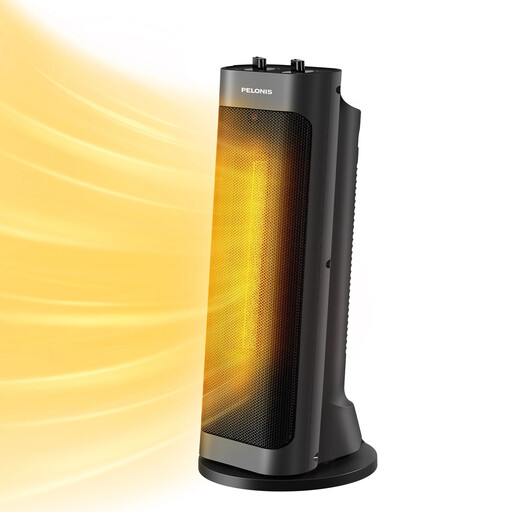
PELONIS 2000 W PTC ceramic fan heater
Could suit you if you’re looking for a portable fan heater with adjustable heat; the product description mentions use in places including an office and living room.
The description lists four heat settings, an adjustable thermostat, 70° oscillation, tip-over protection and overheat protection. Place the heater on a stable surface and keep at least 1 m between the air outlet and any flammable materials.
View at Joybuy
 No image available
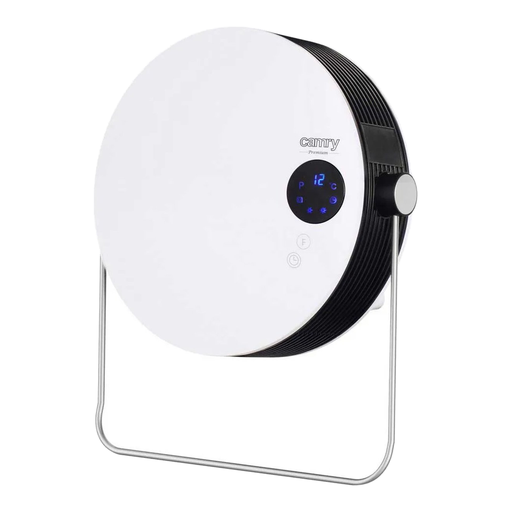
Camry CR 7747 bathroom heater
This model is described as a wall-mounted bathroom heater; it isn’t a freestanding heater for use beside a desk.
The description lists two heat settings of 1400 W and 2000 W, an adjustable thermostat, a weekly timer and IPX2. Wall mounting and a built-in towel rail are also mentioned.
View at Joybuy
 No image available
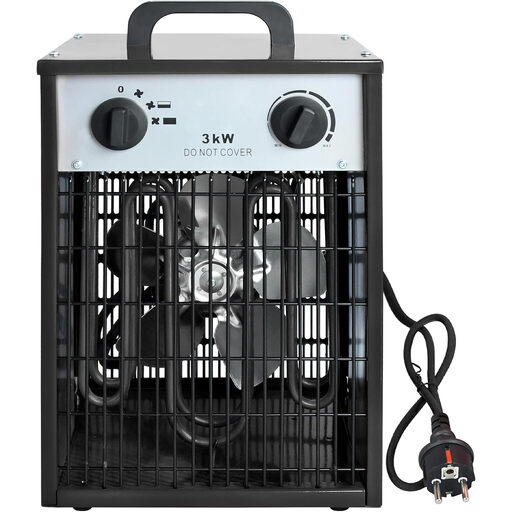
3 kW electric fan heater
The product name lists workshops, garages, warehouses and building sites as places of use; check whether that makes it suitable for a shared lounge.
The product name lists 3 kW, four heat settings and overheat protection.
View at Joybuy
 No image available
OmniHeat 1800 W ceramic fan heater with remote control
Could suit you if you’re looking for a fan heater with oscillation and remote controls; this isn’t a panel heater.
The product name lists 1800 W, a timer, remote control, four heat settings, an adjustable thermostat, oscillation, tip-over protection and overheat protection. The instructions require a stable, level surface and a distance of at least 1 m from flammable materials.
View at Joybuy
Frequently asked questions
Will an infrared panel also work for someone on the other side of the living room?
Not in the same way as it does for someone within its range. Milieu Centraal describes infrared panels as heating for a specific spot; a convection panel is another option if you want warmer air throughout the shared room.
What should I consider when positioning a heater beside a desk?
Follow the installation and clearance instructions for the exact model, and check that a wall socket is accessible. The Netherlands Fire Service recommends plugging electric heaters with high power consumption directly into a socket wherever possible, rather than using a cable reel or multi-socket adaptor.
How can I estimate a panel heater’s electricity use?
Divide the power rating in watts by 1000, then multiply the result by the number of hours the heater is actually heating. This gives you its consumption in kWh. Multiply that figure by your own rate per kWh. A thermostat can affect how long the heater is actually switched on.
What can I do if a panel heater breaks down too soon?
In the Netherlands, statutory guarantees apply in addition to any manufacturer’s warranty: when used normally, the product must meet the standards you could reasonably expect. ACM ConsuWijzer states that the retailer is responsible for offering an appropriate solution if the product is faulty.


