
Shopping for a quick top-up
Want to make a few pancakes soon without adding milk and eggs to your shopping list? Look for a complete mix that only needs water. Just check how many pancakes the pack makes.


For a small top-up shop, don’t choose a mix based on the word ‘premium’ alone: a complete mix is a good fit if you want to keep preparation to a minimum, while for a wholemeal or multigrain option you’ll need to compare the flours on the label. If you’re choosing a gluten-free mix, check separately for egg, milk and any other relevant allergens, and always see what else you’ll need to add at home.
Want to make a few pancakes soon without adding milk and eggs to your shopping list? Look for a complete mix that only needs water. Just check how many pancakes the pack makes.
Is wholemeal flour, a blend of grains or an organic option important to you? Read the ingredients list: multigrain doesn’t automatically mean wholemeal. Also check what you’ll need to add to make the batter.
Do you need a gluten-free mix, or do you need to avoid egg or milk? Check the current packaging, including the ingredients list and any warnings about possible allergens. A gluten-free label alone doesn’t tell you whether the mix contains egg or milk.
First, decide how much you want to make and what you already have at home. Then compare the flours, allergens and extra ingredients listed on the pack.
| What to consider | What to check before buying | Who it matters to |
|---|---|---|
| Minimal preparation | Check whether you only need water and how many pancakes the mix makes. | If I want to make batter quickly, I don’t want to have to go out for milk or eggs after all. For around 25% of consumers, minimal preparation is the main priority. |
| Speciality or organic option | Check the specific product description and what ingredients you’ll need to add yourself. | For a special breakfast, I want to choose a particular option with care, even if it takes more preparation. Around 25% of consumers prioritise this choice of product. |
| Wholemeal and grain content | Check which flours are listed as wholemeal and compare their proportions if these are shown on the label. | When I’m looking for wholemeal flour, I want to know which flours are actually in the mix. The grain content is the main consideration for around 17% of consumers. |
| Gluten-free and allergens | Read the current ingredients list, any warnings about possible allergens and the preparation instructions. | If I need to avoid certain allergens, I want to be able to check both the mix and any ingredients I need to add. This is the main priority for around 17% of consumers. |
| Right-sized quantity | Compare the pack weight with the stated number of pancakes it makes. | If I’m only making a few pancakes, I don’t want lots of mix left over. Getting the right pack size is the main priority for around 16% of consumers. |
A mix containing several grains doesn’t automatically contain wholemeal flour. The name alone won’t tell you which flours have been used.
Look for an explicit mention of wholemeal in the ingredients list, and compare the proportion of each flour if this is shown.
Albert Heijn’s product page says that Koopmans Pannenkoeken Glutenvrij may contain egg and milk. The preparation instructions may also call for ingredients you want to avoid.
Before buying, check the current label as well as the ingredients you’ll add to the batter yourself.
A standard packet mix may call for milk, eggs and cooking fat, while some complete mixes only need water. This affects what you’ll need to have at home for the meal.
Read the preparation instructions before you shop and choose a mix that suits what you have in your cupboards.
Koopmans offers a range of pancake mixes, including complete, multigrain, organic and gluten-free options.
Albert Heijn offers own-brand mixes in several varieties, including multigrain and spelt.
Jumbo offers a 400 g wholemeal pancake mix with specified flours.
PLUS lists a plain pancake mix in both a 200 g bottle and a 400 g pack.
ALDI lists Albona pancake mixes in 400 g packs.
Lidl describes Belbake Pannenkoekenmix Origineel as a 400 g pack that makes around 12 pancakes.
These mixes suit three types of choice for a small top-up shop: a complete mix for minimal preparation, a mix to compare by flour type, and a standard packet mix if you have the required ingredients at home. Check the current label and preparation instructions for each product.
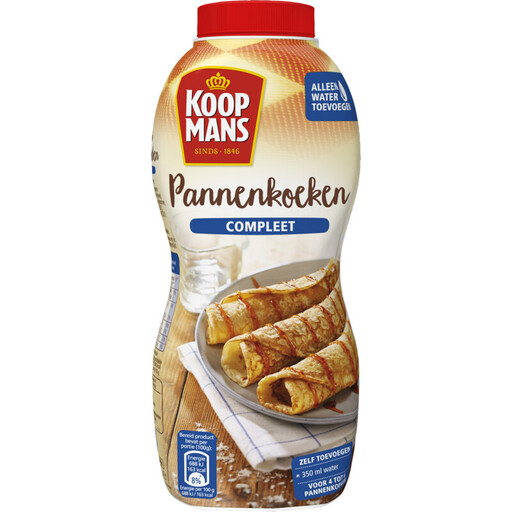 Image unavailable
For a small batch when you don’t want to add milk or eggs to the batter. Joybuy states that you only need to add 350 ml of water to this bottle and that it makes 4 to 6 pancakes. Check the current label for allergen information.
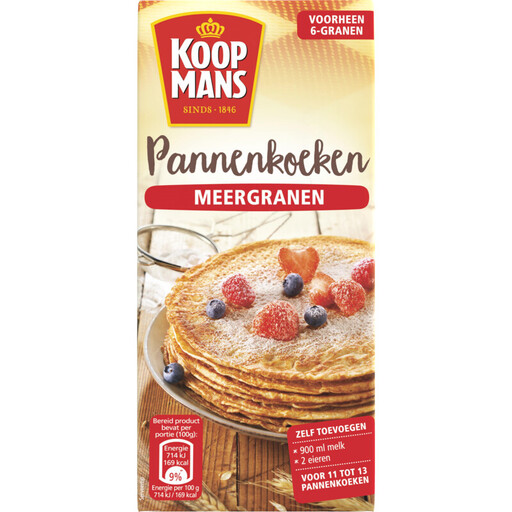 Image unavailable
For anyone who wants to compare the flours in a 400 g packet mix. Check the current label to see which flours are wholemeal and what you’ll need to add to the batter yourself; the product name alone won’t give you the full picture.
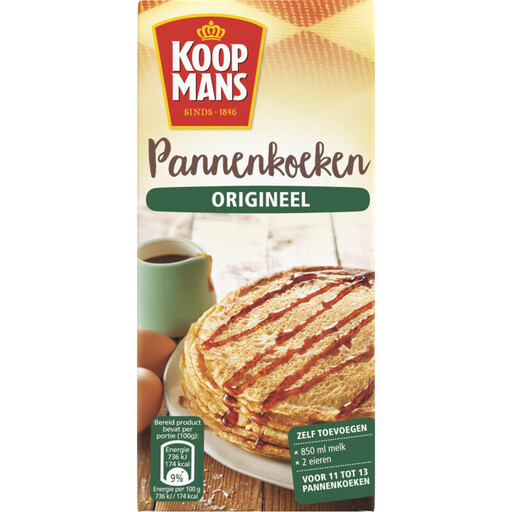 Image unavailable
A standard 400 g packet mix to consider if you already have the ingredients for the batter at home. Read the preparation instructions on the pack; Joybuy specifically states that Koopmans Original batter should not be eaten raw and must be cooked through.
No. Multigrain means that several grains have been used, not that all the flour is wholemeal. Check the ingredients list to see which flours are described as wholemeal; for example, Jumbo lists the proportions of wholemeal wheat, oat and buckwheat flour in its wholemeal mix.
Yes, it can: Albert Heijn states that Koopmans Pannenkoeken Glutenvrij may contain egg and milk. Also check whether the recipe requires you to add milk or eggs.
For a pre-packed mix, check the ingredients list and look for any warnings about the possible presence of allergens. The Netherlands Food and Consumer Product Safety Authority explains that allergens must be clearly stated on the label; use the information on the current packaging to guide your choice.
Follow the preparation instructions and cook the batter thoroughly. Joybuy explicitly states that Koopmans Original batter is not intended to be eaten raw.