
A host catering for fussy eaters
You want to offer a plain and a wholemeal option, clearly labelled and side by side. This means using separate bowls and making room in advance for two types of batter.


Planning a festive pancake get-together with guests who enjoy a familiar plain option as well as people who prefer wholemeal? Making two separate batters gives everyone a clear choice. Check each pack to make sure it’s labelled wholemeal, see what you need to add to the batter and check the allergens listed. Bear in mind that making two types also takes more preparation.
Offering two mixes makes most sense when people around the table have different preferences. If you have one specific requirement, you may prefer to start by checking the label of a suitable mix.
You want to offer a plain and a wholemeal option, clearly labelled and side by side. This means using separate bowls and making room in advance for two types of batter.
Choose by checking for the wholemeal label and reading the ingredients list, rather than relying on a name such as multigrain. This lets you compare the grains in each mix.
You want to keep the number of separate ingredients you need for the batter to a minimum. Compare the preparation instructions for a complete mix with those for a regular option.
First decide whether you want to make one or two types of pancake. Then compare the grains, preparation instructions and allergen information on each pack. The product name alone won’t answer all your questions.
| What to consider | What to check when buying | Who it matters to |
|---|---|---|
| Choice at the table | Compare the stated yield per pack and decide whether you want to make plain and wholemeal pancakes separately. | If not everyone wants the same type of pancake, I’d rather put out two clearly labelled platters, even if that means extra preparation. Around 31% of consumers put catering for different preferences first. |
| Wholemeal option | Look for the wholemeal label and check which types of flour are listed in the ingredients; don’t rely on the word multigrain alone. | I want to be sure I’m buying a mix labelled wholemeal, whatever other flavours are on the table. For around 38% of consumers, this is the main requirement. |
| Preparation | Check what you need to add to the batter and what you’ll need to cook the pancakes. | When I’m making batter just before serving, I want to avoid having to get lots of separate ingredients ready. This is the main consideration for around 23% of consumers. |
| Allergens | Check the current ingredients, allergen information and any cross-contamination warning on the pack. | If someone at the table needs to avoid an ingredient, I can’t rely on a name such as plain or complete. Around 8% of consumers give this check top priority. |
A multigrain mix contains several types of grain, but the name doesn’t tell you whether you’ve chosen a wholemeal option.
Look for the wholemeal label on the specific pack, then check the ingredients list.
These names don’t tell you whether a product contains allergens. For example, Albert Heijn lists wheat in its wholemeal mix; according to PLUS, its complete mix contains wheat, milk and egg.
Check the current label just before buying and preparing the mix. If someone has a relevant allergy, use separate bowls, whisks and pans where necessary to avoid cross-contamination.
The names, grains and preparation methods vary between products from these brands. Compare specific packs rather than assuming that a whole brand shares the same features.
Koopmans offers, among other options, Original, Wholemeal and Complete pancake mixes.
Albert Heijn’s wholemeal mix is an option if you’re looking for a pack explicitly labelled wholemeal.
PLUS describes wholemeal, plain and complete mixes, which you can compare by their grains and preparation instructions.
Jumbo describes a plain mix for anyone looking to compare regular pancake mixes.
ALDI describes Albona pancake mix in multigrain and plain varieties.
Lidl describes a 120 g Belbake multigrain pancake mix.
These two Koopmans options suit different needs: Original is a regular base, while Complete is for when you want to add fewer separate ingredients to the batter. If you’d also like to serve a wholemeal option, choose a separate mix that’s explicitly labelled wholemeal.
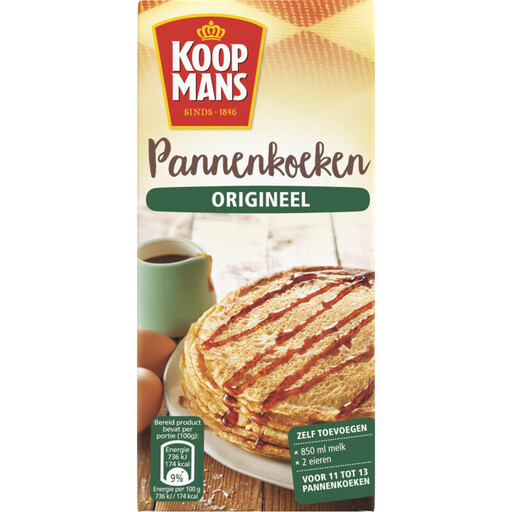 Image unavailable
A regular base if you’d like to make a familiar option alongside a possible wholemeal variety.
The pack contains 400 g of mix. Before cooking, check what you need to add and the latest allergen information.
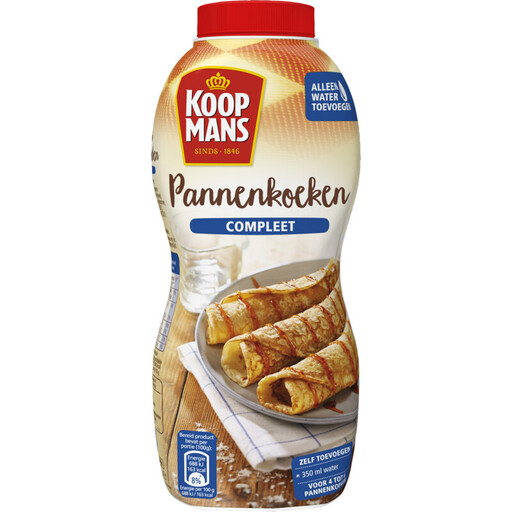 Image unavailable
A complete mix is an option if you want to get fewer separate ingredients ready for the batter; check what you’ll need to cook the pancakes too.
The pack contains 210 g of mix. If you’re cooking for several people, check the yield per pack and read the latest allergen information.
No. Multigrain means a product contains several types of grain; it isn’t a substitute for the wholemeal label. If wholemeal is a requirement for you, check for that label and look at the types of flour in the ingredients list.
Make plain and wholemeal batters separately, and serve the toppings on the side. Clearly label the pancakes or serving dishes, and check the stated yield on each pack so you know how many of each type you can make.
No, the ingredients you need to add vary by product. Albert Heijn says to add milk and eggs to its wholemeal mix, while PLUS lists water for the batter for its Complete mix. Also check the pack to see what you’ll need for cooking.
No. Using different additions doesn’t change the ingredients in the dry mix; for example, Albert Heijn’s wholemeal mix contains wheat. Check the latest label for the specific product, including the allergen information and any cross-contamination warnings.