Choose a plain mix for your store cupboard if you usually have milk, eggs and cooking fat at home when you bake. A complete mix is a better fit if you want to add only water, as directed. For both types, check the pack size, storage instructions and allergens on the packaging.
Which mix is right for you?
Stocking up and comparing pack sizes
If you want to keep several packs in the cupboard, consider the weight per pack and which ingredients you’ll need to add. Compare plain mixes with other plain mixes: a complete mix calls for different store-cupboard essentials.
Looking to avoid having to prepare fresh ingredients
If you’d rather add only water when it’s time to bake, look for a complete mix. Check the preparation instructions for the variety you choose, and read the label if milk or egg is a concern for you.
Looking for specific allergen or grain options
Check each variety against its current label, including the ingredients and any ‘may contain’ statements. The name plain, multigrain or gluten-free doesn’t tell you which other allergens are listed on that pack.
What should you look for when choosing?
First, decide what you want to add when baking. Then consider how much mix you want to store, how the pack should be kept and whether the ingredients suit your needs.
| What to consider |
What to check before buying |
Who it matters to |
| Pack size |
Compare the pack weight within the same type of mix, and check whether the number of servings per pack is stated. |
If I’m stocking up on several packs, I want to estimate how much batter I can make without ending up with too many opened packs to store; around 31% of consumers prioritise this kind of stock planning. |
| Storage |
Read the storage instructions and best-before date on each pack, and check that the packaging is intact. |
I need to be able to keep an unopened pack in my cupboard until I need it. Careful storage is the main concern for around 25% of consumers. |
| Ingredients to add |
Check whether the recipe calls for water, milk, eggs or cooking fat. |
When I want to bake, I’d rather not have to get milk and eggs first; that’s why around 25% of consumers prioritise having as few ingredients as possible to add. |
| Ingredients and allergens |
Read the ingredients list and any ‘may contain’ statement on the pack you choose. |
I need to check whether this particular variety meets my allergen or grain requirements; for around 19% of consumers, this check is the deciding factor. |
Common mistakes
-
Assuming plain and complete mixes are the same
One key difference is what you need to add yourself: the PLUS Naturel variety reviewed requires milk and eggs, while PLUS says its Complete mix is prepared with water.
Read the recipe before stocking up, and decide which extra ingredients you want to have available when it’s time to bake.
With a plain mix, you’ll also need to have the required milk, eggs and cooking fat at home.
-
Assuming the best-before date still applies after opening
According to the Netherlands Nutrition Centre, the best-before date applies to an unopened pack. On its own, the date therefore doesn’t tell you how to store a pack of opened mix.
Once opened, follow the instructions on the pack. Store unopened mix as directed on the label, and don’t keep damaged or damp packaging in your cupboard.
-
Relying on the variety name for full allergen information
Even when a mix has a different recipe, it’s important to check the individual ingredients and any warnings. For example, the gluten-free Koopmans mix sold by PLUS states that it may contain egg and milk.
Check the current label every time you buy, even if you’ve bought the same variety before.
Brands to consider
These brands offer a range of pancake mixes. Always compare the specific variety and the instructions on the packaging.
Koopmans
The range includes Original and Complete, as well as varieties made with other grains.
- For Koopmans Original, the instructions say to add milk, eggs and butter or oil; for the Complete variety reviewed, you add water.
- Check the ingredients and allergens for each variety: their different preparation methods mean the mixes aren’t interchangeable.
Albert Heijn
The range includes AH own-brand mixes as well as mixes from other brands, including plain and complete varieties.
- You can compare varieties with different preparation methods within the range.
- Check the label on the specific pack; the recipe for one variety won’t necessarily apply to another.
Jumbo
Jumbo offers own-brand mixes, including varieties labelled Naturel and Volkoren.
- The 400 g Naturel variety gives you a clear pack weight to plan your store-cupboard supplies.
- According to Jumbo’s product information, this variety contains wheat, buckwheat and oats, and may contain barley, egg and milk. Check the current label if these allergens matter to you.
Belbake (Lidl)
Belbake offers a 400 g Original pancake mix.
- Lidl says the pack makes around 12 pancakes.
- Lidl states that this variety is available in store only; check the ingredients and allergens on the pack there too.
Albona (ALDI)
Albona is an ALDI own brand with plain and multigrain mixes among its range.
- The plain variety comes in a 400 g pack, making it easier to plan how much to keep in your cupboard.
- Check which variety is available in your store, and read the preparation instructions and ingredients on the pack.
PLUS
PLUS offers separate own-brand Naturel and Complete varieties, both in 400 g packs.
- PLUS says to add water to Complete, while the recipe for Naturel calls for milk and eggs.
- The varieties reviewed also differ in their ingredients and allergens, so check the packaging before choosing one.
Pancake mixes on Joybuy
These dry pancake mixes vary in pack size and type. Choose a pack that suits your storage space, and check the preparation instructions and label for that specific mix before use.
 No image available
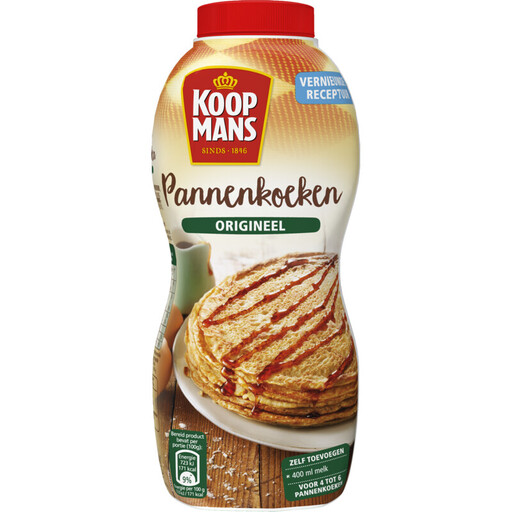
Koopmans Shaker Pancakes 175 g
A 175 g shaker pack if you’d prefer to keep a smaller pack in your cupboard. Check the packaging to see which ingredients you need to add to the batter.
View on Joybuy
 No image available
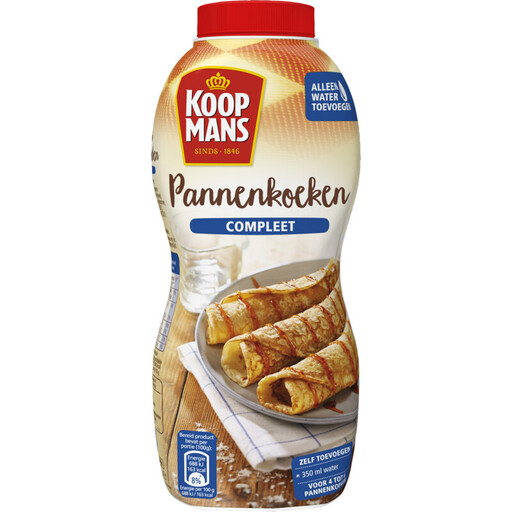
Koopmans Pancakes Complete 210 g
A complete mix in a 210 g pack for anyone who wants to keep extra ingredients to a minimum. Check the pack for the amount of water needed and the allergen information.
View on Joybuy
 No image available
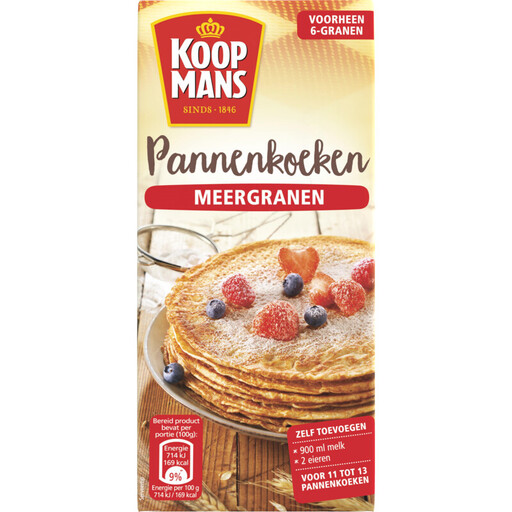
Koopmans Wholegrains Pancake Mix 400 g
A 400 g pack if you’d like to add a grain-based mix to your store-cupboard supplies. Check the current label to see which grains and allergens are listed for this variety.
View on Joybuy
 No image available
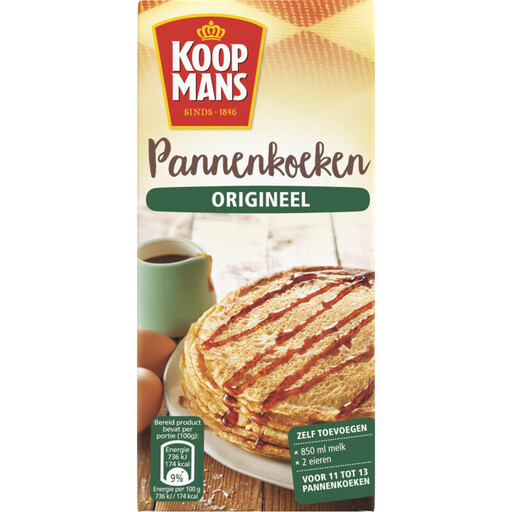
Koopmans Original Pancake Mix 400 g
A classic 400 g mix if you’d like to add the ingredients yourself. Check the recipe on the packaging before topping up your supplies.
View on Joybuy
 No image available
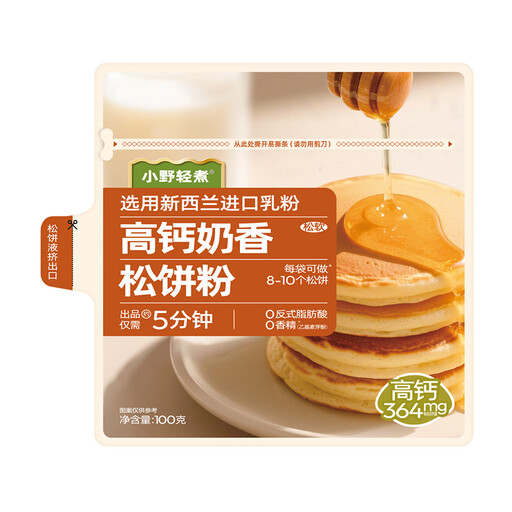
Xiaoyeqingzhu High-Calcium Pancake Mix with Milk Flavor 100 g
A small 100 g pack for anyone short on cupboard space. Check the preparation instructions and ingredients on the packaging; don’t assume the product’s name confirms its nutritional value or suitability for people with allergies.
View on Joybuy
Frequently asked questions
What’s the difference between plain and complete pancake mix?
The main practical difference is what you need to add to the batter yourself. According to PLUS, the recipe for the Naturel variety reviewed calls for milk and eggs, while the PLUS Complete recipe lists water as the ingredient to add. Always check the recipe on the pack you choose.
How should I store an unopened pack of pancake mix?
Follow the storage instructions on the packaging, and keep the pack intact and dry. The Netherlands Nutrition Centre says the best-before date applies while the packaging remains unopened; once you’ve opened it, follow the instructions for that product.
Can I rely on the variety name if I have allergies?
No. Read the ingredients and allergen information on the current pack. The mixes reviewed vary in this respect: even a variety labelled gluten-free may, according to the product information, carry an egg or milk warning.
How do I decide how many packs to keep in my store cupboard?
Check the weight and, if stated, the number of servings per pack, then choose an amount based on how often you plan to bake. Also check the best-before date on each pack and remember to factor in any ingredients you’ll need to add.


