If you want to make pancakes without adding milk and eggs to the batter, choose a complete mix whose instructions call for water only. If you usually have those ingredients at home, an original, plain or wholemeal mix could also be a good choice for your store cupboard. Before buying, check which additions are needed, and always read the current label if you have allergies or dietary preferences.
Which mix is practical for you?
For those who keep basic ingredients in stock
If you usually have milk, eggs and cooking fat at home, you can keep an original or plain mix as a dry base. Check the quantities needed on each pack, though: a pack of mix on its own does not make a complete batter.
For spontaneous bakers without milk or eggs to hand
If you don’t want to rely on fresh ingredients, a complete mix that you prepare with water according to the instructions is more practical. This doesn’t tell you whether the mix itself contains milk or egg; check the ingredients and allergen information for that.
For shoppers comparing labels
If you’re looking for specific grains, checking for allergens or want a plant-based preparation method, the information on the particular pack is more useful than the product type alone. Compare the preparation instructions too: a description of the dry mix doesn’t automatically tell you about the finished batter.
What should you look for when choosing?
Start by checking what you’ll actually need to add to the batter. Then compare the ingredients, allergen information and storage instructions on the packaging.
Complete mix
Choose this option: if you want a mix whose instructions list water as the only addition.
Bear in mind: adding water doesn’t mean the dry mix is free from milk or egg ingredients.
Original or plain base mix
Choose this option: if you can plan for milk, eggs and cooking fat, and want to decide how to prepare your pancakes.
Bear in mind: without the required additions, you can’t follow the standard instructions.
| What to consider |
What to check before buying |
Who it matters to |
| Adding to the batter yourself |
Check how much milk, how many eggs and how much cooking fat the instructions call for. |
I usually have those ingredients at home and want to keep a dry base that I can add to myself. Around 40% of consumers say this flexibility in preparation is a priority. |
| Few additions needed |
Check whether you only need water for the batter and whether the pack size suits the portion you want to make. |
If I don’t usually keep milk and eggs in the fridge, I still want to be able to bake using what I have in the cupboard. For around 30% of consumers, relying on fewer extra ingredients matters most. |
| Ingredients and allergens |
Check the current ingredients, allergen information and any specific claims, such as gluten-free. |
I want to know before stocking up whether the pack suits my ingredient or dietary requirements. Checking the label is the top priority for around 30% of consumers. |
Common mistakes
-
Assuming ‘complete’ means ‘allergen-free’
The instructions for a complete mix may call for water only, while the mix itself contains allergens. Convenience and suitability for someone with an allergy are two different things.
First, read the ingredients and allergen information on the current packaging; then check which additions you’ll need.
-
Stocking up on a base mix without planning for the additions
A dry pack in the cupboard won’t help you put together a spontaneous meal if you’re out of the milk, eggs or cooking fat required by the instructions.
Read the preparation instructions before buying several packs, and check that you usually keep the required ingredients at home.
-
Going by the product name alone
‘Wholemeal’, ‘complete’ or a description of the dry mix doesn’t tell you by itself which ingredients are in the prepared batter or which allergens may be relevant to you.
Compare the label with your requirements when you buy, especially if you’re looking for gluten-free, vegan or lactose-free options.
-
Keeping an opened pack without a clear date
If the packaging and date are out of sight, it’s harder to know which pack to use first. The Netherlands Nutrition Centre advises keeping products in their original packaging wherever possible, so the best-before date remains visible.
Seal an opened pack well and keep the product name and date legible. Put older packs at the front of the cupboard.
Brands to compare
Koopmans
Koopmans offers original, complete, wholemeal and gluten-free mixes, as well as shaker-bottle versions. Compare the variant, not just the brand.
- According to Koopmans, Pannenkoeken Compleet requires only water to be added to the batter.
- A standard variant isn’t automatically gluten-free or free from other allergens; check the label on the pack you choose.
Albert Heijn huismerk
The own-brand range includes plain, multigrain and wholemeal pancake mixes.
- Albert Heijn describes its wholemeal mix as vegan and lactose-free, and also provides a plant-based preparation option.
- The standard preparation calls for milk and eggs; the wholemeal mix contains wheat and gluten. Check both the packaging and preparation method if these characteristics matter to you.
Jumbo huismerk
Jumbo offers complete and plain mixes to compare, including a smaller pack of complete mix.
- A smaller pack may suit you if you don’t want to open a large one for a small portion.
- Jumbo states that its 200 g complete bottle should be used straight away once the batter is prepared.
PLUS huismerk
PLUS offers plain, wholemeal and complete pancake mixes, among other options.
- For its 400 g plain mix, PLUS lists milk, eggs and cooking fat as required ingredients, so you can check in advance what you’ll need to keep in stock.
- Preparation methods vary by variant. Check the ingredients and allergen information for the complete mix too.
Albona
Albona is ALDI’s own brand, which includes a 400 g multigrain pancake baking mix.
- The multigrain variety gives you a different type of product to compare with a plain mix.
- Check the pack to see which ingredients and allergens apply to this variety, and what you need to add during preparation.
Belbake
Belbake is Lidl’s baking brand, with original and multigrain pancake mixes among its products.
- For the original pack reviewed, Lidl lists a weight of 400 g and around 12 pancakes.
- Check the current preparation instructions, ingredients and allergen information on the packaging before stocking up on this mix.
Pancake mixes on Joybuy
These products show different ways to stock your cupboard: dry mixes that need extra ingredients, shaker bottles for smaller portions, and a complete shaker bottle that Koopmans says you prepare with water. Check the current packaging for each product before stocking up on several.
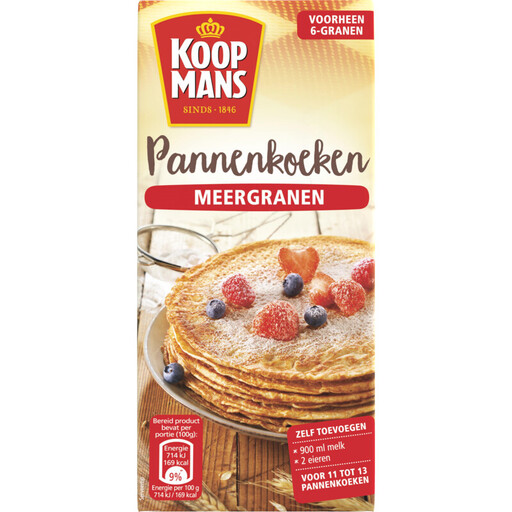 Image unavailable
Koopmans Wholegrains pancake mix 400 g
An option to consider if you prefer a multigrain mix and can plan for the ingredients needed for the batter. The pack contains 400 g; check the quantities in the preparation instructions and the allergen information on the pack before baking.
View on Joybuy
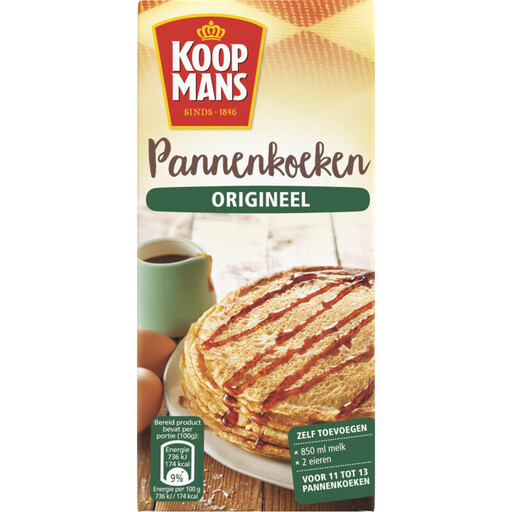 Image unavailable
Koopmans Original pancake mix 400 g
A dry base mix for anyone who can include milk, eggs and cooking fat in their shopping plans. The pack contains 400 g; check the current label for the quantities required and any allergen information.
View on Joybuy
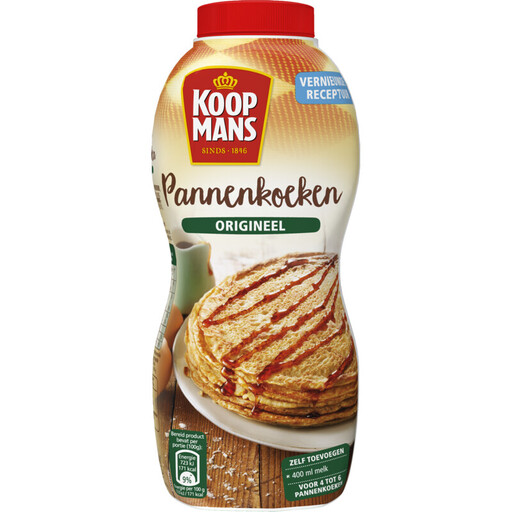 Image unavailable
Koopmans Shaker Pancakes shaker bottle 175 g
A shaker bottle for anyone looking for a smaller pack and who has milk at home for preparation. The bottle contains 175 g of mix; check the packaging for additions and allergen information.
View on Joybuy
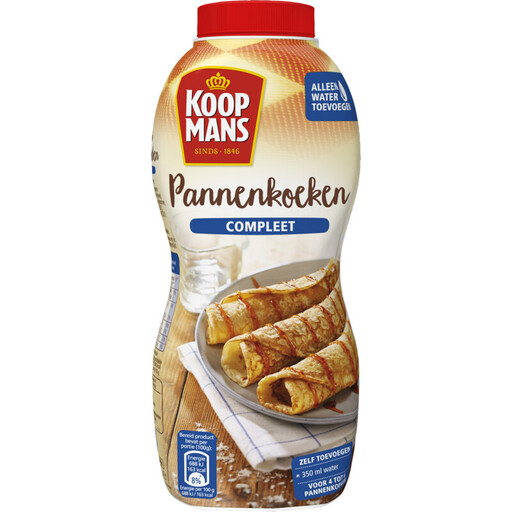 Image unavailable
Koopmans Pannenkoeken Compleet shaker bottle 210 g
According to Koopmans, you add water to this complete shaker bottle, making it a good fit if you don’t want to keep milk or eggs for the batter. The bottle contains 210 g of mix and, according to the product information, makes 4 to 6 pancakes. Check the label for allergen information.
View on Joybuy
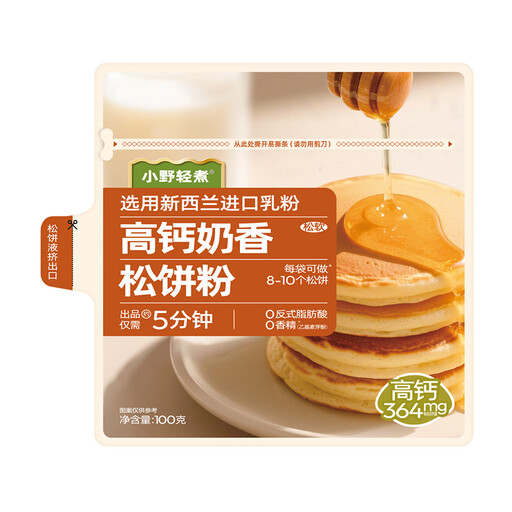 Image unavailable
Xiaoyeqingzhu milk-flavoured pancake mix 100 g
A 100 g pack to consider if you have an egg available as well as water for preparation. Check the preparation instructions, ingredients and allergen information on the pack before adding this mix to your store cupboard.
View on Joybuy
Frequently asked questions
Can I use pancake mix after its best-before date?
A passed best-before date doesn’t automatically mean the mix can no longer be used. According to the Netherlands Nutrition Centre, a best-before date relates to quality: after this date, assess the product by looking at it, smelling it and tasting it. Once opened, follow the storage instructions on the packaging.
How should I store an opened pack of pancake mix?
Seal the pack well and keep the best-before date visible. The Netherlands Nutrition Centre advises keeping products in their original packaging wherever possible; put packs that need using first at the front.
Is a complete pancake mix automatically lactose-free, egg-free or vegan?
No. ‘Complete’ describes what you need to add during preparation, not which ingredients are already in the mix. For these characteristics, check the current ingredients and allergen information for the specific pack.
What should I look for on the label if allergens are important to me?
Check the ingredients list, allergen information and any details about the possible presence of other allergens on the current packaging. The Netherlands Food and Consumer Product Safety Authority stresses the importance of accurate labelling for the safe use of food products; don’t judge suitability by the product name or preparation method alone.


