
Parents who make pancakes regularly
If you bake often, a larger bag can be handy. Before you buy, consider whether you’ll use 1 kg within the storage period, and check which allergens the mix contains.


A 1 kg bag of pancake mix is a good choice if you bake regularly and can store the mix according to the instructions on the pack. For a toddler’s breakfast, the pack size alone says little about what’s in it. Choose a wholemeal option if wholemeal ingredients are your priority, or a complete mix if you want to make the batter with water alone. In either case, check the ingredients and allergens for the specific product. The Voedingscentrum says pancakes can be served as an alternative to the usual bread-based breakfast for children aged 1 to 3.
If you bake often, a larger bag can be handy. Before you buy, consider whether you’ll use 1 kg within the storage period, and check which allergens the mix contains.
If you’re serving pancakes as an alternative at breakfast, you’ll want to know which grains the mix contains. The Voedingscentrum recommends wholemeal and brown bread as options for the usual breakfast of children aged 1 to 3. A wholemeal mix is a separate product choice, so check its ingredients before you buy.
If your child has a relevant food allergy, check the allergen information on the exact pack you’re buying, including any warnings about traces. If you’re packing pancakes for your child, check the rules at their school or nursery too.
First, decide which ingredients and preparation method suit your breakfast plans. Then compare pack sizes: wholemeal mix, complete mix and a 1 kg bag answer different needs, though a product may tick more than one box.
| What to consider | What to check before buying | Who it matters to |
|---|---|---|
| Wholemeal ingredients | Check which grains are listed and how much wholemeal flour the mix contains. Only compare nutritional values when they are based on the same preparation method. | If pancakes are an alternative at breakfast, I want to know which wholemeal grains I’m choosing in the mix. This is the most important consideration for around 45% of consumers. |
| Pack size and preparation | Compare the net weight with how often you plan to bake, and check whether you need to add water, milk or eggs. | If you bake regularly, you’ll want a pack you can use up without making your morning routine more difficult. For around 33% of consumers, having a good balance of cupboard stock and convenience is the priority. |
| Allergens and taking food along | Read the current allergen and traces information for the specific product. If you’re sending food with your child, check the school or nursery rules. | If a child has a relevant allergy or takes food with them, I want to know in advance whether these particular pancakes are suitable. This is the first concern for around 22% of consumers. |
A larger pack mainly tells you how much mix you’ll have in the cupboard. It doesn’t change the ingredients, added ingredients or the place pancakes have in breakfast.
First choose the ingredients and preparation method you want. Only opt for a larger bag if it suits how often you bake and how you can store it.
These words don’t tell you everything about the ingredients. The products reviewed vary in whether they contain gluten-containing grains, milk and egg.
Check the label of the specific product every time you buy, even if you’ve used a mix from the same brand before.
Milk, eggs, cooking fat and toppings all contribute to the finished dish. This means you can’t always compare the nutritional values of dry mix and prepared pancakes directly.
Check what the pack says you need to add, and compare nutritional information only when it is based on the same preparation method.
Allergen information on the label doesn’t tell you about the rules at a particular school or nursery.
Check the local rules before packing food, and if your child has a relevant food allergy, follow the arrangements in place for them.
The differences below apply to the specific products mentioned, not necessarily to every mix from the same brand.
The range includes wholemeal and complete pancake mixes. The packs mentioned here are 400 g.
The PLUS own-brand products mentioned are a wholemeal mix and a complete mix, both in 400 g packs.
ALDI lists a 400 g multigrain pancake mix under the Albona name.
The Oud-Hollandse pancake mix mentioned comes in a 1 kg bag and, according to the supplier, is made with water.
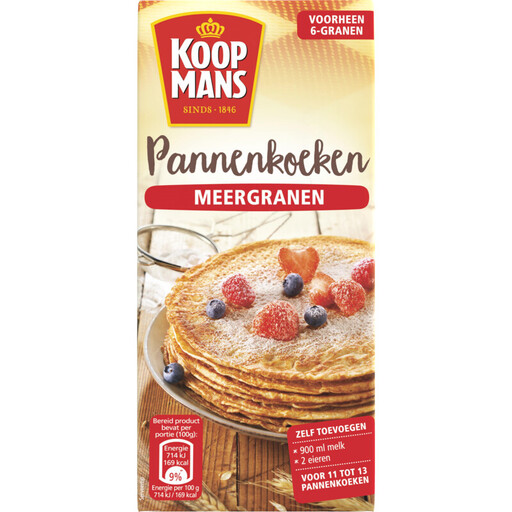
This 400 g Koopmans mix is an option if a smaller pack suits how often you bake. If you’re specifically looking for a single 1 kg bag, this product is a different size.
 No image available
A smaller pack for anyone who serves pancakes as an occasional alternative at breakfast. The pack contains 400 g of mix, not 1 kg. Check the label to see which ingredients you need to add and which allergens apply to this product.
Pancakes are better served as an alternative than as a replacement for all usual breakfasts and lunches. The Voedingscentrum recommends wholemeal and brown bread for children aged 1 to 3, and lists wholemeal pancakes as a possible alternative.
A complete mix may be suitable if you want to make the batter with water alone. According to Albert Heijn, the Koopmans Complete mix mentioned requires 700 ml of water per 400 g pack. Check the ingredients and allergens even with this type of mix: the preparation instructions don’t tell you what is already in the dry mix.
No. The pack size alone says nothing about whether the ingredients are suitable. A 1 kg bag is mainly a practical choice if you bake often and can store the mix according to the pack instructions. According to the supplier, the Van de Meester product mentioned contains gluten, milk and egg.
Read the ingredients list, highlighted allergens and any ‘may contain’ warnings on the exact pack you’re buying. The Voedingscentrum points out that common allergens must be listed on the label. Also check any ingredients you add to the batter yourself.