
Student with a well-stocked cupboard
You already have milk, eggs and cooking fat at home, and want a mix you can make with what you have without needing to buy much else for the batter.


If you already have milk, eggs and cooking fat at home, a plain or original pancake mix is a good choice when you want to avoid buying many extra ingredients. If you want to make batter without adding milk and eggs separately, look for a complete mix and check whether you still need cooking fat. If you specifically want wholemeal, check both the product name and the ingredients: ‘multigrain’ doesn’t automatically mean wholemeal.
You already have milk, eggs and cooking fat at home, and want a mix you can make with what you have without needing to buy much else for the batter.
You don’t want to add milk and eggs to the batter separately. If you choose a complete mix, check whether you’ll still need butter or oil for cooking.
You want to know which grains the mix contains. A product described as ‘multigrain’ doesn’t tell you the same thing as an ingredients list that mentions wholemeal flour.
Start with what you already have at home. Then check whether the preparation instructions and grains suit the pancakes you want to make.
| What to consider | Check before you buy | Who it matters most to |
|---|---|---|
| Ingredients you have at home | Check how much milk, how many eggs and how much cooking fat the instructions call for. | If I already have milk and eggs, I want to choose a mix that suits what’s in my cupboard. Around 30% of consumers prioritise this. |
| Keeping extra shopping to a minimum | Check whether water is enough to make the batter and whether you’ll still need cooking fat. | If I don’t have milk or eggs at home, I want to make the batter with as few extra ingredients as possible. This matters most to around 40% of consumers. |
| Wholemeal or multigrain | Check the product name and ingredients list. Only compare fibre content on the same basis, such as per 100 g of prepared product. | I’m specifically looking for a mix containing wholemeal flour and don’t want to rely on the word ‘multigrain’ alone. This is the main priority for around 20% of consumers. |
| A choice of toppings | Choose a basic mix, then decide which sweet or savoury toppings you’d like. | If we want a range of toppings at the table, a plain base is most important to me. Around 10% of consumers prioritise this. |
A pack of plain mix doesn’t give you ready-made batter. According to the preparation instructions for PLUS plain and AH wholemeal mixes, you’ll also need milk and eggs.
Before you shop, make a list of the mix, the ingredients for the batter and the cooking fat. That way, you’ll know exactly what you still need to buy.
For PLUS Complete batter, you use water, but PLUS also recommends butter or oil for cooking.
Read the full preparation instructions and check that you have everything they list.
PLUS lists ingredients including wheat, milk and egg in its Complete mix. A mix’s name doesn’t tell you which allergens it contains.
If you have an allergy, always check the latest ingredients and allergen information on the packaging.
Koopmans offers original, complete and multigrain pancake mixes. Preparation instructions vary by variety.
Albert Heijn’s own brand includes plain, multigrain and wholemeal mixes.
PLUS offers both a plain mix and a Complete pancake mix.
ALDI lists Albona pancake baking mixes in plain and multigrain varieties.
Lidl lists a Belbake pancake mix labelled ‘original’.
These mixes offer different starting points for a student meal: a variety with a grain descriptor, an original mix and a small pack for which the product information says to use water and an egg. Check the preparation instructions and ingredients for each product before choosing.
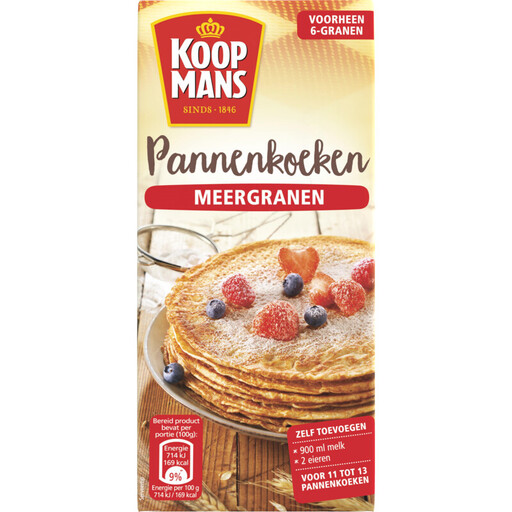 No image available
For anyone looking for a mix with a grain descriptor who wants to check which grains it contains. The pack contains 400 g. If you want a fully wholemeal mix, don’t rely on the name alone. Also check which ingredients you’ll need for the batter and cooking.
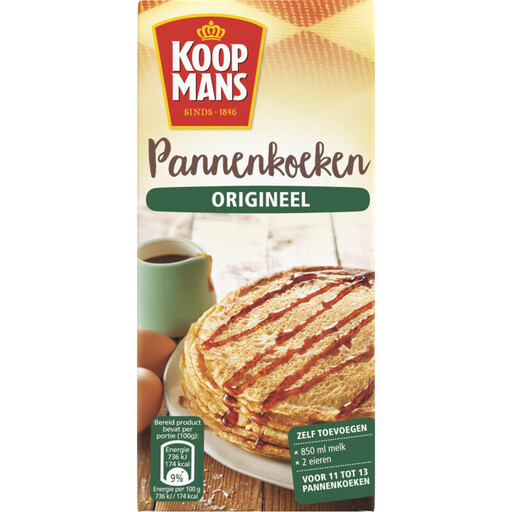 No image available
For anyone who already has milk, eggs and cooking fat at home and wants to use an original mix. The pack contains 400 g. According to the Koopmans recipe, you’ll need 850 ml of milk and 2 eggs, as well as butter or oil for cooking.
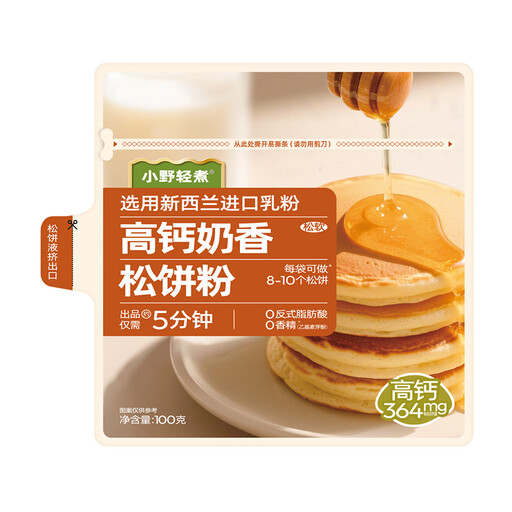 No image available
For anyone looking for a small pack and wanting to use water to make the batter. The pack contains 100 g. You’ll also need an egg: the preparation instructions don’t call for water alone. Check the ingredients and allergens on the latest packaging.
The main difference is what you need to add to the batter. Koopmans recommends milk and eggs for its original mix, while its Complete variety calls for water. PLUS says you’ll also need butter or oil to cook PLUS Complete pancakes.
Don’t rely on the word ‘complete’ to decide. PLUS lists wheat, milk and egg as ingredients in its Complete mix. If you have an allergy, check the latest ingredients and allergen information on the packaging of the mix you want to use.
Look for an explicit wholemeal description and check which types of flour are listed in the ingredients. Albert Heijn calls its mix wholemeal and lists wholemeal wheat flour as an ingredient. The word ‘multigrain’ on its own doesn’t mean the entire mix is wholemeal.