
Small groups keen to avoid leftovers
You want to make enough for your guests and think ahead about what to do with any leftover dry mix or cooked pancakes.


Choose your mix based on how many pancakes you want to make and what you’ll need to add during preparation. A 210 g complete shaker bottle is designed to make 4–6 pancakes, while the 400 g packs reviewed make a larger batch. You only need to add water to a complete mix, but the varieties reviewed contain milk and egg. If any of your guests have dietary requirements or allergies, check the label on the pack you choose.
You want to make enough for your guests and think ahead about what to do with any leftover dry mix or cooked pancakes.
You want to make the batter just before serving without measuring out milk and eggs. In that case, the key difference is whether you choose a standard or complete mix.
You’re serving guests who need to avoid certain ingredients. Check the ingredients and allergens for each variety: even a complete or gluten-free mix may contain ingredients that aren’t suitable for a particular guest.
Decide how many pancakes you want to serve and which ingredients are suitable for your guests. Then compare the preparation method and the other ingredients you’ll need to buy.
| What to consider | What to check before buying | Who it matters to |
|---|---|---|
| Yield and leftovers | Compare the stated yield for each pack and think about whether you can store any leftover dry mix. | When I’m making pancakes for a small group, I want to make enough without ending up with too much leftover batter. Portion planning is the top priority for around 37% of consumers. |
| Preparation | Check whether you need water, or milk and eggs as well, and whether the yield will be enough. | Just before serving, I want to make the batter without needing lots of separate ingredients. This convenience comes first for around 27% of consumers. |
| Ingredients and allergens | Read the current label for the specific variety and check the toppings you’ve chosen too. | If a guest needs to avoid certain ingredients, I want to know exactly what I’m serving. This is the top priority for around 18% of consumers. |
| Everything you need to buy | As well as the mix, include any ingredients required by your chosen preparation method. | I don’t want to discover halfway through preparing the food that I still need milk or eggs. For around 18% of consumers, the total shopping list is the deciding factor. |
The complete mixes reviewed only need water for the batter, but the dry mix contains milk and egg. So the preparation method alone won’t tell you whether it’s suitable for a guest.
Ask which ingredients your guest needs to avoid, then check the ingredients and allergen information on the pack you choose.
A small pack and a 400 g pack can make quite different numbers of pancakes. The stated yield is a better guide for planning than the weight alone.
Decide how many pancakes you want to make, compare the yield on the pack, and store any unused dry mix in a cool, dry, dark place in a tightly sealed container, as recommended by the Netherlands Nutrition Centre.
A pack that’s too small could mean you need to buy a second one for the same get-together.
You may still have pancakes left over, even if you’ve chosen the right portion size. Store them as prepared food, not in the same way as dry mix.
Cool leftovers quickly and place them in a sealed container in the fridge or freezer. The Netherlands Nutrition Centre recommends keeping cooked pancakes in the fridge for two days or in the freezer for three months.
Offers standard, complete, gluten-free and shaker-bottle varieties, among others. Compare the specific pack for its yield, preparation method and ingredients.
The 400 g AH Plain Pancake Mix is a standard mix that makes around 12 pancakes.
The 400 g standard and complete mixes reviewed give you the choice of adding ingredients yourself or making the batter with water.
An ALDI own-brand with a 400 g multigrain mix among its range.
Lidl’s Original Pancake Mix comes in a 400 g pack and, according to the product information, makes around 12 pancakes.
These mixes include small packs for making a few pancakes and 400 g packs for when you want to make more. For shaker bottles, pay particular attention to what else you need to add.
 No image available
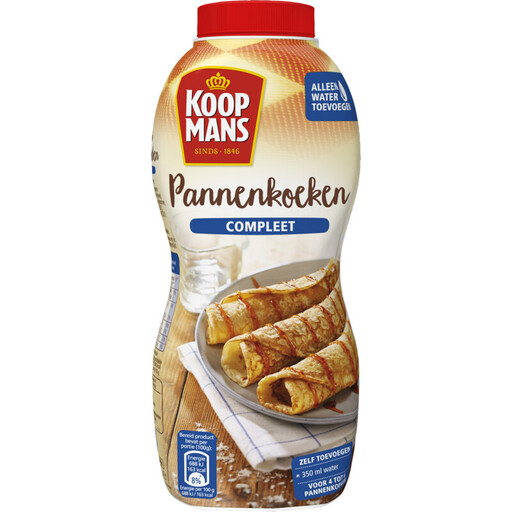
A good choice for making a few pancakes without needing lots of separate ingredients: this complete shaker bottle makes 4–6 pancakes and needs 350 ml of water. Check the label if a guest needs to avoid wheat, milk or egg.
 No image available
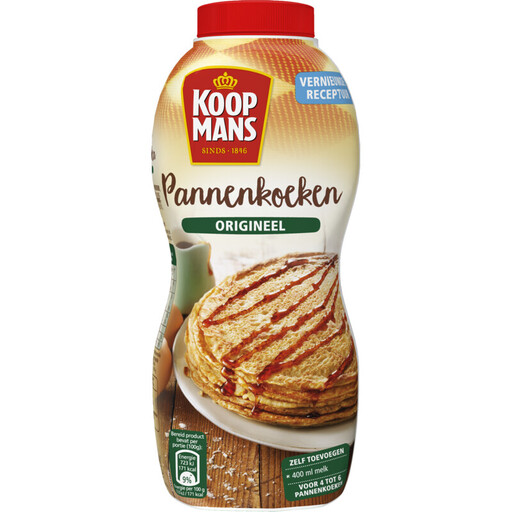
A small shaker bottle for making a few pancakes. Unlike a complete mix, this variety needs milk added. Before buying, check the preparation method, yield and allergens on the label.
 No image available
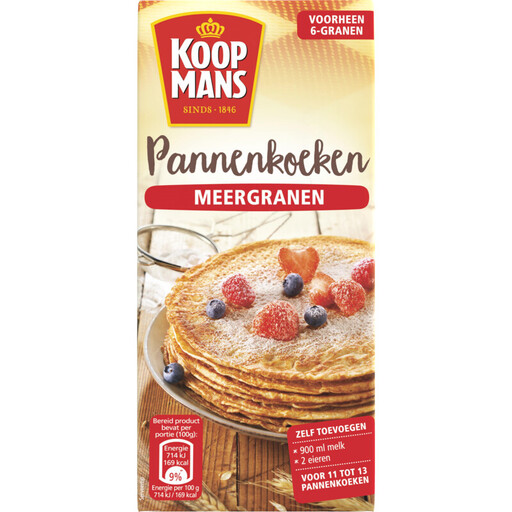
A 400 g pack to consider if you want to make more pancakes. Compare the yield and additional ingredients listed on the pack with your plans, and check the ingredients if any guests have dietary requirements or allergies.
 No image available
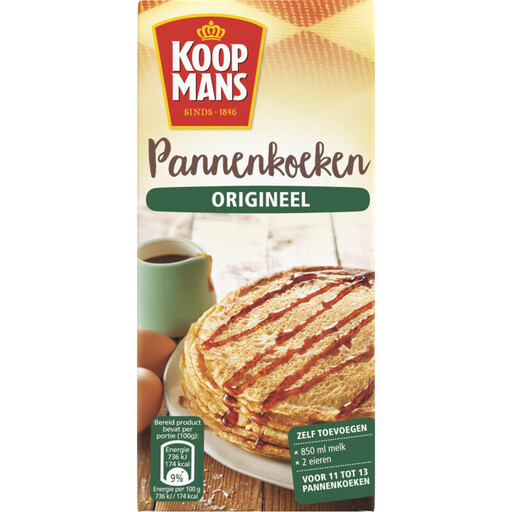
A standard mix for making a larger batch: according to the Joybuy product information, the pack makes 11–13 pancakes. You’ll need to add milk and eggs to this variety; check the label if your guests need to avoid certain ingredients.
Use the yield stated on the pack as your guide, rather than looking at the weight alone. The 210 g Koopmans shaker bottle reviewed makes 4–6 pancakes; the 400 g packs reviewed make a larger batch, depending on the variety. Also think about what else you’ll be serving.
Not without checking the ingredients. The complete mixes reviewed only need water for the batter, but the dry mix contains milk and egg. Ask your guest what they need to avoid and read the label for the variety you’ve chosen.
Store opened dry mix in a cool, dry, dark place in a tightly sealed container. For cooked pancakes, the Netherlands Nutrition Centre recommends keeping them in the fridge for two days or in the freezer for three months; cool them quickly and store them in a sealed container.
If a guest has an allergy or dietary requirement, check the current label on the pack you’re using too. The Netherlands Food and Consumer Product Safety Authority explains that allergens must be clearly identified on the labels of pre-packed foods. Also check the toppings and other ingredients in the meal separately.