Choose a wholegrain or multigrain mix if the grain base is your priority, and a plain mix if you mainly want a base you can top with different flavours. A complete mix means less measuring, as you just add water, but the examples we looked at also contain allergens such as wheat, egg and milk. If you’re making pancakes for school or after-school care, always check the packaging for the variety you’ve chosen and agree any dietary arrangements in advance.
Which option is right for you?
Families looking for a wholegrain base
For a pancake meal at the start of the school year, you could choose a mix made with wholegrains. Compare the ingredients of the exact variety and take your child’s taste preferences into account. The wholegrain mixes we looked at contain gluten-containing grains.
Parents who want less measuring
A complete mix that only needs water can save preparation time during a busy school week. But that doesn’t mean it’s suitable for people with allergies: check the chosen mix for wheat, egg and milk, among other things.
Families with dietary arrangements at school
If you’re packing pancakes for your child or making them for a class activity, you’ll need to know what arrangements apply to your child and the group. The Food Allergy Foundation advises parents to discuss food allergies with the school before the school year starts.
What should you look for when choosing?
Start with what matters most to your family: the grain base, a familiar plain mix, less preparation or ingredients that fit the school’s arrangements. Then compare the packaging and preparation instructions for specific products.
| What to consider | What to check when buying | Who it matters to |
|---|
| Grain base |
Check which grains are listed in the ingredients. Only compare fibre content on a like-for-like basis, for example per 100 g of prepared product. |
If I want to choose a mix made with wholegrains, the ingredients list gives me a useful guide, although it doesn’t tell me whether my child will enjoy the taste. For around 31% of consumers, this grain base is the main priority. |
| Plain base |
Check the preparation instructions, how many pancakes each pack makes and the allergens listed. |
When everyone at the table has different preferences, I want to choose whether to add sweet or savoury toppings. For around 31% of consumers, a familiar base that works with a variety of toppings matters most. |
| Preparation |
Check what you need to add to the mix and how many pancakes the packaging says it makes. |
On a busy day, I want to measure fewer ingredients while still making enough batter for the meal. Around 23% of consumers make convenience their top priority. |
| Allergens and arrangements at school |
Read the allergen information and any cross-contamination warnings on the current packaging; check what arrangements apply at school or in after-school care. |
If a food allergy or an arrangement for a class activity is a factor, I need to know whether this particular mix and preparation method are suitable. For around 15% of consumers, this is the most important consideration. |
Common mistakes
-
Assuming wholegrain means gluten-free
The wholegrain mixes we looked at from Koopmans, Jumbo, AH and PLUS contain wheat, oats or other gluten-containing grains. So a wholegrain label doesn’t mean a mix is suitable if gluten needs to be avoided.
If you need to eat gluten-free, look for a product that is explicitly labelled as gluten-free and read the allergen information and any warnings on the current packaging.
-
Assuming ‘just add water’ means allergen-free
A complete mix can save preparation time, but the complete mixes we looked at contain wheat or gluten, milk and egg. Convenience doesn’t tell you whether a product is suitable for someone with an allergy.
Check the ingredients of the exact complete mix before deciding whether it’s suitable for the people eating it and any arrangements at school.
-
Waiting until you’re cooking to check arrangements at school
For a school meal or class activity, arrangements covering food allergies, hygiene and alternative products may affect what you can send in.
If your child has a known food allergy, discuss in good time with the school or after-school care provider what arrangements apply to your child and the activity, as the Food Allergy Foundation also advises.
Brands to compare
The mixes we looked at from these brands vary in their grain base, preparation and allergens. So compare the specific variety on the packaging, not just the brand name.
Koopmans
The range we looked at includes original, wholegrain, complete and gluten-free varieties.
- Product information from Albert Heijn and Jumbo explains what you need to add to prepare several varieties.
- The regular varieties we looked at contain gluten-containing grains; the complete mix we looked at also contains egg and milk.
AH
The own-brand range includes plain, multigrain and wholegrain pancake mixes.
- The ingredients list for AH Wholegrain names wholemeal wheat flour as its base.
- The plain and multigrain varieties we looked at contain gluten-containing grains. Also check what the preparation instructions ask you to add.
Jumbo
The own-brand range includes wholegrain, plain and complete varieties we looked at.
- According to Jumbo, its wholegrain mix contains 75% wholemeal wheat flour and 20% wholemeal oat flour.
- You add water to the complete mix we looked at, but this variety contains wheat, milk and egg.
PLUS
The wholegrain and complete mixes we looked at let you choose between a wholegrain base and a mix prepared with water.
- PLUS states that its wholegrain mix contains 75% wholemeal wheat flour and 20% wholemeal oat flour.
- The wholegrain mix contains gluten and may contain egg and milk; the complete mix we looked at contains wheat, milk and egg.
Albona
ALDI offers a multigrain and a plain pancake baking mix under its Albona own brand.
- The two varieties give you a choice between multigrain and plain.
- If you have allergies or dietary requirements, make your decision based on the ingredients and allergens listed on the packaging for the variety you choose.
Pancake mixes at Joybuy
These products offer a choice between a mix with a grain-based label, an original base and a complete shaker bottle for making a small batch. If you’re using them for school, pay particular attention to the variety and allergens listed on the packaging.
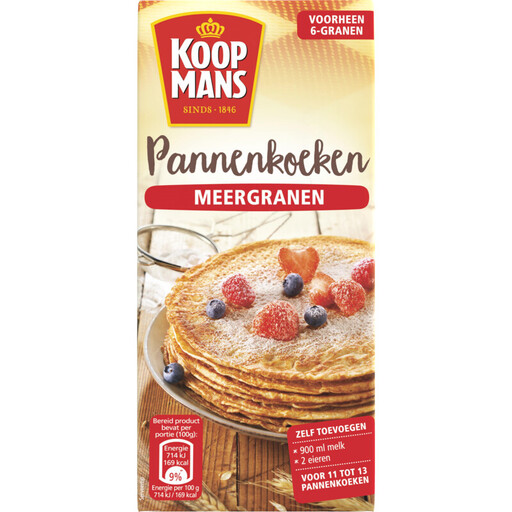 Image unavailable
Koopmans Wholegrains Pancake Mix 400 g
An option to consider if the grain base matters to you. Check the packaging for this variety to see which grains it contains and which allergens are listed; a grain-based label doesn’t mean it’s gluten-free.
View at Joybuy
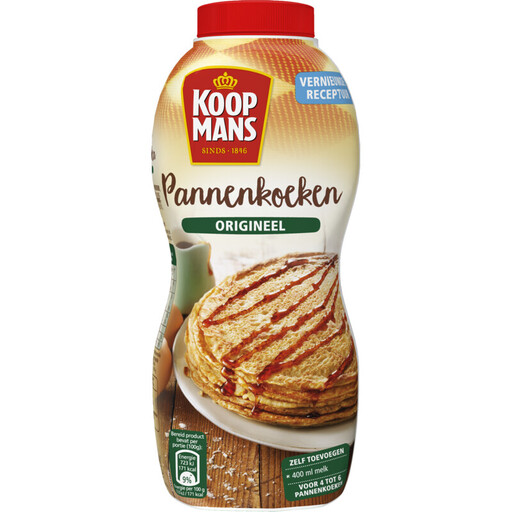 Image unavailable
Koopmans Shaker Pancakes 175 g
The shaker bottle format could be useful if you want to make a small amount of batter without using a large mixing bowl. Check how much liquid the packaging says to add and check the allergens before making pancakes for school.
View at Joybuy
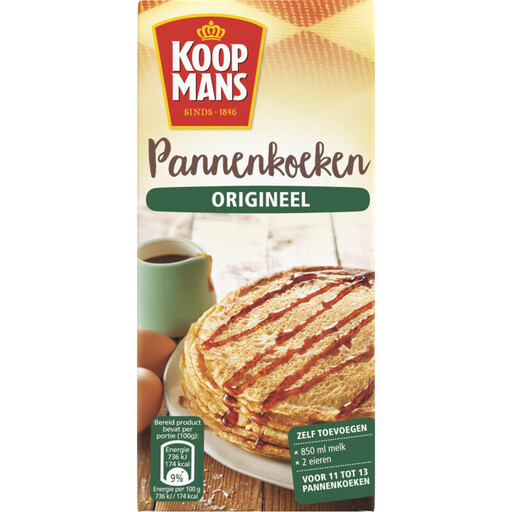 Image unavailable
Koopmans Original Pancake Mix 400 g
This original mix makes a plain base that you can top with sweet or savoury ingredients. For the Koopmans Original mix we looked at, Albert Heijn says to add milk, eggs and butter or oil; follow the instructions on the pack you use and check the allergens.
View at Joybuy
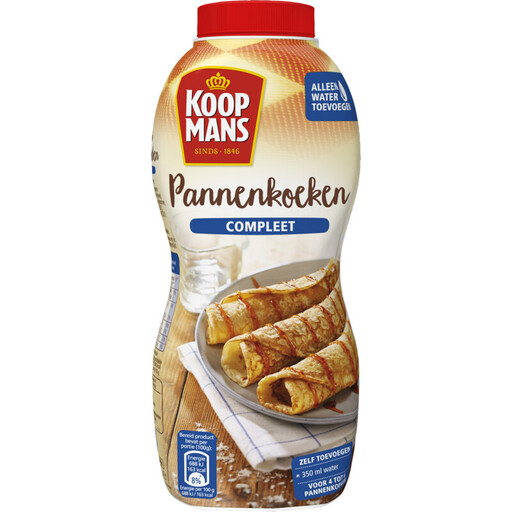 Image unavailable
Koopmans Pancakes Complete 210 g
This complete shaker bottle means less measuring when you’re making a small batch. Joybuy says to add 350 ml of water, which makes 4 to 6 pancakes. Check the current packaging: this variety lists wheat, egg and milk.
View at Joybuy
Frequently asked questions
Is wholegrain pancake mix automatically gluten-free?
No. The wholegrain mixes we looked at from Koopmans, Jumbo, AH and PLUS contain wheat, oats or other gluten-containing grains. If gluten needs to be avoided, check that the product you choose is explicitly labelled as gluten-free and read the current packaging.
Why should I read the label again if I buy the same mix regularly?
Because you need to check the ingredients and allergens on the pack you’re actually using. Also check what you add to the batter yourself, especially if a food allergy or an arrangement at school is a factor.
What does a warning about possible cross-contamination mean?
This type of warning tells you that an allergen may be present due to cross-contamination; read it alongside the ingredients list. According to the Netherlands Food and Consumer Product Safety Authority, rules have applied in the Netherlands since 1 January 2026 on when and how manufacturers must include these warnings on labels.


