
If you’re making pancakes for several lunches
You’re making a batch of pancakes at home and want to know how many you’ll get from a pack. For a standard mix, check which ingredients you’ll need to add yourself.


A standard or multigrain mix is a good choice if you can add milk and eggs at home and want to make several pancakes. If you’d rather measure out fewer ingredients, look for a complete mix or shaker bottle that only needs water. Cook the pancakes all the way through and leave them to cool before packing them. Check the label and your school’s allergen policies, too.
You’re making a batch of pancakes at home and want to know how many you’ll get from a pack. For a standard mix, check which ingredients you’ll need to add yourself.
You want to keep preparation simple. A complete mix or shaker bottle that only needs water could be a good fit, although you’ll still need to cook the pancakes.
You need to take ingredients such as gluten, eggs or milk into account, or follow the school’s policies. Read the current label for the exact variety you’ve chosen, and check what you’re adding to the pancakes, too.
When making pancakes at home for a secondary school lunch, first consider which ingredients and allergens are suitable. Then compare the preparation, yield and nutritional information of the varieties that meet your needs.
| What to consider | What should you check? | Who is this important for? |
|---|---|---|
| Type of grain and what’s in the lunch | Compare the types of grain and the nutritional information for the prepared product, using the same preparation method. Choose toppings and side dishes separately. | If I’m putting together the whole lunch, I look beyond how convenient the mix is. Around 30% of consumers prioritise what goes into the lunch. |
| Preparation at home | Check whether you need to add water, milk or eggs, and how long it will take to cook the pancakes all the way through. | On a busy school morning, I want to measure out as few ingredients as possible, but I still need to cook the pancakes. Simple preparation is the top concern for around 30% of consumers. |
| Allergens and dietary requirements | Read the label for the exact variety, including any ‘may contain’ warnings. Check toppings and school policies, too. | If gluten, eggs or milk need to be avoided, I need to know what’s in both the chosen mix and the prepared recipe. This is the top priority for around 10% of consumers. |
| Yield and portions | Compare the stated number of pancakes per pack with the number of lunches you want to make. | For a few lunches, I want to make the right amount without unnecessary leftovers; if I’m making them ahead, a larger batch may be more useful. Around 30% of consumers prioritise getting the number of portions they need. |
The varieties we looked at differ: standard mixes contain gluten-containing grains, while even a gluten-free mix may list eggs or milk.
Read the current label on the exact pack you’re buying. Also check the ingredients in any toppings and the school’s policies.
For the mixes we looked at, ‘complete’ means you only need to add water to make the batter. The batter isn’t intended to be eaten raw.
Cook the pancakes all the way through at home and leave them to cool before packing them.
The range we looked at includes standard, complete, multigrain and gluten-free pancake mixes.
Albert Heijn lists own-brand mixes in varieties including plain, complete and wholemeal.
The Jumbo Naturel we looked at is a 400 g pancake mix.
The PLUS Naturel we looked at is a 400 g pancake mix.
These two mixes are suitable if you’re making pancakes ahead at home: one variety made with several types of grain and one original mix. You’ll need to cook the pancakes before packing either one.
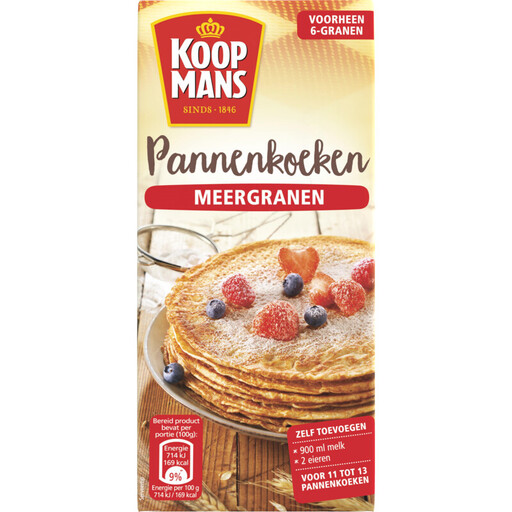 Image unavailable
An option if you’re making pancakes ahead at home and want to compare a mix made with several types of grain. The pack contains 400 g of mix. Check the label for allergens and the ingredients needed for preparation.
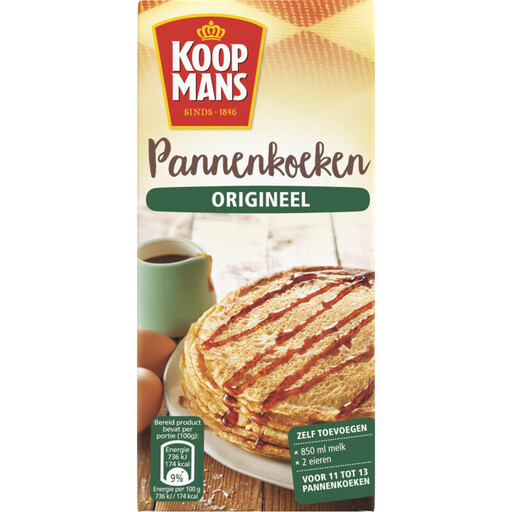 Image unavailable
A standard mix for anyone who wants to make several pancakes at home and can add milk and eggs. The pack contains 400 g of mix. Check the label for allergens and cook the batter all the way through.
No, don’t pack raw batter. The product information we looked at says the batter must be heated all the way through. Cook the pancakes at home and leave them to cool before packing them.
Not necessarily. According to the product information at Albert Heijn, the Koopmans Glutenvrij mix we looked at may contain eggs and milk. Read the current label on the exact pack and check what you’re adding to the batter, too.
The Koopmans Compleet mix and Compleet shaker bottle we looked at only need water added to the mix. You’ll still need to cook the batter, so check the preparation instructions for your chosen variety.