
Organisers of a large baking session
Parents, school teams and volunteers baking lots of pancakes in one go need to decide whether several small packs are practical or a professional-size pack better suits their baking plans.


For a one-off school lunch or a smaller baking session, 400 g packs are handy if you want to choose the quantity and ingredients for each variety. A 5 kg professional mix is worth considering if you regularly bake for a large group. Before buying, check the yield, preparation method and storage instructions for the exact variety. For a school lunch, check the ingredients, toppings and preparation method against the school's allergen arrangements in advance.
Parents, school teams and volunteers baking lots of pancakes in one go need to decide whether several small packs are practical or a professional-size pack better suits their baking plans.
If you're preparing or packing pancakes for pupils, make sure the specific mix, any added ingredients and the toppings meet the arrangements for those pupils. You should also consider the risk of cross-contact during cooking.
When there's little time to gather individual ingredients, the preparation method for an all-in-one mix can make a difference. You still need to check the allergens.
First, work out how many pancakes you want to make and on which days. Then choose the pack size and preparation method. For a school lunch, check the label and the school's allergen arrangements before using the mix.
| What to consider | What to check before buying | Who it's important for |
|---|---|---|
| Quantity | Compare the stated yield with the number of people and baking sessions. For a 5 kg pack, also check the storage instructions after opening. | If I regularly bake for a large group, I don't want to have to plan around lots of individual packs; around 36% of consumers prioritise a suitable quantity they can use repeatedly. |
| Allergens and school arrangements | Read the label for the exact variety, and discuss toppings and how to prevent cross-contact with the school. | If a pupil needs to avoid specific allergens, I want to know which ingredients and preparation methods are suitable before I start baking. This is the main concern for around 29% of consumers. |
| Preparation | Check which ingredients you need to add and whether your pans and available baking time suit the planned serving time. | When there's little help in the kitchen, I want to prepare as few individual ingredients as possible; around 21% of consumers give this preparation the highest priority. |
| Type of mix | Compare the ingredients and nutritional information for the exact variety, including anything you add to the batter. | If I want to serve a particular type of grain or another variety, I want to be able to see what's in it on the label. This product choice is the deciding factor for around 14% of consumers. |
Koopmans Professioneel lists 5 kg pancake mixes. The supermarket ranges mentioned mainly include 400 g packs. Pack size alone tells you nothing about the yield or preparation method of a specific professional mix.
For a large baking session, you'll need to buy and open several 400 g packs. A 5 kg professional pack, on the other hand, calls for a plan for using and storing it.
Work out the number of portions and baking sessions planned. Then compare the yield, any ingredients you need to add and the storage instructions for the exact products.
For the mixes mentioned, ‘complete’ mainly describes what else you need to add during preparation. It doesn't mean that ingredients such as wheat, milk or egg are absent.
Read the allergen information on the pack and check it against the arrangements for the pupils who will be eating.
A gluten-free mix doesn't automatically make the finished pancake suitable: added ingredients, toppings and cross-contact during preparation all matter too.
Agree the full preparation method with the school in advance, and check the ingredients and method for the pupil concerned.
Preparing food separately may require extra equipment and preparation time.
Ingredients and allergen information can change. A product page you looked at previously is no substitute for the information on the pack you're actually using.
When you buy the product and before you start baking, check the current label, use-by information and the school's arrangements.
Compare the specific variety and pack size for each brand. Preparation methods and allergen information can vary even within the same range.
Koopmans offers mixes for consumers and also lists 5 kg pancake mixes through Koopmans Professioneel.
The range includes own-brand pancake mixes and varieties from Koopmans, including 400 g packs.
Jumbo offers, among other products, a 400 g organic pancake mix that lists wheat as an ingredient.
PLUS offers 400 g plain and complete pancake mixes, with different preparation methods.
ALDI lists 400 g pancake mixes under the Albona brand, including a plain variety.
Lidl lists Belbake Original Pancake Mix in a 400 g pack, with a yield of approximately 12 pancakes.
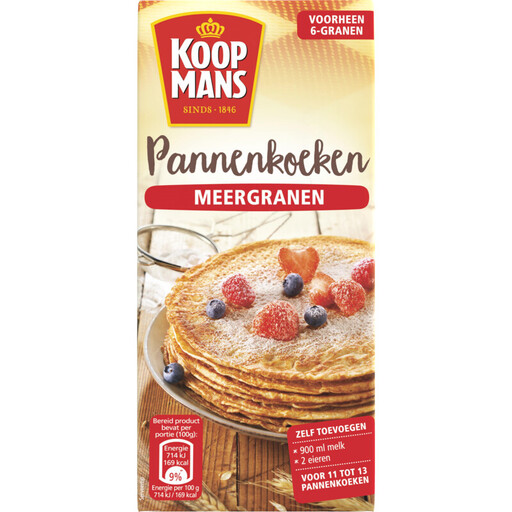
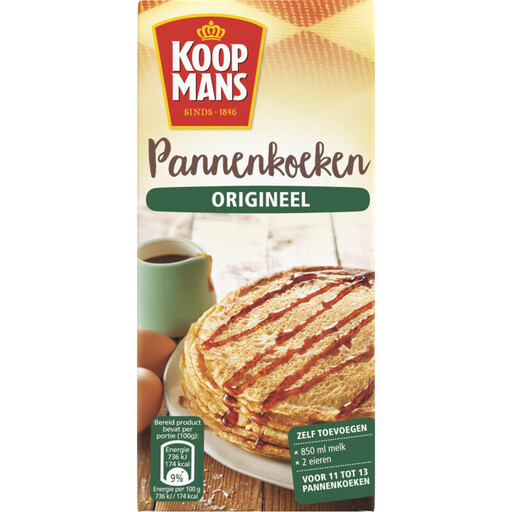
These two Koopmans mixes come in 400 g consumer packs, suitable for a smaller or occasional baking session. If you're catering for a larger group, work out how many packs you'll need. Before using them for a school lunch, check the current packaging and the school's arrangements.
 No image available
A consumer pack for a smaller baking session; if you're catering for more people, work out in advance how many packs you'll need.
You'll also need milk, eggs and baking fat to prepare it. Before baking for pupils, check the current pack for cereals containing gluten and the possible presence of milk or egg.
 No image available
A consumer pack for a smaller school event or a family baking session; according to Koopmans, one pack of the original mix makes 11–13 pancakes.
You'll need milk, eggs and baking fat to prepare it. Before use, check the current label for cereals containing gluten and the possible presence of other allergens, and agree your choice with the school.
Yes, provided the specific ingredients and preparation method meet the arrangements for the pupils who will be eating. Check the current label and any added ingredients. The Voedingscentrum stresses that pupils must be given accurate information about food served at school.
No. The added ingredients, toppings and preparation method must also be suitable. Koopmans states that its gluten-free mix complies with AOECS standards, but also describes preparing it with milk and eggs. Agree the full preparation method with the pupil's school and prevent cross-contact.
For the mixes mentioned, ‘complete’ means you need to add fewer individual ingredients to the batter. Koopmans says to add water to its complete mix; PLUS says to add water and baking fat or oil to its complete variety. The word doesn't mean the mix is free from allergens, so read the label.
Before preparation, agree which ingredients and toppings will be used and how pupils will be given information about them. The Voedingscentrum highlights the importance of providing accurate information about food served; also follow the food safety and allergen arrangements of the school in question.
No. Also read the label on the pack you actually receive. PLUS says that product information can change, so check the ingredients and allergen information again just before use.