
Organisers catering for fussy eaters
You want to offer a familiar pancake without making preparation more complicated than necessary. An original or plain mix is a sensible starting point; check what you need to add to the batter for each product.


Choose an original or plain mix if you want to offer fussy eaters a familiar pancake; you could also provide a separate wholemeal or multigrain option. A complete mix can reduce the number of separate ingredients you need to add, but that doesn’t tell you whether it’s suitable for people with allergies. Before buying, ask what the school’s policy is and check the packaging of the mix you choose.
You want to offer a familiar pancake without making preparation more complicated than necessary. An original or plain mix is a sensible starting point; check what you need to add to the batter for each product.
You want to offer a wholemeal or multigrain option alongside the classic choice. Compare the grains and nutritional information on the packaging, and check the allergens separately.
Before buying, you need to know what the school allows and which allergies or dietary requirements are relevant. The Netherlands Nutrition Centre points out that school policy can determine what children are allowed to bring in as a treat.
Start by checking the school’s rules. Then decide whether familiarity, ease of mixing or an additional grain option matters most, and work out how much batter you’ll need.
| What to consider | What to check before buying | Who it matters to |
|---|---|---|
| Familiar flavour | Check whether it’s an original or plain variety, and how many pancakes the manufacturer says the pack will make. | If children are fussy, you may want to offer a familiar base and let them choose their own toppings. Around 36% of consumers put familiarity first. |
| School rules and allergens | Ask what the school allows, and read the ingredients and allergen information on the pack you buy. | You want to avoid offering a pancake that doesn’t meet the school’s rules or known allergy requirements. For around 29% of consumers, suitability is the top priority. |
| Preparation | Compare which ingredients you need to add and how much batter each pack makes. | If you’re baking as a team, you’ll want to keep mixing simple and avoid running short of ingredients during preparation. Around 21% of consumers put convenience first. |
| Wholemeal or multigrain | Compare the grains and nutritional information listed, and check the allergens too. | You may want to offer a clearly labelled wholemeal or multigrain option alongside a regular pancake. Around 14% of consumers give this extra choice top priority. |
A wholemeal or multigrain name doesn’t mean a mix is gluten-free. For example, the product information for PLUS Wholemeal lists cereals containing gluten.
Read the allergen information on the exact pack. If you need a gluten-free option, make sure the preparation and packaging also meet the school’s rules.
According to the Netherlands Nutrition Centre, a school’s policy can determine what children are allowed to bring in as a treat. Your chosen mix and how you package it need to comply.
Before buying, ask the school about its rules on ingredients, allergens, labelling and packaging.
Adding water describes how to prepare the mix, not which allergens it contains. The product information for PLUS Complete lists wheat, milk and egg, among other ingredients.
Choose a complete mix if it suits the way you want to prepare the batter, but always check allergens separately on the packaging.
Albert Heijn warns that product ingredients, nutritional values and allergen information can change.
Use the packaging of the product you actually buy for your final check, and keep the information available when you package the pancakes.
Koopmans offers original, wholemeal, multigrain and complete pancake mixes, among other varieties.
The AH range includes plain, multigrain and wholemeal mixes, among other varieties.
Jumbo’s own-brand mixes include plain, complete and wholemeal varieties.
PLUS offers a wholemeal mix and a complete pancake mix, among other products.
ALDI describes a 400 g Albona multigrain pancake mix.
Lidl lists a 400 g Belbake Original Pancake Mix.
These mixes offer options for an original pancake, a grain-based variety or preparation with fewer separate ingredients. Compare the amount in each pack with your baking plans, and make sure every variety you choose meets the school’s rules.
 No image available
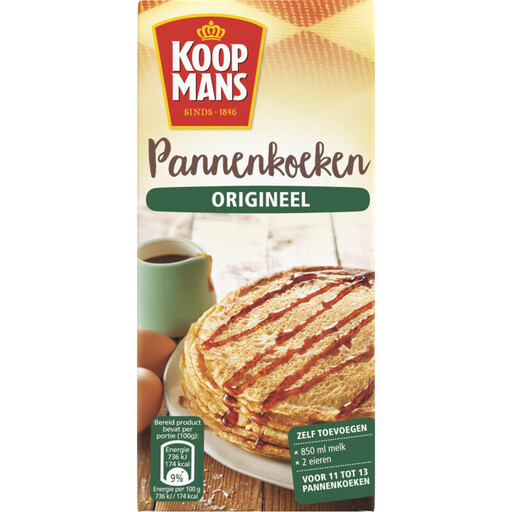
An original mix to consider if you want to offer a familiar pancake. Before baking for the school fair, check the packaging for the ingredients you need to add and the allergen information.
 No image available
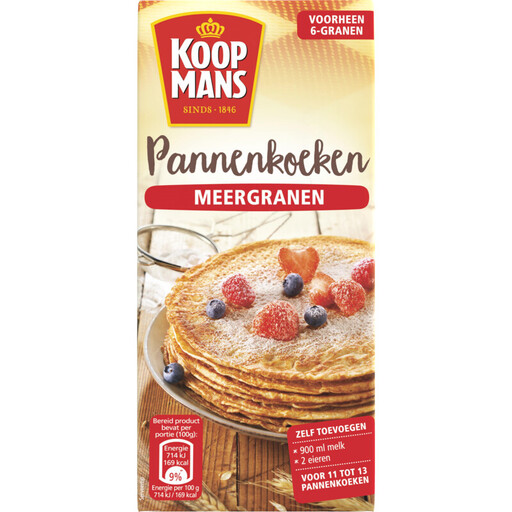
A grain-based variety to consider alongside an original mix. Check the label for the exact grains, nutritional information and allergens; the name alone doesn’t tell you whether it’s suitable for someone avoiding gluten.
 No image available
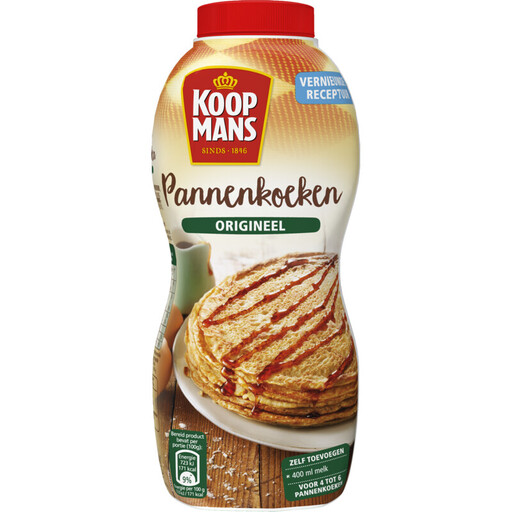
The shaker format could work well if you want to start with smaller quantities. Check how many pancakes the pack says it makes and how many packs you’ll need for the school fair.
 No image available
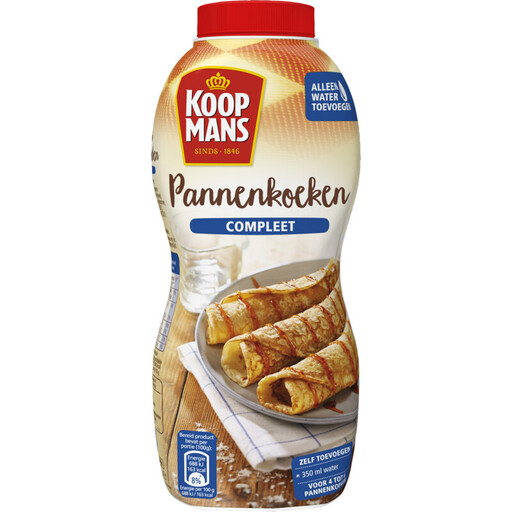
A complete mix to consider if you want to reduce the number of separate ingredients needed for mixing. Follow the instructions on this pack and check the allergens separately: ‘complete’ doesn’t mean allergen-free.
Not necessarily: ask what the school’s rules are and which allergy requirements are relevant to this fair. Regular varieties containing gluten-bearing grains aren’t gluten-free; even with a separate gluten-free mix, check the packaging and preparation method.
Not necessarily: if fussy eaters value familiarity most, you could choose an original mix and offer a wholemeal or multigrain variety separately. If you offer two options, make it clear which batter you’re using and check the allergens for both; wholemeal doesn’t mean gluten-free.
That depends on the exact variety. According to Koopmans, Original requires milk, eggs and butter, while Koopmans Complete is mixed with water and needs butter or oil for frying. Read the instructions on the pack you buy, especially if you’re using different sizes or varieties.
Follow the storage instructions for the mix you’re using and the school’s food safety rules. For Koopmans Gluten-Free Pancake Mix specifically, PLUS states that cooked pancakes can be covered and kept in the fridge for up to two days once cooled, or frozen for up to three weeks; don’t assume these time limits apply to other varieties without checking.