
Canteens that vary their toppings
Looking for a familiar pancake base that can be served with different sweet and savoury combinations each day. Koopmans describes both uses for its original mix.


If your canteen wants to offer a changing choice of sweet and savoury toppings, an original mix gives you the flexibility to use one pancake base. A complete mix is a better fit when reducing preparation before the lunch rush is the priority. For multigrain mixes and dessert specialities, your team should also assess the recipe, allergens, portion yield and cooking capacity for each dish.
Looking for a familiar pancake base that can be served with different sweet and savoury combinations each day. Koopmans describes both uses for its original mix.
Want to measure out fewer ingredients before cooking starts. Albert Heijn says that you only need to add water to Koopmans Complete Pancake Mix.
Want to offer a multigrain, buckwheat or dessert option alongside the regular pancake, and need to check the ingredients, allergens and portion yield for each recipe.
First decide whether you want a mix that offers flexibility for changing toppings, reduces preparation or adds a separate option to your range. Then test how it cooks using your actual pan size and portion during a comparable lunch rush.
Choose this when: you want one pancake base for both lunch dishes and desserts.
Bear in mind: you’ll need extra ingredients and preparation to make the batter.
Choose this when: your team wants to measure out fewer basic ingredients before the serving rush.
Bear in mind: cooking time and the separate allergen information for toppings and cooking fat.
Choose this when: you want a separate type of pancake to give your menu more choice.
Bear in mind: a grain in the product name does not, by itself, mean it is suitable for someone with an allergy.
Choose this when: you’re aiming to offer a specific dessert special, such as Kaiserschmarrn.
Bear in mind: it calls for a different preparation method and serving portion from a regular thin pancake.
| What to consider | What to check before buying | Who it matters to |
|---|---|---|
| Varied dishes | Check which ingredients the batter requires and work out the yield for your preferred portion size. | If I want to serve both a savoury lunch and a dessert using the same base, I want to vary the toppings without having to choose a different batter each time. An estimated 40% of consumers put this menu flexibility first. |
| Lunch rush | Compare the liquid and preparation required; test how many portions your available pans can handle during service. | When a queue builds quickly, I want to prepare the batter with minimal steps without underestimating the cooking time. An estimated 30% of consumers put reducing preparation first. |
| Range and allergens | Check the current ingredients and allergens for each mix, and record those for the toppings, sauce and cooking fat too. | If I want to offer a separate multigrain, buckwheat or dessert option, the menu description needs to match the full recipe. An estimated 30% of consumers prioritise this combination of choice and clear allergen information. |
An original pancake mix can also be the base for a changing selection of sweet and savoury dishes. Choosing a different mix doesn’t replace the need to decide on toppings and presentation.
First decide what you want to serve, then compare the finished portions, including the ingredients and preparation required.
Extra toppings and presentation take preparation, while unused ingredients can lead to waste.
According to Koopmans, Koopmans Multigrain Pancakes contain wheat, rye, oats and barley, among other ingredients. So ‘multigrain’ does not mean gluten-free.
If you plan to offer a gluten-free option, use the current information on the exact packaging and assess the risk of cross-contact during preparation too.
For pancakes served unpackaged, allergen information relates to the dish the customer receives, not just the packet of mix. Toppings, sauce and cooking fat may also be relevant.
Create a recipe card for each serving option, listing all ingredients and allergens present, so your team can answer questions during service. The Netherlands Food and Consumer Product Safety Authority requires allergen information for unpackaged foods.
Adding water can reduce batter preparation, but your pans and staff still determine how many portions you can cook at once.
Test the process using your planned portion and pan size, and organise service into manageable batches. Keep perishable toppings chilled.
Offers original, complete and multigrain pancake mixes, among others: different options for a basic dish or an extra choice on the menu.
Kaiserschmarrn and American pancakes are separate types of mix for a dessert speciality, rather than a regular thin pancake.
The 400 g Organic Buckwheat Pancake Mix offers a separate buckwheat option for your range.
Its own range includes regular and complete pancake mixes, as well as other options.
These mixes suit a pancake base with changing toppings or a separate multigrain option. Preparation and allergens vary by recipe, so match your portions to your canteen’s cooking capacity.
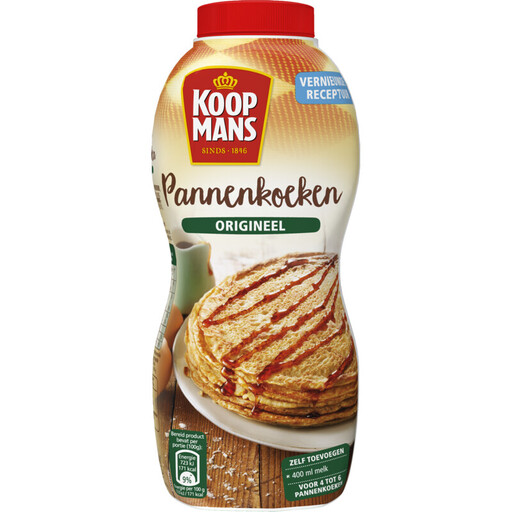 Image unavailable
A shaker mix to consider if your team wants to prepare batter in individual bottles for pancakes with different toppings.
Pack size: 175 g. Check the preparation instructions and the allergens in the mix and additions for the complete serving recipe.
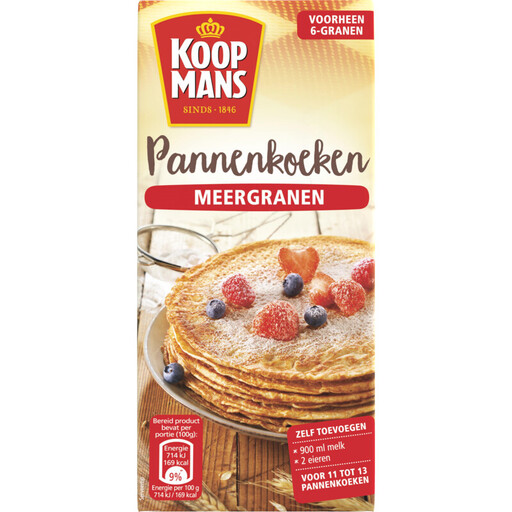 Image unavailable
A multigrain option for a separate type of pancake alongside your regular base.
Pack size: 400 g. Koopmans says its multigrain mix contains wheat, rye, oats and barley, among other ingredients; don’t treat it as gluten-free. Check the current label and all additions to the dish.
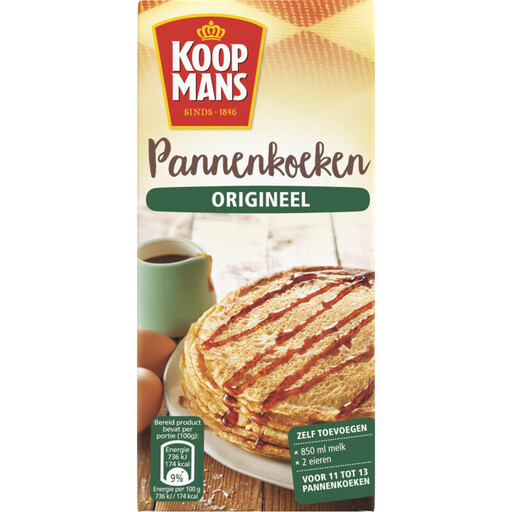 Image unavailable
An original base for a menu where toppings vary between savoury lunch dishes and desserts.
Pack size: 400 g. Koopmans says a pack of Pancakes Original makes 11 to 13 pancakes; use your planned portion size to assess the yield for your own service.
Yes. The Netherlands Food and Consumer Product Safety Authority says consumers must be given information about the allergens present in unpackaged foods. Include the complete serving option, including toppings, sauce and cooking fat, and make sure the information is available alongside the food on offer.
For cereals containing gluten, check exactly which grains are in the recipe. Koopmans says its multigrain mix contains wheat, rye, oats and barley, among other ingredients. The Netherlands Food and Consumer Product Safety Authority requires the relevant gluten-containing cereals to be clearly identified in allergen information.
No, those product names aren’t enough to establish that. According to the manufacturer, Koopmans Multigrain Pancakes contain wheat, rye, oats and barley, among other ingredients. Check any gluten-free claim against the exact product packaging and take cross-contact into account during preparation.
Don’t do this with the Koopmans Complete mix reviewed here: the product information says the batter must be heated all the way through. Check the preparation instructions for any other mix before deciding how to serve it.
Keep perishable toppings chilled and only put out what you need during service. The Netherlands Nutrition Centre recommends storing them at 4 °C and discarding perishable products that have been out of the fridge for more than two hours.