
Organisers of a large park picnic
For a family or other group, you’ll want to work out in advance how many packs you need. The number of pancakes listed on the pack is a better guide than the pack weight alone.


For a large park picnic, start by checking how many pancakes each pack makes and what you need to add to the mix. A complete mix that only needs water keeps preparation to a minimum; with a standard, wholemeal or gluten-free variety, check the preparation instructions and allergens on each pack. If you make the pancakes in advance, let them cool, seal them in a container and keep them chilled if you won’t be eating them straight away.
For a family or other group, you’ll want to work out in advance how many packs you need. The number of pancakes listed on the pack is a better guide than the pack weight alone.
If you want to avoid having to organise lots of separate ingredients, the difference between a mix that only needs water and one that needs milk and eggs is important.
For these groups, the information on the exact pack matters. A brand name or the word wholemeal won’t tell you whether a particular variety suits everyone in your group.
Decide whether you’ll cook at home or prepare the pancakes on the day of the picnic. Then choose the number of packs, extra ingredients and packaging information to suit your group.
| What to consider | What should you check? | Who is this important for? |
|---|---|---|
| Transporting cooked pancakes | Can you take pancakes cooked in advance in a sealed container and keep them chilled? The Voedingscentrum recommends using a cool bag for products that need to stay chilled. | I cook at home so we can eat straight away in the park, but I want to keep the pancakes safe on the journey. For around 33% of consumers, safe transport is the top priority. |
| Servings per pack | Check the yield for the exact variety and use it to work out how many packs you’ll need for your group. | I want to buy enough mix for a large family without having lots left over. For around 27% of consumers, planning portions is their main concern. |
| Ingredients needed | Check whether you only need to add water or whether you’ll also need milk and eggs. | If I’m making the batter on the day of the picnic, I want to organise as few separate ingredients as possible. For around 20% of consumers, keeping preparation simple matters most. |
| Allergens and variety | Check the ingredients and allergens on the current packaging; wholemeal and gluten-free don’t mean the same thing. | If anyone in the group has dietary requirements or allergen needs, I want to know which variety is suitable before I buy. For around 20% of consumers, label information is a priority. |
Packs of the same weight can make different numbers of pancakes or have different preparation instructions. For a group, that affects how many packs and extra ingredients you’ll need.
Compare the yield and preparation instructions for the exact varieties before deciding how many packs to buy.
According to PLUS, its wholemeal pancake mix contains wheat and oats. So wholemeal is not an alternative to a clearly labelled gluten-free variety.
If you need a gluten-free option, check the label of the variety you’ve chosen and separately check for other allergens, including egg and milk.
If you won’t be eating the pancakes until later, take care to cool, seal and chill them for the journey to the park.
Let them cool after cooking, seal them in a container and keep them chilled during transport. The Voedingscentrum recommends using a cool bag for chilled products on a picnic.
Ingredients and allergens can vary between varieties. Even with a trusted brand, a general product name doesn’t tell you everything about the pack you’re buying.
Check the label again when you buy, especially if anyone in the group needs to avoid an allergen.
The range includes complete, original, wholemeal and gluten-free pancake mixes. Choose by variety and preparation method, not just by brand.
PLUS offers, among other products, a complete mix and a 400 g wholemeal variety. These varieties meet different needs when it comes to preparation and grain type.
Albona offers a 400 g plain mix for anyone looking for a standard variety who can organise the required ingredients separately.
Belbake’s original pancake mix comes in a 400 g pack, which Lidl says makes around 12 pancakes.
These 400 g packs give you an original and a Wholegrains variety to compare for your picnic. Check the yield and ingredients needed for each pack before deciding how many to take.
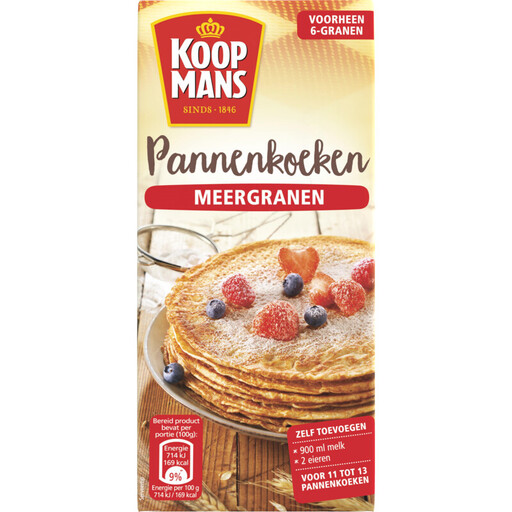 Image unavailable
A good choice if you’re looking for a Wholegrains variety for your group. Use the yield stated on the pack to plan portions, and check which ingredients you need to add to the batter. If anyone has dietary requirements or allergen needs, check the current label.
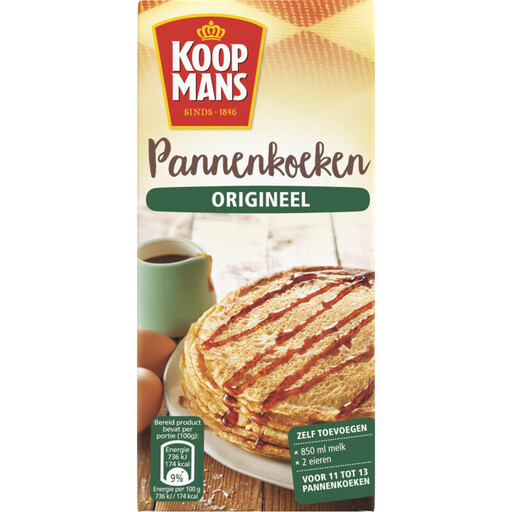 Image unavailable
A good choice if you want to use an original mix for a group picnic. Choose the number of packs based on the stated yield and check which extra ingredients you’ll need. If anyone in the group needs to avoid an ingredient, check the allergens on the pack.
Start with the yield stated on the exact pack and use it to work out how many you’ll need for your group. Albert Heijn says Koopmans Compleet 400 g makes around 10 pancakes; Lidl says Belbake Origineel 400 g makes around 12. Don’t assume these yields apply to other varieties.
A complete mix is useful if you want to avoid organising lots of separate ingredients: according to Albert Heijn and PLUS, their Complete mixes only need water for the batter. Check the allergens for the exact variety before you buy.
If you’ll be eating the pancakes later, let them cool first, then seal them in a container and keep them chilled during transport. The Voedingscentrum recommends using a cool bag to take chilled products to a picnic.
Store the dry mix in a cool, dry, dark place and keep it well sealed. The Voedingscentrum recommends storing an opened pack in an airtight container; also follow the instructions on the pack.