
For breakfast-makers with ingredients to hand
If you already have milk, eggs and cooking fat ready, and can use a bowl and frying pan, a standard mix is an option. Check the pack to see what you need to add and how many pancakes you want to make.


A standard pancake mix is a good option for a quick breakfast if you have milk and eggs at home, and time to make the batter and cook the pancakes. If you want to measure out fewer ingredients, consider a complete mix or a shaker bottle. If you want to skip making the batter and cooking, choose ready-made pancakes instead – they’re not a type of pancake mix.
If you already have milk, eggs and cooking fat ready, and can use a bowl and frying pan, a standard mix is an option. Check the pack to see what you need to add and how many pancakes you want to make.
A complete mix can mean measuring out fewer extra ingredients. A shaker bottle lets you mix the batter in the bottle itself. Both still take time at the hob, so check whether your chosen variety needs water or milk.
If you don’t want to make batter or cook pancakes, you could try ready-made or frozen pancakes. These are a different type of product from pancake mix, with their own storage and heating instructions.
First decide whether you want to cook pancakes or simply heat them up. If you’re cooking, the main difference between a standard mix and a complete mix or shaker bottle is how much you need to prepare in advance.
Choose this if: you have milk and eggs at home and want to make the batter yourself.
Bear in mind: you’ll need to measure the ingredients, mix the batter and cook the pancakes.
Choose this if: you want to measure out fewer ingredients; some complete mixes only need water.
Bear in mind: you’ll still need to mix or shake the batter and then cook it. Check what needs to be added to each variety.
Choose this if: you want to skip making the batter and cooking the pancakes.
Bear in mind: check the storage and heating instructions; this isn’t pancake mix.
| What to consider | Check before buying | Who should consider this? |
|---|---|---|
| Ingredients you have at home | Check what you need to add and think about how much batter you want to make. | I want to be able to cook with what’s already in my kitchen, without having to buy any missing ingredients first. Around 25% of consumers would put having the ingredients at home top of their list. |
| Preparation | Check whether you need water or milk, and whether you can mix the batter in the packaging. | On a busy morning, I want to measure and wash up as little as possible, even if I still need to cook the pancakes. For around 25% of consumers, preparation would be their main concern. |
| Just heating up | Check the heating method and storage instructions for ready-made pancakes. | If cooking doesn’t fit into my morning, I want pancakes that just need heating up. This would determine the choice for around 25% of consumers. |
| Ingredients and allergens | Check the ingredients, allergen information and any warning about the possible presence of allergens on the current packaging. | I want to know which grains and other ingredients are in my chosen product before using it. For around 25% of consumers, checking the ingredients or allergens would come first. |
You can mix the batter in the bottle, but you still need to cook the pancakes afterwards. What you need to add also varies by product: one variety may need water, while another needs milk.
Read the preparation instructions before buying, and choose ready-made pancakes if you don’t want to cook.
Ready-made and frozen pancakes save you from making batter, but they need to be stored and prepared differently from a pack of mix.
First decide whether you want to cook pancakes yourself or heat them up. Then check the instructions for the product you actually want to use.
Wholemeal describes the type of grain used; it doesn’t mean a product is gluten-free. For example, Albert Heijn lists wholemeal wheat flour and wheat gluten in its wholemeal mix.
Check the latest ingredients and allergen information. If you need a gluten-free product, look for a clear, relevant statement on the packaging.
Albona plain pancake mix is a standard mix for anyone who wants to make their own batter.
The AH range in this comparison includes a 400 g plain mix and a 300 g wholemeal mix.
PLUS offers plain, wholemeal and complete pancake mixes, with different preparation steps.
Koopmans offers both a standard mix and a complete shaker bottle. The preparation required depends on the variety.
Jumbo describes Koopmans Vriesvers as frozen pancakes that you can heat up, not as pancake mix.
These two Koopmans shaker bottles are a good fit if you want to mix the batter in the packaging and then cook the pancakes yourself. Check what needs to be added: not every shaker bottle mix only needs water.
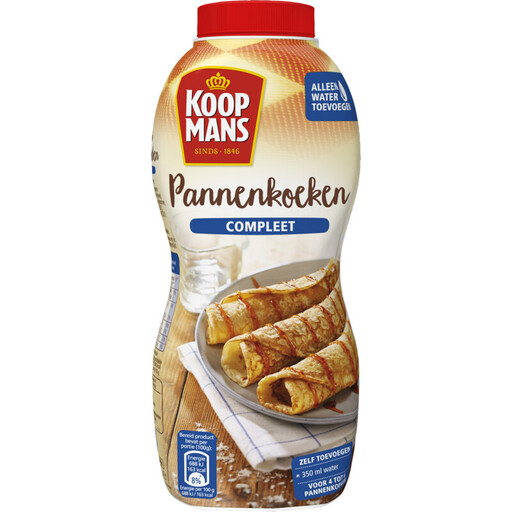 Image unavailable
For anyone who wants to measure out fewer ingredients but still cook the pancakes themselves. Joybuy says this complete shaker bottle needs 350 ml of water and makes around 4 to 6 pancakes; you’ll still need to shake the batter and cook it.
Check the ingredients and allergen information on the packaging before using the mix.
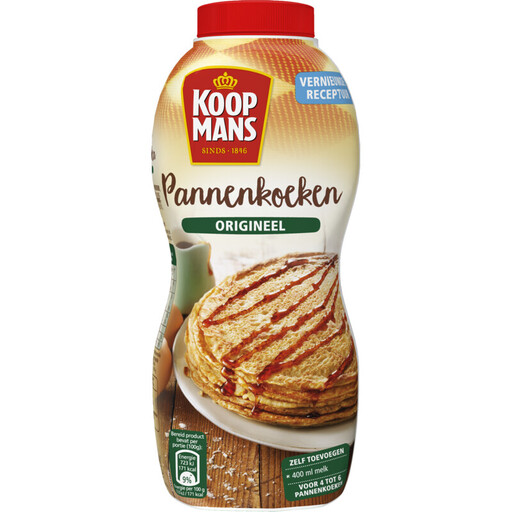 Image unavailable
For anyone who wants to mix the batter in the packaging, can add milk and has time to cook the pancakes afterwards. Check how much milk you need and read the preparation steps on the packaging.
Also check the latest ingredients and allergen information before use.
Not if you also want to skip cooking. According to Joybuy, you add water to Koopmans Schudfles Compleet and mix the batter in the bottle; you then still need to cook the pancakes in a frying pan.
If you don’t want to make batter or cook pancakes, frozen pancakes are another option. Jumbo describes Koopmans Vriesvers as a product that you can heat in the microwave. Follow the storage and heating instructions on the packaging.
No. Wholemeal doesn’t mean gluten-free in itself. According to the product information, Albert Heijn’s wholemeal mix contains wholemeal wheat flour and wheat gluten. If you need a gluten-free product, check the current packaging for a clear, relevant gluten-free statement.
The label lets you check the ingredients, allergens and instructions on the packaging you have in your hands. The Netherlands Food and Consumer Product Safety Authority explains what information about ingredients and allergens should appear on food labels.