What should you look for when buying in larger quantities?
First, decide which preparation method and dietary requirements apply to your group. Then work out how many pancakes you can make with each pack you’re considering, and what other ingredients you’ll need.
| What to consider |
What to check before buying |
Who it matters to |
| Quantity |
Compare the pack weight and stated yield of your chosen mix with the number of pancakes you want to make. |
When I’m cooking for a large group, I don’t want to run out of batter halfway through. Around 36% of consumers prioritise planning for a sufficient yield. |
| Preparation |
Check which ingredients you need to add and whether you’ll also need cooking fat. For example, PLUS says its 400 g Complete mix requires 700 ml of water and butter for frying or oil. |
When several people are helping with the cooking, I want to keep the number of separate ingredients to a minimum; this is the main concern for around 29% of consumers. |
| Diet and allergens |
Check the current ingredient and allergen information on every pack, including gluten-free and Complete mixes. |
If a guest has a specific dietary requirement, I want to know whether both the mix and its preparation are suitable. Around 21% of consumers make this check their priority. |
| Commercial use |
If you’re selling pancakes or providing catering, check which registration and food safety requirements apply to your business. The NVWA covers food business registration, while the Chamber of Commerce explains that home catering businesses must work with an HACCP plan or hygiene code. |
If I’m going to sell pancakes, I need to sort out my business operations as well as buying the ingredients; this commercial context is the starting point for around 14% of consumers. |
Pancake mixes on Joybuy
These packs offer options for planning several standard mixes, as well as smaller batches using a Complete mix or shaker. Work out how many packs you’ll need for your group for each option.
 No image available
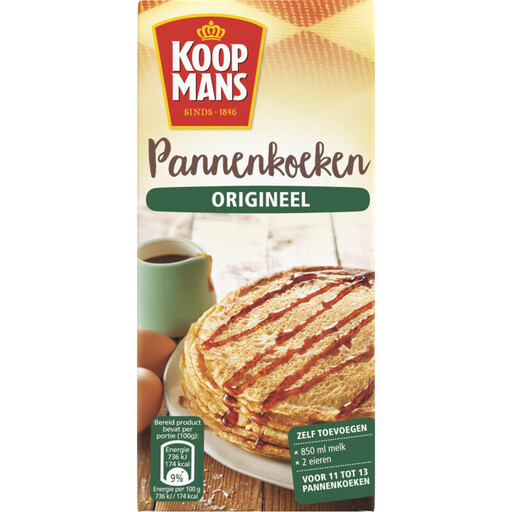
Koopmans Original Pancake Mix, 400 g
For anyone planning a larger batch using a standard mix, pack by pack. Koopmans states that the Origineel mix makes 11–13 pancakes per pack. Remember to allow for milk, eggs and cooking fat, and check the instructions on this pack.
View on Joybuy
 No image available
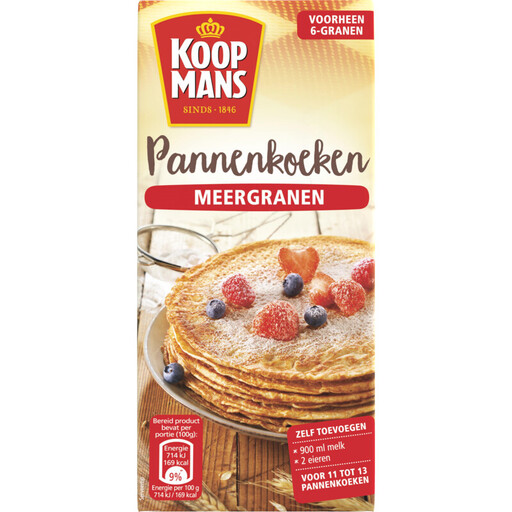
Koopmans Wholegrains Pancake Mix, 400 g
A multigrain option for anyone planning to use several packs of the same mix. Use the yield and preparation instructions on this pack to work out how many you’ll need and which additional ingredients to buy.
View on Joybuy
 No image available
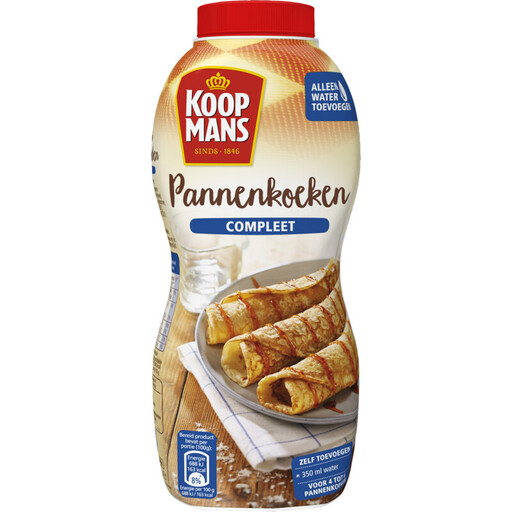
Koopmans Pancakes Complete, 210 g
A Complete mix for anyone looking to make a smaller batch. This pack contains 210 g; read the preparation instructions and, for a larger group, calculate the quantity using the yield of this particular mix, not that of another Compleet pack.
View on Joybuy
 No image available
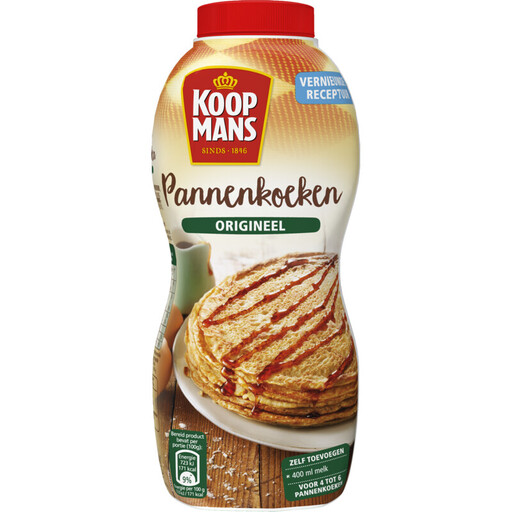
Koopmans Shaker Pancakes, 175 g
A shaker pack for a smaller batch. For a larger group, calculate how many packs you’ll need based on the yield of this mix, and check the label to see which ingredients you need to add.
View on Joybuy
Frequently asked questions
How many packs of pancake mix do I need for a large group?
Divide the number of pancakes you want to make by the stated yield of your chosen mix, then round up to the next whole pack. Koopmans says Origineel makes 11–13 pancakes per pack, while Albert Heijn gives a yield of around 12 for AH Naturel. Don’t use these figures for other mixes.
When is a Complete pancake mix useful?
A Complete mix is useful when you want to measure out fewer separate ingredients: the Complete mixes described by Koopmans and PLUS are made with water. PLUS also recommends butter for frying or oil; check the label, as the Complete mixes described contain milk and egg.
Is a gluten-free pancake mix also free from egg and milk?
No, the gluten-free label doesn’t mean that. PLUS states that the gluten-free Koopmans mix described may contain egg and milk. Check the current packaging and ask which ingredients matter to your guest.
What do I need to arrange if I’m selling pancakes commercially?
Before you start selling, check the registration and food safety requirements for your business. The NVWA explains food business registration, while the Chamber of Commerce says home catering businesses must work with an HACCP food safety plan or hygiene code. These business rules don’t automatically apply to a private party.


