
Bulk buyer
Buying several packs for a large family, neighbourhood meal or event? The number of pancakes each pack makes, along with the milk, eggs and cooking fat you’ll need, will determine what goes on your shopping list.


For a large family or a gathering, start by checking how many pancakes each pack makes and what ingredients you’ll need to prepare them. A standard mix is a good choice if you’ve already factored milk, eggs and cooking fat into your plans. A complete mix means fewer separate ingredients to buy, but you’ll usually still need cooking fat. If anyone eating has a dietary requirement or allergy, first choose a suitable product based on its current label, then work out how many packs you’ll need.
Buying several packs for a large family, neighbourhood meal or event? The number of pancakes each pack makes, along with the milk, eggs and cooking fat you’ll need, will determine what goes on your shopping list.
You’d rather measure out or bring fewer separate ingredients. A complete mix could be a good fit: according to its preparation instructions, PLUS complete mix needs water and cooking fat.
You’ll need to check whether the ingredients and allergen information for the exact product are suitable for everyone eating. The name of a standard or wholegrain mix alone isn’t enough to tell you.
First, decide how many pancakes you want to make and check how many each pack yields. Then look at the preparation instructions and any dietary requirements, and plan the practical details for the day itself.
| What to consider | What to check | Who is this most important for? |
|---|---|---|
| Quantity | Pack size and stated yield per pack; the milk, eggs and cooking fat needed for all the packs together. | When I’m cooking for lots of people, I want to buy enough without ending up with too much left over. Around 33% of consumers put this kind of quantity planning first. |
| Preparation | Whether the mix needs water, or milk and eggs too; how much batter you can prepare for each batch. | For a busy mealtime, I want to measure fewer ingredients and keep the batches manageable. For around 27% of consumers, easy preparation is the most important factor. |
| Dietary requirements and allergens | Ingredients, allergens and any ‘may contain’ statements on the current label. | If someone eating needs to avoid certain ingredients, the mix you choose must be suitable for them. This is the top priority for around 20% of consumers. |
| Storage and preparation | Best-before date, storage instructions and how many packs you’ll need while cooking. | I want to be able to store the packs in good time and make enough batter on the day. For around 20% of consumers, getting everything ready in practice is the most important consideration. |
A standard mix may need milk and eggs for each pack. For example, according to the preparation instructions, one 400 g pack of PLUS plain mix needs 800 ml semi-skimmed milk, three eggs and butter or oil. PLUS complete mix needs water and cooking fat.
Work out your ingredient list after you’ve decided how many packs you need, then multiply the quantities in the instructions for your chosen mix.
The supermarket products mentioned here come in 400 g packs. The yield varies by product: Jumbo states that its plain mix makes around 12 portions, while the product information for Koopmans Wholegrains says it makes 11 to 13 pancakes.
Decide how many pancakes you want to make and use the yield on the label of the mix you’re actually buying.
Standard and wholegrain mixes may contain cereals containing gluten, egg or milk, or carry a ‘may contain’ statement. A complete mix isn’t automatically suitable for someone who needs to avoid these ingredients either.
Check the current label of every product you choose. If anyone eating needs to avoid certain ingredients, take care to prevent cross-contamination between ingredients, pans and kitchen utensils during preparation.
The varieties mentioned give you an idea of the differences in preparation and pack size that matter. Always check the details for the specific mix you choose.
Offers, among other products, Original, Wholegrains and a 400 g pancake mix labelled gluten-free.
Its plain mix is a standard 400 g pancake mix.
Offers both a plain mix and a 400 g complete mix. One of the main differences is which ingredients you need to add.
The ALDI brand offers a 400 g wholegrain pancake mix.
The Lidl brand offers a 400 g original pancake mix.
This range includes standard and wholegrain 400 g mixes, as well as smaller shakers for individual batches. Use the yield per pack to work out how many you’ll need for a larger group; the shakers and packs don’t all require the same additional ingredients.
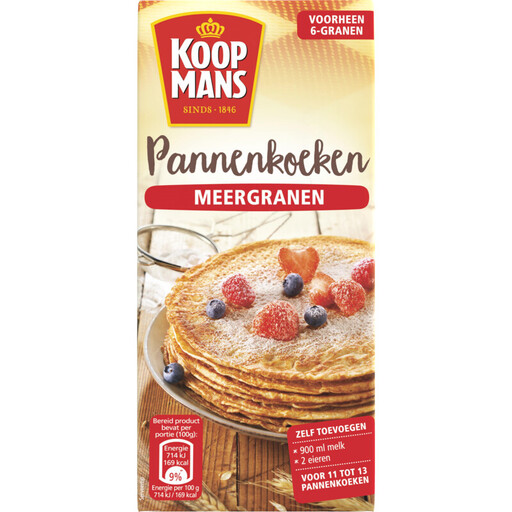 Image unavailable
For a larger group, you can plan around the stated yield of 11 to 13 pancakes per pack. The preparation instructions for each 400 g pack call for 900 ml milk, two eggs and butter or oil. The mix contains wheat, oats, rye and barley, among other ingredients. Check the current label if you have any dietary requirements or allergies.
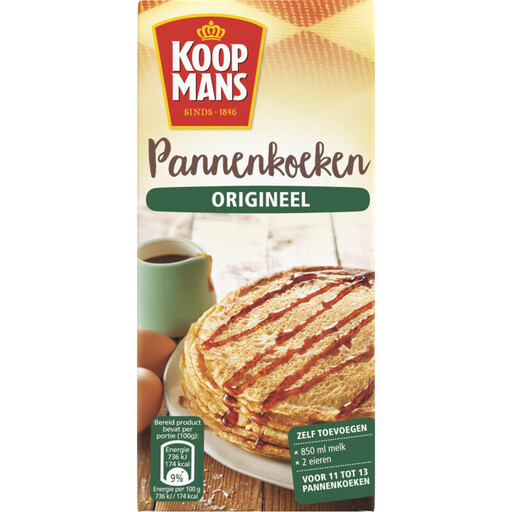 Image unavailable
This standard mix has a stated yield of 11 to 13 pancakes per pack, giving you a helpful guide for planning quantities. For each 400 g pack, the instructions call for 850 ml milk, two eggs and butter or oil. The mix contains cereals containing gluten, including wheat and rye. Check the current label if anyone eating needs to avoid certain ingredients.
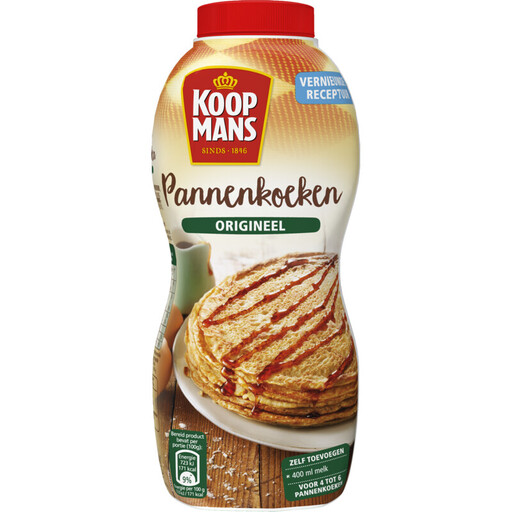 Image unavailable
This shaker is handy for smaller batches: the stated yield is four to six pancakes per pack. According to the instructions, add 400 ml milk to the 175 g shaker and shake for about a minute. You’ll need several shakers to feed lots of people, so check the ingredients and allergens on the label too.
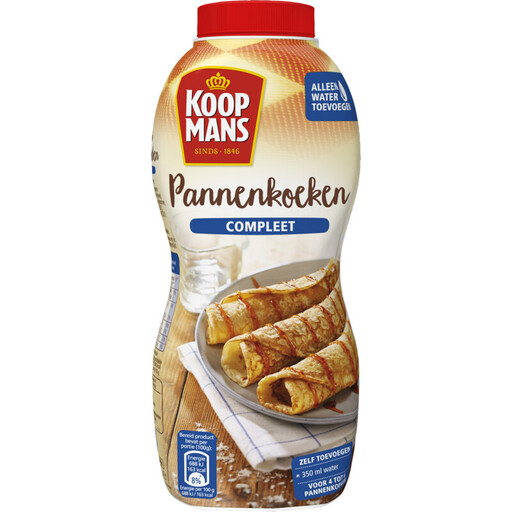 Image unavailable
For a small batch, the preparation information for this complete shaker calls for 350 ml water and about a minute of shaking. The 210 g pack is stated to make four to six pancakes, so plan on using several bottles for a larger group. The mix contains wheat, egg and milk. Read the current label if you have any dietary requirements or allergies.
No, you can plan the quantity using several smaller packs instead. The supermarket varieties mentioned here come in 400 g packs. For example, the product information for Koopmans Wholegrains states that each pack makes 11 to 13 pancakes. Check the yield of your chosen mix to work out how many packs you’ll need.
It depends on the product. The preparation instructions for 400 g of Koopmans Original call for 850 ml milk, two eggs and butter or oil; for 400 g of PLUS plain mix, PLUS specifies 800 ml semi-skimmed milk, three eggs and butter or oil. Follow the instructions on the pack you buy.
A complete mix is a good choice when you want to measure out or bring fewer separate ingredients. According to the instructions, PLUS complete mix needs water and cooking fat, while PLUS plain mix also needs milk and eggs. Be sure to check the allergens: PLUS complete mix contains wheat, milk and egg.
Read the ingredients and allergen information on the current label of every product you choose. The Netherlands Food and Consumer Product Safety Authority requires allergens to be clearly stated on the label. Standard mixes may contain cereals containing gluten, egg or milk, among other ingredients, or carry a ‘may contain’ statement for them. Also take care to avoid cross-contamination between ingredients and kitchen utensils during preparation.
Follow the storage instructions and check the best-before date on each pack. The Netherlands Nutrition Centre says that a product may sometimes still be usable after this date if the packaging is undamaged and the product looks, smells and tastes fine. Check each pack individually and don’t use any damaged packaging.