For a small batch, choose a shaker bottle if you only need a few pancakes; a standard pack is a better fit if you’re cooking for more children or want to keep the leftovers. Jumbo says its 175 g Koopmans shaker bottle makes 4–6 pancakes, while Albert Heijn lists 11–13 for the original Koopmans mix. Before taking anything to school or an after-school club, check the allergens in your chosen variety and the rules on bringing in or sharing food.
Who is this choice relevant to?
Those cooking a small batch
If you’re cooking for one child or a small household, check how many pancakes each pack makes rather than looking only at its weight. Jumbo says a 175 g Koopmans shaker bottle makes 4–6 pancakes; Albert Heijn lists 11–13 for the original Koopmans mix.
Parents taking a treat to school or an after-school club
Before you start cooking, ask what the rules are for bringing in or sharing food. VOO says schools can set their own rules for treats; the Netherlands Nutrition Centre also recommends asking about allergies and dietary preferences in the group.
Households avoiding particular ingredients
The ingredients in the exact variety you choose are what matter. For example, PLUS says its gluten-free Koopmans mix may contain egg and milk. Also check the ingredients you add to the batter yourself.
What should you look for when choosing?
First decide how many pancakes you want to make and what you’ll do with any leftovers. If you’re taking them to school or an after-school club, check the ingredients and local rules before you start preparing them.
| What to consider |
What to check when buying |
Who is this most important for? |
| Portion size |
Compare the stated number of pancakes per pack and consider whether you want to keep any leftovers. |
When I’m cooking for one child, I don’t want to make more batter than we’ll use. The right portion size is the deciding factor for around 31% of consumers. |
| Allergens and school rules |
Read the current label, including any warnings about possible traces, and ask what’s allowed at school or an after-school club. |
When I’m taking pancakes in, I want to know whether they can be shared and which allergies I need to consider. Around 31% of consumers put these checks first. |
| Ease of preparation |
Check whether you need to add water, milk or eggs, and whether the packaging is designed for mixing the batter in. |
For a quick batch, I want to measure out as few ingredients as possible. Preparation is the first thing around 23% of consumers consider. |
| Grain and ingredient choices |
Check which grains are in the exact mix; wholemeal, multigrain and gluten-free don’t mean the same thing. |
If I’m looking for a particular blend of grains, I want to be able to identify it without confusing it with gluten-free. Around 15% of consumers put ingredient choice first. |
Common mistakes
-
Assuming ‘complete’ means allergen-free
A mix that only needs water may already contain milk and egg ingredients in the dry mix. Convenient preparation doesn’t mean it’s suitable for someone with an allergy.
Check the allergens on the current label of your chosen mix before cooking for a group of children.
-
Assuming wholemeal, multigrain or buckwheat means gluten-free
The wholemeal mix described by PLUS contains wheat and oats. Having buckwheat as an ingredient doesn’t automatically make a complete mix gluten-free either.
If gluten-free is a requirement, look for that wording on the exact pack and check the other allergen information too.
-
Checking the school rules only after cooking
VOO says schools can set their own rules for treats. So something that seems suitable at home may not necessarily be allowed at a school event.
Check in advance whether you can bring in or share food, and ask about allergies and dietary preferences in the group.
If sharing isn’t allowed, the preparation and cooking may have been for nothing.
Brands to consider
Koopmans
Koopmans makes several pancake mixes, including a small shaker bottle, an original mix, a complete mix and a gluten-free variety. Compare them individually, as the packaging and additional ingredients vary.
- Jumbo says its 175 g shaker bottle makes 4–6 pancakes; Albert Heijn lists 11–13 for the original mix.
- PLUS says the gluten-free Koopmans variety may contain egg and milk. So the gluten-free label doesn’t answer every question about allergens.
PLUS
PLUS sells, among other varieties, plain and wholemeal pancake mixes in 400 g packs. Check the grains and preparation instructions for each variety.
- According to PLUS’s ingredients list, its wholemeal mix contains 75% wholemeal wheat flour and 20% wholemeal oat flour.
- The wholemeal mix described contains wheat and oats; wholemeal doesn’t mean gluten-free.
Albona
ALDI describes Albona pancake mix in a 395 g plain variety and a 400 g multigrain variety.
- The two varieties mentioned give you a choice between plain and multigrain.
- Before using the mix for school or if someone has an allergy, check the full ingredients and allergen information on the pack you’ve bought.
Smaakt
Smaakt makes a 400 g organic buckwheat pancake mix. PLUS says this variety contains 90% organic buckwheat flour, as well as tapioca flour.
- The ingredients list makes it clear which type of flour is the main ingredient in this variety.
- PLUS says the mix may contain traces of peanuts, soya, nuts and sesame. Don’t assume that buckwheat means the mix is gluten-free or free from other allergens.
Smaller packs at Joybuy
These pancake mixes come in packs ranging from 100 to 210 g, making them worth considering if you’re planning a smaller batch. Pack weight alone doesn’t tell you how many pancakes you’ll get: check the yield, preparation instructions and allergens for each variety.
 No image available
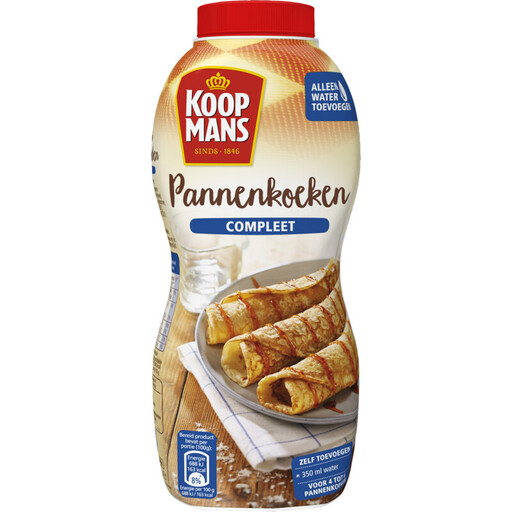
Koopmans Pancakes Complete 210 g
A pack to consider if you’re looking for a smaller quantity of mix and want to compare a complete variety. It contains 210 g. Check the label for the yield, any additional ingredients needed and allergens before cooking for a group.
View at Joybuy
 No image available
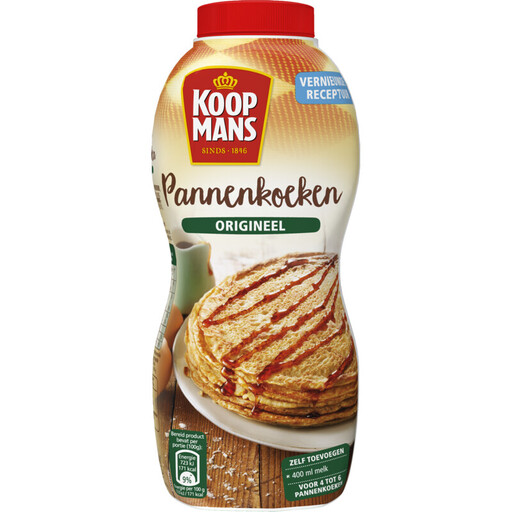
Koopmans Shaker Pancakes 175 g
The shaker bottle is a handy option if you don’t want to open a large pack for a quick batch. It contains 175 g. Check the label to see what you need to add, and check the allergens if you’re making pancakes for other people.
View at Joybuy
 No image available
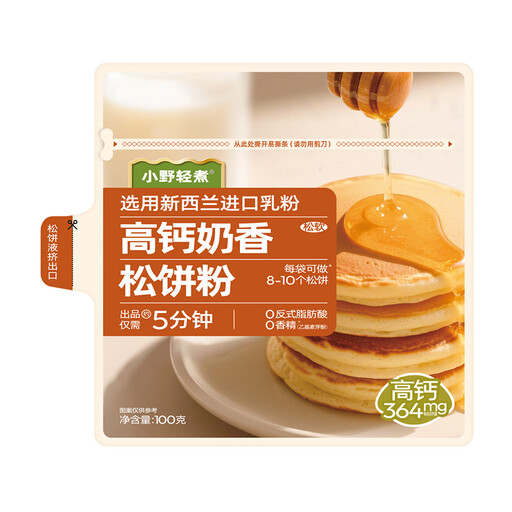
Xiaoyeqingzhu milk-flavoured pancake mix 100 g
If you’re looking for a small quantity of mix, you can compare this 100 g pack with the larger varieties. Check how many pancakes it makes and read the preparation instructions and allergen information; a milk flavour alone doesn’t tell you whether it’s suitable for someone with a milk allergy.
View at Joybuy
 No image available
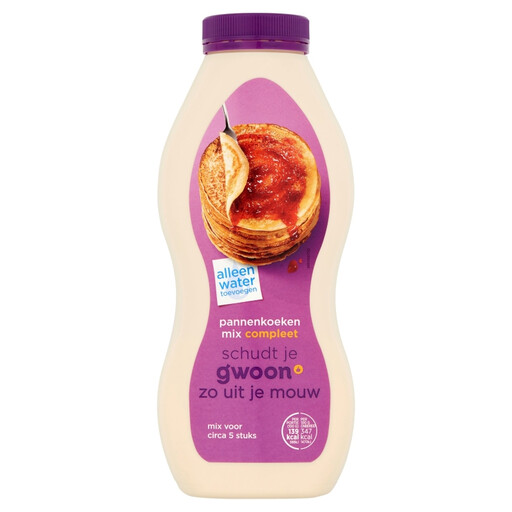
g'woon Pancake Mix Complete 200 g
This 200 g pack is worth considering if you want to compare a smaller complete mix. Check how many pancakes it makes and what you need to add to get the portion you want. If you have allergies, check the ingredients and allergens on the current pack label.
View at Joybuy
Frequently asked questions
Can I take pancakes made with a standard mix to school?
It depends on the school’s rules and the needs of the children in the group. VOO says schools can set rules for treats; the Netherlands Nutrition Centre recommends asking about allergies and dietary preferences in advance. Also check the current mix label and the ingredients you’re adding yourself.
Does pancake mix always contain gluten?
No, gluten-free mixes are also available. Standard, wholemeal and multigrain varieties may contain grains with gluten: PLUS, for example, lists wheat and oats in its wholemeal mix. If gluten-free is a requirement, check the wording and allergen information on the exact pack rather than relying on a grain name such as buckwheat.
Is a gluten-free mix also free from egg and milk?
Not necessarily: PLUS says its gluten-free Koopmans mix may contain egg and milk. Check the allergen information for the dry mix as well as the preparation instructions for any ingredients you add yourself.
Why should I check the pack label if I’ve already compared the mixes?
The label on the pack you buy is the best place to check the ingredients and allergens in that particular variety. According to the Netherlands Food and Consumer Product Safety Authority, allergens must be listed on the labels of packaged foods. This is especially important when you’re cooking for someone with an allergy or for a school group.


