
Budget-conscious weekly shopper
Wants to know how many people one pack will serve and what other ingredients are needed. The pack size and preparation instructions make it easier to plan the shopping for the whole meal.


For your weekly shop, first choose a mix that your household will enjoy. Then check how many pancakes the pack makes and what else you’ll need to add. A mix explicitly labelled wholemeal is the one to choose if you want wholemeal; multigrain doesn’t automatically mean wholemeal. A complete mix lets you leave out the milk and eggs, but you should still check the instructions and allergen information.
Wants to know how many people one pack will serve and what other ingredients are needed. The pack size and preparation instructions make it easier to plan the shopping for the whole meal.
Wants pancakes the household will enjoy, but would also like to understand the difference between wholemeal and multigrain. The ingredients list shows which flours are in the mix.
Would rather use water for the batter than add milk and eggs separately. With a complete mix, it’s still important to check what you’ll need for cooking.
Before doing your weekly shop, decide which requirement matters most to your household. Then compare the pack size, ingredients and preparation instructions of the mixes that fit the bill.
| What to consider | What to check before buying | Who it matters to |
|---|---|---|
| Servings for the week | Check the pack size, the stated number of pancakes and what else you’ll need to add. | If I’m cooking for several people, I want to know whether one pack will be enough and which ingredients I’ll need to have at home. Around 36% of consumers prioritise planning their weekly shop this way. |
| Wholemeal or multigrain | Read the product name and ingredients list, and check which flour is listed first. | If I have fussy eaters, I look for a grain option the household will enjoy, without confusing multigrain with wholemeal. Around 29% of consumers prioritise this consideration. |
| Ease of preparation | Check whether the mix calls for water, milk or eggs, and whether you’ll need cooking fat. | If I want to keep measuring to a minimum, I’d rather choose a batter that only needs water. This is the most important requirement for around 21% of consumers. |
| Dietary requirements and allergens | Read the current ingredients list, highlighted allergens and any ‘may contain’ statement on the packaging. | If my household needs to avoid an ingredient, I don’t want to rely on the product name alone. This check takes priority for around 14% of consumers. |
A 300 g pack and a 400 g pack won’t necessarily make the same number of pancakes. A standard dry mix may also need milk, eggs and cooking fat.
Check how many pancakes the pack makes and read the preparation instructions before deciding how many packs and extra ingredients you’ll need.
‘Multigrain’ doesn’t tell you how much wholemeal flour the mix contains. For example, Albert Heijn’s multigrain mix lists 74% wheat flour, as well as wholemeal barley and oats.
If you specifically want wholemeal, choose a product labelled as such and check the ingredients list.
A gluten-free claim doesn’t answer questions about other allergens. A complete mix may also contain ingredients that are relevant to your household.
Check the current label every time you buy, including the allergen information and any ‘may contain’ statement.
According to the Voedingscentrum, harmful bacteria can also be present in flour.
So don’t taste uncooked batter. Wash your hands after preparing it and cook the pancakes thoroughly.
Koopmans offers several types of pancake mix, including Original, Compleet, wholemeal and multigrain.
The own-brand range includes wholemeal and multigrain mixes, so you can compare the two.
The own-brand range includes both a complete and a wholemeal pancake mix.
ALDI sells plain and multigrain pancake baking mixes under the Albona name.
Lidl lists an original Belbake pancake mix as well as a multigrain variety.
These two Koopmans mixes give you an Original and a Wholegrains option to consider for your weekly shop. In particular, check the flours used and what you need to add during preparation.
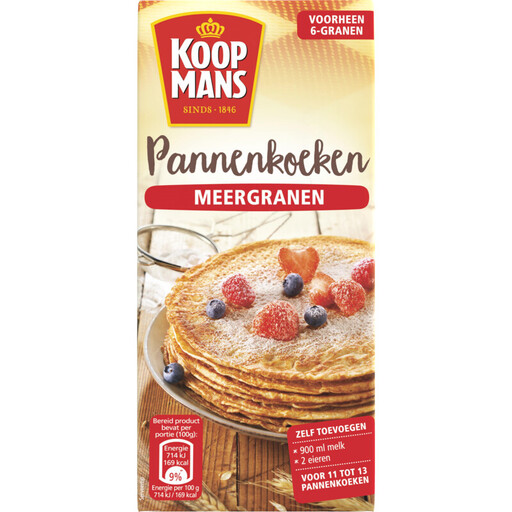 Image unavailable
An option to consider if the choice of grains matters to your household.
Check the pack to see which flours it contains and what you’ll need for the batter and cooking; the name alone doesn’t tell you enough.
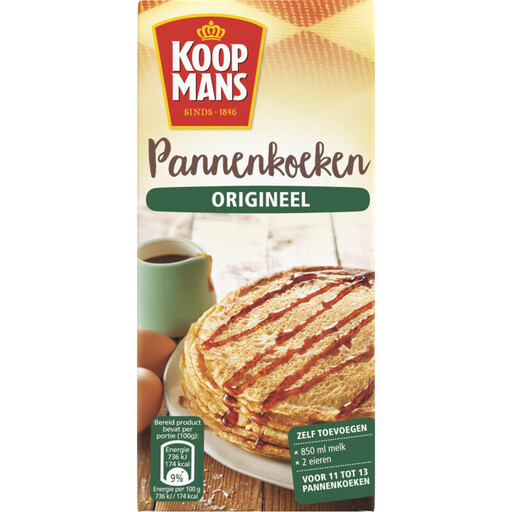 Image unavailable
An Original variety for anyone looking for a standard dry pancake mix for their weekly shop.
According to the Joybuy product information, add 850 ml of milk and two eggs; you’ll also need butter or oil for cooking.
No, a multigrain mix isn’t automatically fully wholemeal. According to the ingredients list, Albert Heijn’s multigrain mix contains 74% wheat flour, as well as wholemeal barley and oats. If wholemeal is what you’re looking for, choose a product explicitly labelled as such and read the ingredients.
For the PLUS Complete and Koopmans Compleet mixes mentioned above, you add water to the batter instead of adding milk and eggs separately. Check the specific pack to see how much water you need and which cooking fat to use.
Before buying, read the ingredients list and allergen information on the current packaging, even if the front carries a specific dietary claim. Also look for any ‘may contain’ statement about other allergens.
It’s best not to taste uncooked batter. The Voedingscentrum points out that flour can contain harmful bacteria, so make sure you cook the pancakes thoroughly.