
New cook with an empty cupboard
If milk and eggs aren’t on your shopping list yet, a complete mix that only needs water means fewer ingredients to buy for the batter. Just check that you have cooking fat and a suitable pan.


If you don’t have milk and eggs at home yet, look for a complete pancake mix that only needs water added to the batter. A plain or wholemeal mix may suit you better if you’re buying the other ingredients anyway, or if the type of grain matters to you. If you need a gluten-free option, check the current label and any ingredients you need to add yourself.
If milk and eggs aren’t on your shopping list yet, a complete mix that only needs water means fewer ingredients to buy for the batter. Just check that you have cooking fat and a suitable pan.
You want to know which grains the mix contains, so check the ingredients list. Bear in mind that a wholemeal mix may still need milk, eggs and cooking fat to prepare.
If gluten, milk or egg affects your choice, check both the mix’s current packaging and anything you add to the batter yourself.
Start with the ingredients you already have at home and any label requirements that apply to you. Then compare the types of grain and how many pancakes you want to make.
| What to consider | What to check | Who is this important for? |
|---|---|---|
| Ingredients you need | Check what you need to add to the batter and whether you’ll need cooking fat. The complete Koopmans mix described by Albert Heijn needs water for the batter; the AH plain mix needs milk and eggs. | I don’t want to buy milk and eggs specially for one batch of batter on my first food shop. Around 33% of consumers would say that buying as few extra items as possible is their main priority. |
| Grains and fibre | Check the ingredients list and compare fibre per 100 g on the same basis. Koopmans says its Pannenkoeken Volkoren contains 60% wholemeal oat flour and 35% wholemeal wheat flour. | I want to know whether the mix actually contains whole grains, even if preparing it means buying more ingredients. This grain choice would be the top priority for around 25% of consumers. |
| Diet and allergens | Check the current ingredients, allergen information and any gluten-free labelling; also consider any milk or egg you add yourself. | If I need to avoid certain ingredients, the whole batter must meet my requirements, not just the name of the mix. For around 25% of consumers, this check would be their first priority. |
| Yield and leftovers | Compare the pack weight with the stated number of pancakes and check how to store an opened pack. | I’m only making pancakes for a small group and don’t want an opened pack to go unused. Portion size and storage would be the most important considerations for around 17% of consumers. |
For the Koopmans Pannenkoeken Compleet described by Albert Heijn, you add water to make the batter, but you’ll still need butter or oil and a pan for cooking. You’ll need to buy anything you want to serve with the pancakes separately.
Read the preparation instructions before you shop, and make a list of any cooking fat and toppings you might need.
The Koopmans Pannenkoeken glutenvrij described by Albert Heijn states that the mix may contain egg and milk. The preparation instructions also call for milk and eggs.
Check the mix’s current allergen information as well as the ingredients you add yourself.
If you don’t use the whole pack, it’s important to know how to store the leftover mix.
Choose a pack size that suits your meal. The Netherlands Nutrition Centre advises storing opened pancake mix in a cool, dry, dark place in a well-sealed container; also follow the product label.
Koopmans offers several pancake mixes, including complete, wholemeal and gluten-free options.
Albert Heijn’s own brand includes a 400 g plain mix.
ALDI Netherlands lists pancake mixes from its Albona baking range, including 400 g packs.
Lidl Netherlands describes a 400 g Belbake original pancake mix that makes around 12 pancakes.
Jumbo offers its own plain, complete and wholemeal mixes, alongside pancake mixes from other brands.
These mixes offer a range of options for your first food shop: a complete mix, standard mixes and an option made with several types of grain. Check each pack to see what you need to add to the batter; a name such as Shaker or Wholegrains doesn’t tell you what else you’ll need.
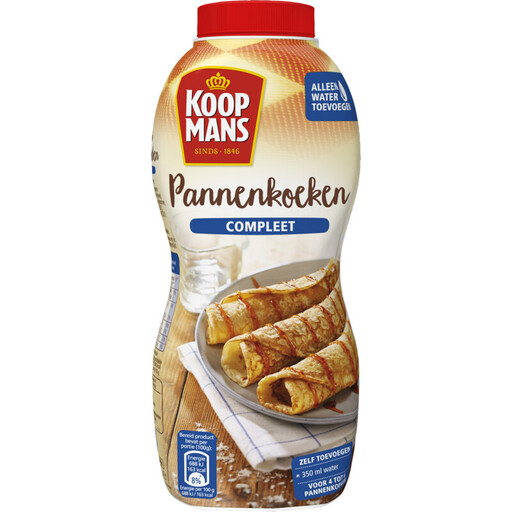 Image unavailable
An option if you don’t want to buy milk for the batter. Check how many pancakes you want to make, and bear in mind that the mix contains egg and milk if those allergens are relevant to you.
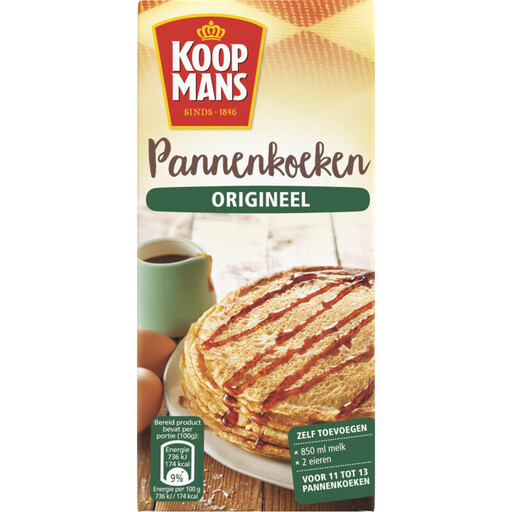 Image unavailable
Ideal for a standard batter if you’re happy to use milk, eggs and cooking fat. Before buying, check that the stated yield suits your group, and read the current label if allergens are a concern.
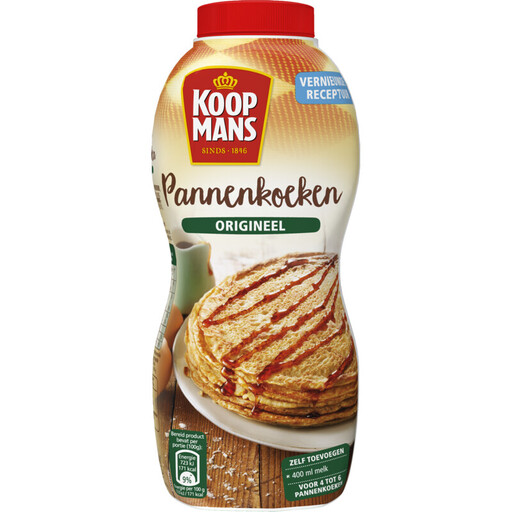 Image unavailable
The smaller pack may suit a smaller group. This batter needs milk, so don’t assume the shaker is a water-only option. Check the allergen information too.
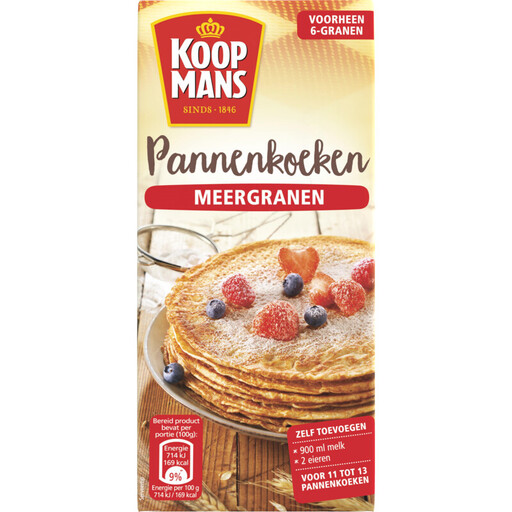 Image unavailable
An option to consider if the types of grain used influence your choice. Check the ingredients list to see which flours are wholemeal; you’ll also need milk, eggs and cooking fat to prepare the mix.
 Image unavailable
Read the full preparation instructions for this mix and check the yield on the pack before planning for several people. You’ll also need an egg for the batter; check any nutritional claims against the nutrition information.
Look for a complete mix whose label says to add water to the batter. Albert Heijn says to add 700 ml of water to Koopmans Pannenkoeken Compleet; you’ll still need a pan and butter or oil to cook the pancakes.
A wholemeal mix changes the grain base, but that alone doesn’t tell you everything about the finished dish or its toppings. Check the ingredients and nutrition information for the specific mix; the Netherlands Nutrition Centre explains the difference between wholegrain products and products made with white flour.
The gluten-free label doesn’t necessarily mean that it is. Albert Heijn says that Koopmans Pannenkoeken glutenvrij may contain egg and milk, while the stated preparation instructions call for milk and eggs. Check the current pack and all the ingredients you add.
Store the mix in a cool, dry, dark place in a well-sealed container, as advised by the Netherlands Nutrition Centre. Also follow the storage instructions on the pack you’ve bought.
Read the ingredients list and allergen information on the current label. The Netherlands Food and Consumer Product Safety Authority explains how allergens must be identified in the ingredients list of prepacked foods; remember to check any ingredients you add yourself too.