For a family lunch, a consumer-sized pack is often more practical than a 5 kg bag. For an event, a bulk pack may be suitable if you have enough ingredients, storage space and cooking capacity. Choose a wholegrain mix if you want to consider the grains, but also assess the lunch based on how you prepare the pancakes and what you serve with them.
Which quantity is right for you?
Families preparing several lunches
Want to make a batch of pancakes without having to store a large bag? Compare the yield per pack with the number of people you’re feeding, and check which other ingredients you’ll need for the batter. The Netherlands Nutrition Centre also explains how to freeze cooked pancakes for a later lunch.
Organisers of large lunch gatherings
A 5 kg professional bag may be suitable for a club, event or large family gathering. Before choosing one, check that you have room to store the mix and that your mixing bowls and cooking capacity are suitable for the number of portions you’re planning.
Shoppers who carefully check ingredients
Want to compare grain types and nutritional value, or do you need to avoid certain allergens? Read the ingredients, allergen information and preparation instructions on the pack you’re buying. Any milk, eggs, cooking fat and toppings you add also contribute to the finished lunch.
What should you look for when choosing?
First, decide how many pancakes you want to make and how much time you have to prepare them. Then compare the ingredients and nutritional information on the same basis, such as per 100 g of prepared product.
| What to consider |
What to check when buying |
Who it matters to |
| Grain types and what you serve for lunch |
Check which flours the mix contains and compare fibre and salt on the same preparation basis. Choose separately what you’ll serve with the pancakes. |
If I want to consider the grains in my lunch, I look beyond the word ‘wholegrain’ on the front of the pack. This nutritional consideration is the most important one for around 36% of consumers. |
| Quantity and yield |
Compare the pack weight with the stated yield, and check that you can mix, cook and store the amount of batter you’ll need. |
When I’m making lunch for a large group, I want to plan enough portions without storing more mix than I’ll use. This is the most important consideration for around 29% of consumers. |
| Preparation |
Check whether you need to add milk and eggs, just water or other ingredients. |
If there’s little time to make the batter, I want to know in advance how many extra ingredients I’ll need. Around 21% of consumers prioritise easy preparation. |
| Allergens and preparation options |
Check the ingredients, highlighted allergens, any ‘may contain’ warnings and instructions for alternative preparation methods. |
If certain ingredients need to be avoided, a preparation suggestion alone isn’t enough to choose a mix. Checking ingredients and allergens is the top priority for around 14% of consumers. |
Common mistakes
-
Assuming a wholegrain mix makes a complete lunch
According to the Netherlands Nutrition Centre, wholegrain cereals contain more fibre than white cereal products. However, the mix doesn’t determine which ingredients you add to the batter or what you eat with the pancakes.
Read the ingredients in the mix, then decide separately which other products you’d like to serve for lunch.
-
Focusing only on the size of the bulk pack
A 5 kg bag is only practical if the quantity suits the number of people you’re feeding and you have enough room to mix, cook and store it. You’ll also need milk and eggs for the standard preparation of Koopmans Professioneel Pannenkoekmix Speciaal.
Plan the whole preparation around the manufacturer’s stated yield and the number of pancakes you want to serve.
Remember to factor in the ingredients you’ll need, cooking capacity and storage space.
-
Assuming plant-based preparation means allergen-free
A version made without added milk or eggs doesn’t change the ingredients in the dry mix. According to its product information, Albert Heijn’s wholegrain mix contains wheat and wheat gluten.
Check the current label for every mix and additional ingredient you use, including any ‘may contain’ warnings.
-
Relying only on a product page you viewed previously
The ingredients and nutritional information on a pack can change. Current information is important when you’re checking allergens or comparing products.
Use a product page to shortlist your options, then read the pack you’ve actually bought before using it.
Brands to consider
Koopmans
Koopmans offers a consumer-sized wholegrain mix and, under the Koopmans Professioneel name, a 5 kg mix.
- Koopmans states that its 400 g pack of Pannenkoeken Volkoren makes 13 to 15 pancakes.
- Milk and eggs are needed for the standard preparation of the professional Speciaal mix, so consider the pack size alongside the full recipe.
Albert Heijn
The own-brand wholegrain mix comes in a 300 g household pack and includes a suggested plant-based preparation option.
- Albert Heijn states that each pack makes around 10 pancakes.
- According to the product information, the dry mix contains wheat and wheat gluten; preparing it with plant-based ingredients doesn’t make it gluten-free.
Jumbo
Jumbo offers a 400 g wholegrain pancake mix for household use.
- Jumbo states that it makes around 14 portions and lists wholemeal wheat flour and wholemeal oat flour as ingredients.
- If you have allergies, also check the current warnings about ingredients the product may contain.
PLUS
PLUS offers both a wholegrain mix and a 400 g complete mix; one key difference is how they’re prepared.
- PLUS says to add 700 ml of water to the 400 g complete mix.
- The complete mix contains milk and egg ingredients. Compare its nutritional values with those of the wholegrain mix only when both are prepared on the same basis.
Albona / ALDI
ALDI lists a 400 g pack of Albona multigrain pancake mix.
- Its pack size gives you a useful point of comparison with other household packs.
- If you’re choosing based on nutritional value or allergens, read the information on the pack.
Belbake / Lidl
Lidl lists a 120 g pack of Belbake multigrain pancake mix.
- The small pack size gives you a useful comparison for the amount you might need for one cooking session.
- For a larger group, check how many packs you’ll need, and read the pack for ingredient and allergen information.
Pancake mix on Joybuy
This 400 g mix is worth considering if you want to make enough pancakes at home for several lunch portions. Check the pack to see whether the yield and preparation suit your plans.
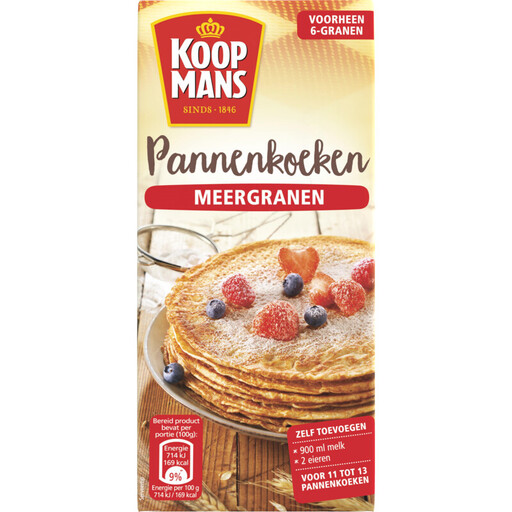 Image unavailable
Koopmans Wholegrain Pancake Mix 400 g
Consider this household pack if you want to make several portions for lunch. Before buying, compare the yield, required ingredients and allergen information on the current label with your own preparation plans.
View on Joybuy
Frequently asked questions
How much pancake mix do I need for a large family or event?
Start with the number of pancakes you want to serve and the yield of the specific mix. Koopmans says its 400 g pack of Pannenkoeken Volkoren makes 13 to 15 pancakes; for Pannenkoekmix Speciaal, Koopmans Professioneel states a yield of around 12 to 15 pancakes per kg. If you’re buying a bulk pack, also check the ingredients you’ll need and your cooking capacity.
Does wholegrain pancake mix automatically make lunch balanced?
No. The grains in the mix are just one part of the lunch. The Netherlands Nutrition Centre recommends eating a varied diet and including vegetables at lunch, so also consider how you prepare the pancakes and what you serve with them.
Can I make pancake mix without milk and eggs?
Some manufacturers suggest alternative ways to prepare their mixes. For its wholegrain mix, Albert Heijn suggests using a plant-based drink and apple purée or an egg replacer. Check the recipe for your chosen mix and the ingredients in anything you add. Preparing it with plant-based ingredients doesn’t mean the mix is gluten-free.
What allergen information should I check on pancake mix?
Read the current ingredients list, highlighted allergens and any ‘may contain’ warnings on the pack you’ve chosen. According to the Netherlands Food and Consumer Product Safety Authority, allergens must be listed on the labels of pre-packed foods. Also check the ingredients you add to the batter yourself.


