
Cooking for a group
After the egg hunt, you’ll want enough pancakes for the children and adults. The number stated per pack and the ingredients you need to add yourself matter more than the pack size.


For an Easter egg hunt, start by choosing a mix based on how many pancakes you want to make and which ingredients you can have ready. A complete mix means less measuring out individual ingredients; plain or multigrain mixes usually need more preparation, while an organic label only matters if that’s what you’re looking for. If you need to avoid an ingredient, always check the label on the exact pack.
After the egg hunt, you’ll want enough pancakes for the children and adults. The number stated per pack and the ingredients you need to add yourself matter more than the pack size.
If pancakes are part of a more substantial meal, you might choose an organic or multigrain mix. Even then, check the preparation instructions and the number of pancakes each pack makes.
Words such as plain, wholemeal or multigrain don’t tell you which allergens are in the pack. Read the current ingredients and allergen information, and remember to include anything you add to the batter or use as a topping.
First, work out how many people will be eating and whether you want to have milk and eggs ready. Then check the label for any ingredients you need to avoid, and only then choose between a plain, complete or speciality mix.
| What to consider | What to check when buying | Who it matters to |
|---|---|---|
| Enough for the group | Compare the stated number of pancakes per pack with the number of people eating. Make a note of how much milk and how many eggs you’ll need for the quantity you’ve chosen. | If lots of people want to eat at once after the egg hunt, I don’t want to run out of batter halfway through. Getting enough pancakes is the top priority for around 33% of consumers. |
| Less preparation | Check whether the mix needs water or milk and whether you need to add eggs. If it comes in a shake bottle, check when you need to use the mixed batter. | I don’t want to spend ages measuring ingredients around the activity, but I still want enough time to cook. Around 27% of consumers therefore prioritise easy preparation. |
| Ingredients and allergens | Check the ingredients and the ‘contains’ and ‘may contain’ statements on the exact pack. Remember to include any milk, eggs and toppings you add. | If a guest needs to avoid an ingredient, I need to know what’s in both the mix and the finished batter. Checking ingredients is the main priority for around 20% of consumers. |
| Choosing for Easter brunch | Check whether the specific pack is labelled organic or which grains it contains, then compare the ingredients needed and the number of pancakes it makes. | For a more substantial brunch, I want to choose a particular mix, even if it takes more preparation. Around 20% of consumers make this choice a key part of their meal planning. |
A small bottle leaves you less room to make extra pancakes if more people join in. With the PLUS bottle, the batter must be used straight after mixing it with milk.
For the main batch, compare the stated yield per pack. A shake bottle is best when a small round of pancakes suits your plans.
‘Complete’ describes how the mix is prepared. It doesn’t mean it’s suitable for someone who needs to avoid, for example, eggs or milk.
Read the allergen information on the exact pack and check your cooking fat and toppings too.
AH lists wheat and wheat gluten in its wholemeal mix. Koopmans lists wheat, oats, barley and rye, among other ingredients, in its multigrain mix.
If you need a gluten-free option, look for a mix specifically labelled gluten-free and check the current packaging and any ingredients you need to add.
Koopmans’ product information for its gluten-free mix says the batter isn’t meant to be eaten raw and must be thoroughly heated.
Don’t let children taste uncooked batter, and only serve the pancakes once they’re fully cooked.
Koopmans offers complete, original, multigrain and gluten-free-labelled pancake mixes, among others. Preparation varies by product.
AH offers plain and wholemeal mixes as different options for anyone who wants to add ingredients to the batter themselves.
PLUS offers a complete mix in a box and a plain mix in a bottle. Choose according to how the mix is prepared and how many pancakes you want to make.
At ALDI, Albona offers a 400 g multigrain mix and a 395 g plain mix.
Belbake offers an original pancake mix if you’re looking for a classic option.
These products let you choose between multigrain, original, complete and milk-flavoured mixes. Choose a pack to suit the size of your group, and check the preparation instructions and ingredients for each option.
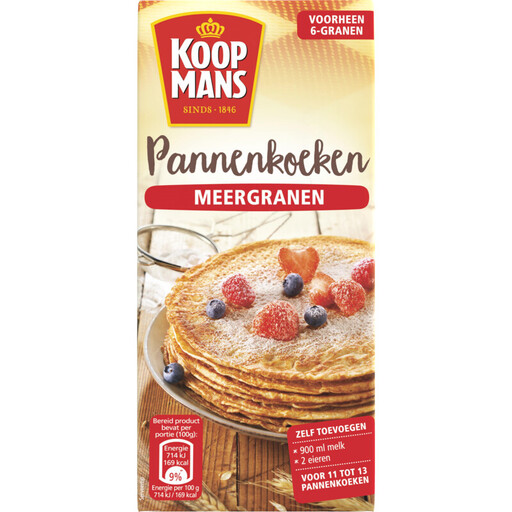 Image unavailable
A good option for a brunch when you want to use a multigrain mix. Compare the stated yield with the size of your group, and check the pack for the ingredients needed and allergen information.
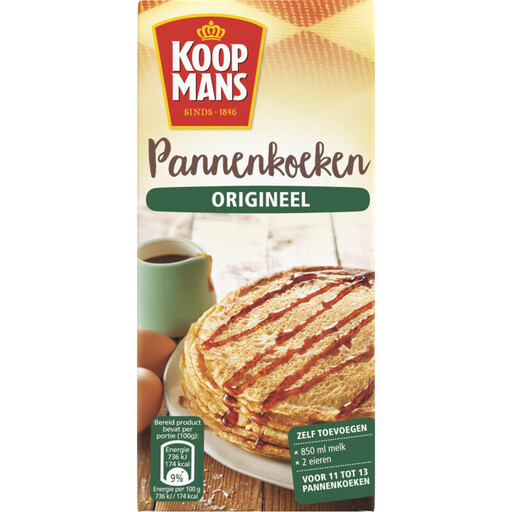 Image unavailable
An original mix for anyone who wants to choose their own toppings. Before you start cooking, check the pack to see how many pancakes it makes and what you need to add to the batter.
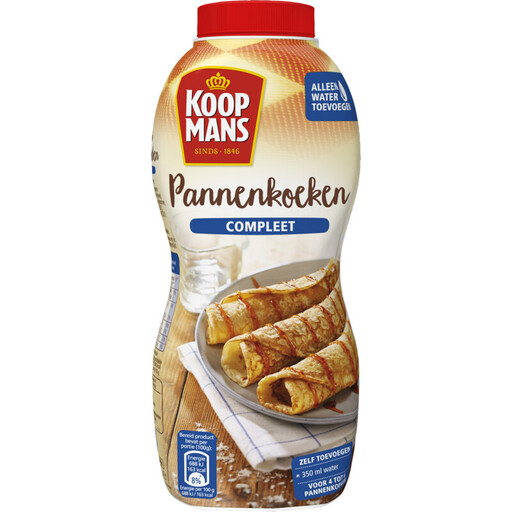 Image unavailable
A complete mix to consider for a smaller batch. Check the yield and preparation instructions on this pack before relying on it for the whole group.
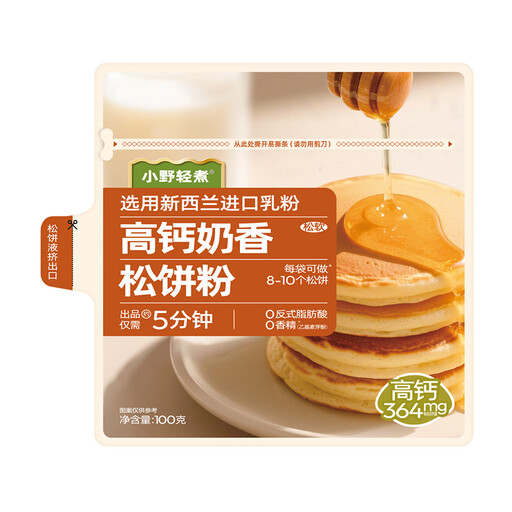 Image unavailable
If you’re considering a milk-flavoured mix, compare it with the other options. Check how many pancakes the pack makes, what you need to add and the nutritional information on the label.
A complete mix is handy if you don’t want to measure out milk and eggs separately. According to Koopmans and PLUS, the complete mixes mentioned here only need water for the batter, as well as cooking fat. Check the instructions on the exact pack, though, as a shake bottle may need milk.
Use the stated number of pancakes per pack to help you plan, and compare it with the number of people eating. According to the relevant product information, Koopmans Compleet makes 8 to 10 pancakes, AH Naturel around 12, and Koopmans Biologische Meergranen 12 to 14. The actual yield also depends on how large you make them.
No. Those names don’t mean a product is gluten-free. According to Albert Heijn, AH Volkoren contains wheat and wheat gluten, while Koopmans lists wheat, oats, barley and rye, among other ingredients, in its multigrain mix. If you need a gluten-free option, check the label and ingredients on the exact pack.
Don’t do this with the Koopmans Glutenvrij mix: its product information says the batter shouldn’t be eaten raw and must be thoroughly heated. Cook the pancakes through before serving them.
Read the current ingredients and allergen information for your chosen mix. Also check any milk, eggs, cooking fat and toppings you’re using. Voedingscentrum stresses the importance of allergen information on the label; the product name alone isn’t a substitute for it.