
Caterers serving guests with different preferences
If you want to offer a wholemeal or multigrain pancake alongside a classic one, you’ll need two different standard mixes and clear labelling at the serving point.


If you expect to welcome fans of classic pancakes as well as guests who prefer wholemeal or multigrain, you can offer two separate standard mixes. A complete mix that only needs water means fewer separate ingredients at the cooking station, but it won’t automatically give guests that choice. Plan a separate gluten-free option, and check the preparation method, toppings and allergen information for every version you serve.
If you want to offer a wholemeal or multigrain pancake alongside a classic one, you’ll need two different standard mixes and clear labelling at the serving point.
At a small or temporary cooking station, a complete mix can reduce the number of separate ingredients you need. Koopmans says that its Pannenkoeken Compleet mix only needs water added.
For unpackaged pancakes, the information you provide must reflect the finished dish, including how it’s prepared and its toppings. A gluten-free option also requires a separate check of the ingredients and preparation method.
First decide which pancakes you want to offer, then work out what you’ll need at the cooking station for each version. A gluten-free option needs to be considered separately from the standard flavours.
Choose this if: you want guests to be able to choose between two standard grain profiles.
Bear in mind: you’ll need two batters and separate information about ingredients and toppings. The wholemeal and multigrain mixes reviewed are not gluten-free.
Choose this if: you want to use fewer separate ingredients at the cooking station.
Bear in mind: the mix’s allergens and how many pancakes each pack makes. Adding water doesn’t make the finished product allergen-free.
Choose this if: you want to offer a suitable option for guests who eat gluten-free.
Bear in mind: the mix, toppings, cooking equipment and serving method. A gluten-free mix is not automatically free from other allergens.
| What to consider | What to check before buying | Who it matters to |
|---|---|---|
| Choice of flavours | Compare the grain ingredients and preparation method for a classic mix and a wholemeal or multigrain mix. | If guests have different preferences, I don’t want to serve everyone the same standard pancake. For around 33% of consumers, choosing between grain profiles comes first. |
| Setting up the cooking station | Check which ingredients you’ll need to add and how many pancakes the manufacturer says each pack makes. | At a temporary cooking station, I want to have as few separate ingredients as possible to set out and replenish. Around 27% of consumers put ease of operation first. |
| Gluten-free options and allergens | Check the latest packaging and include the preparation method and toppings in the information you provide to guests. | If a guest needs to eat gluten-free, I want to know what I can actually serve and which allergens it contains. For around 20% of consumers, this is the main consideration. |
| Cooking schedule and leftovers | Compare the stated yield per pack with your portions, and plan how you’ll store any cooked leftovers. | I want to be able to cook more during the event without leaving lots of pancakes uneaten. For around 20% of consumers, planning this is the top priority. |
According to their product information, the Koopmans and AH wholemeal and multigrain mixes discussed here contain gluten-containing grains. A different grain profile is therefore not a substitute for gluten-free preparation.
For guests who need this option, use a mix specifically labelled gluten-free and check the latest packaging, toppings and preparation method too.
Milk, eggs, cooking fat and toppings can change the ingredients in the pancake you serve. The Netherlands Food and Consumer Product Safety Authority says that allergen information must be available to guests for unpackaged food, including catering.
Record the allergens for each version you serve and make sure guests can get the information before they buy.
The Netherlands Nutrition Centre advises that cooked leftovers should not be kept out of the fridge for more than 2 hours.
Cook in smaller batches and quickly cool any pancakes you plan to keep.
AH describes its Volkorenmix as vegan, but its standard preparation instructions include milk and eggs. Following those instructions won’t produce a plant-based pancake.
If you want to serve a plant-based version, check the chosen preparation method and all toppings separately.
The range includes Origineel, Compleet, Volkoren and Glutenvrij, with different preparation methods to suit your catering plans.
AH offers a Volkorenmix and a Meergranenmix, which can provide a second standard grain profile alongside a classic mix.
Lidl lists Belbake Pannenkoekenmix Origineel as a standard 400 g mix, making around 12 pancakes according to the product page.
These mixes suit a classic or multigrain option, as well as cooking in smaller batches. The complete mix is a good choice for a cooking station where you want to use fewer separate ingredients. For unpackaged servings, always check the latest packaging and the ingredients in the pancakes you serve.
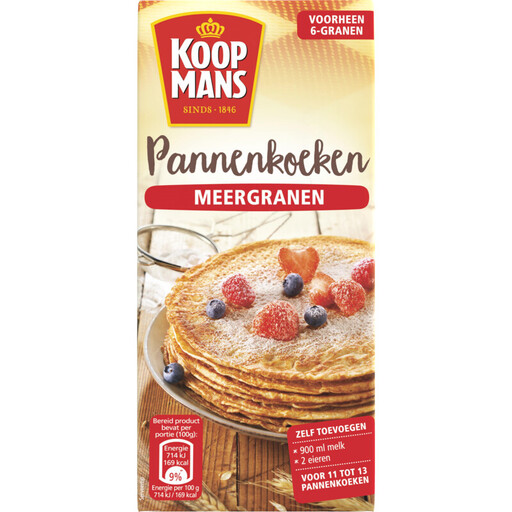 Image unavailable
A good choice if you want to offer a different grain profile alongside a classic mix. Check the grain ingredients and allergens on the packaging before finalising your menu; don’t assume this mix is suitable as a gluten-free option.
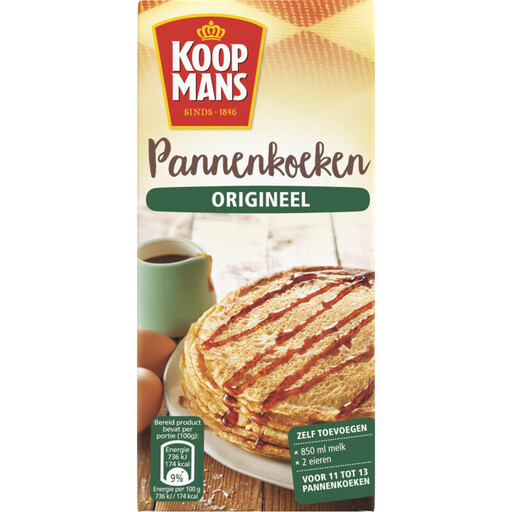 Image unavailable
For a classic standard pancake to serve alongside a second grain option. You’ll need to plan for milk and eggs when preparing this mix, and include both ingredients in the allergen information for guests.
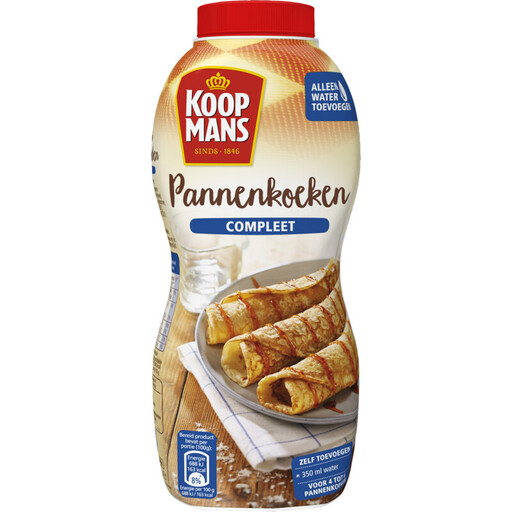 Image unavailable
For a cooking station where you want to reduce the number of separate ingredients. According to Koopmans’ product information, Pannenkoeken Compleet only needs water added. Check the mix’s allergens and work out how many packs you’ll need for the portions you’re planning.
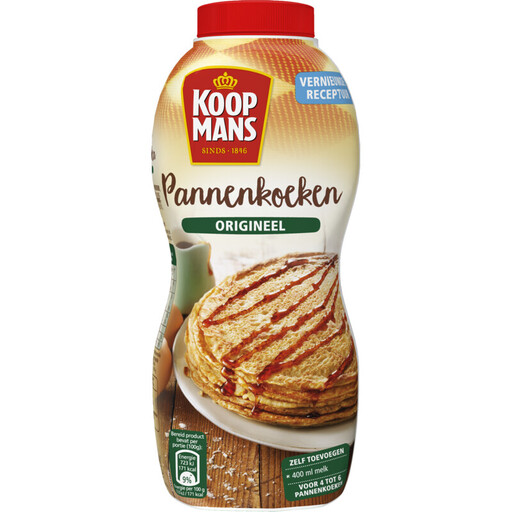 Image unavailable
A shaker pack for making smaller batches of classic pancakes. The preparation method described requires milk; check the latest packaging for preparation instructions and allergen information, and plan the number of packs to suit your serving requirements.
Yes. The Netherlands Food and Consumer Product Safety Authority says that in the Netherlands, guests must be able to get information about any allergens in unpackaged food, including catering, before they buy. You can provide this information in writing or verbally, as long as you clearly tell guests they can ask for it. Base it on the version you actually serve.
Not just because of the name. According to their product information, the Koopmans and AH wholemeal and multigrain mixes discussed here contain gluten-containing grains. If you need a gluten-free option, choose a mix made for that purpose and check the toppings and preparation method too.
A complete mix is a good choice if you want to manage fewer separate ingredients at your conference venue: Koopmans says that you only need to add water to its Pannenkoeken Compleet. For the Origineel and Volkoren mixes discussed here, you’ll also need to plan for milk and eggs. Check the yield and allergens for each pack you choose.
Don’t leave cooked leftovers unrefrigerated for long. The Netherlands Nutrition Centre advises keeping them out of the fridge for no more than 2 hours, cooling them quickly, then refrigerating or freezing them in a sealed container. It’s best to cook batches that match the pace of serving.