
If you’re baking for several guests
If you want to make a larger batch, check the pack size and stated yield. Also make sure you have the milk, eggs and frying fat you’ll need.


If you’re baking for several guests and already have milk and eggs at home, a plain pancake mix is a sensible place to start. The complete mixes mentioned only need water for the batter, but check what you’ll need for frying, how many pancakes each pack makes and what the label says about allergens.
If you want to make a larger batch, check the pack size and stated yield. Also make sure you have the milk, eggs and frying fat you’ll need.
A complete mix can be handy if you’d rather use water than milk and eggs for the batter. Check what else you’ll need for frying.
If you’re looking for a particular grain content or need to take allergens into account, choose based on the label for the exact variant. A gluten-free label doesn’t tell you whether the product contains egg or milk.
First, work out how many pancakes you want to make for your coffee morning and which ingredients you already have. Then compare the preparation instructions and, if your guests need you to, the ingredient and allergen information.
| What to consider | What to check before buying | Who should consider this? |
|---|---|---|
| Quantity for your group | Check the pack size and the stated yield per pack. | If I’m baking for several guests, I want to know in advance how many packs I’ll need. This is the deciding factor for around 33% of consumers. |
| Extra ingredients | Check what you need to add to the batter and what you’ll need for frying. | I don’t want to find myself having to buy milk and eggs just before my coffee morning. Around 27% of consumers prioritise needing fewer extra ingredients. |
| Allergens and ingredients | Check the ingredients list and any information about allergens that are present or may be present. | When I’m baking for guests with specific dietary requirements, I want to be able to check the exact variant. For around 20% of consumers, this is their top priority. |
| Small-batch preparation | Compare the yield from a shaker bottle with the number of guests, and check which liquid you need. | For a small coffee morning, I want to make batter without using a bowl and whisk. This is the main consideration for around 13% of consumers. |
| Grain content | Read the ingredients and check the contents and preparation instructions for the wholemeal variant. | I’m specifically looking for a wholemeal mix and want to know what else it contains. This matters most to around 7% of consumers. |
A pack of mix isn’t everything you need to make pancakes for your guests.
Before you choose, read the preparation instructions and check which ingredients you already have at home.
You may also need milk, eggs and frying fat for a plain mix.
For the complete variants mentioned, you only need water for the batter, but you’ll still need butter or oil for frying. The product name also doesn’t tell you whether it’s suitable for people with allergies.
Read both the preparation instructions and the allergen information on the pack.
The Koopmans variant sold as gluten-free by PLUS states that the product may contain egg and milk.
If you’re catering for a specific dietary requirement, check all the relevant information on the current pack, not just the gluten-free label.
A small bottle can be practical for making a small batch, but you may need several bottles if you’re feeding more guests.
Check that the stated yield is enough for your group and find out how soon you need to use the prepared batter.
Albona is ALDI’s own brand, which offers a plain pancake mix.
PLUS offers plain, complete and wholemeal mixes, as well as a shaker bottle option.
The AH own-brand range includes a 400 g plain mix and a 300 g wholemeal mix.
Jumbo offers a 400 g plain mix whose pack states that it makes around 12 portions.
Koopmans offers an original mix, a complete mix and a gluten-free variant, among other options.
Lidl offers a 400 g original pancake mix under its Belbake brand.
These products come in different formats to suit a coffee morning: a complete mix in a bottle, a shaker bottle and a larger pack of original mix. Choose based on the size of your group and the ingredients you want to add.
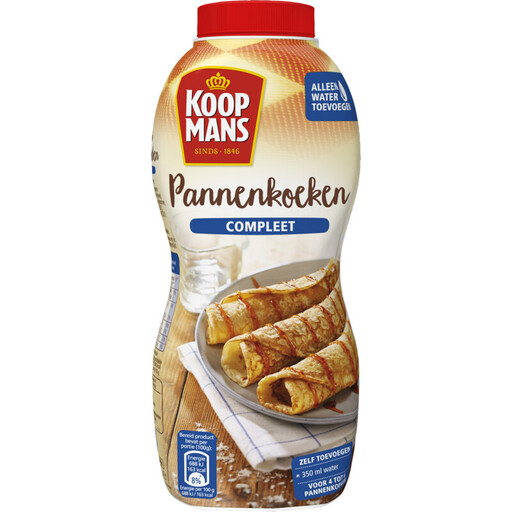 No image available
An option if you’d rather not add milk and eggs to the batter. Check how many bottles you’ll need for your guests and, if allergies are a concern, read the current label.
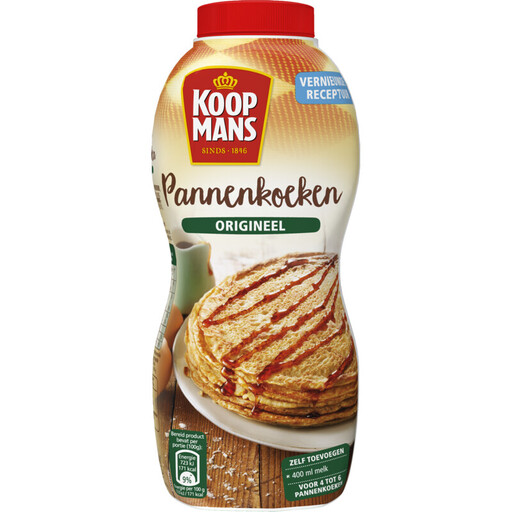 No image available
The shaker bottle is a good choice if you want to make a small amount without using a separate mixing bowl. You’ll need milk to prepare it, so check that the yield is enough for your guests and read the label if allergies are a concern.
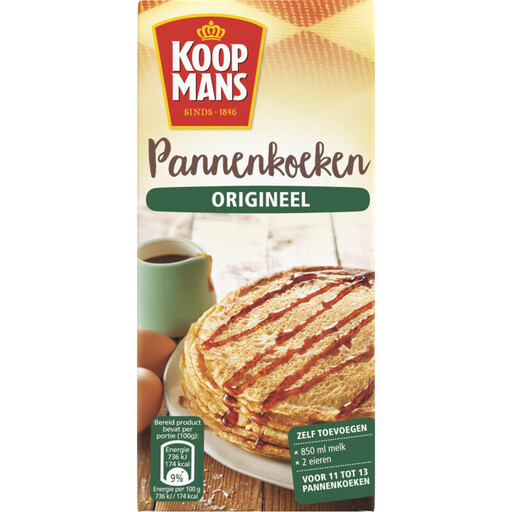 No image available
Consider this larger pack if you’re feeding several guests and want to add your own ingredients to the batter. Check the preparation instructions, stated yield and, if needed, the allergen information.
Yes. Check the pack of the mix you’re actually using. The Netherlands Food and Consumer Product Safety Authority says that allergen information must appear on the label of pre-packed products; also look out for statements about allergens that may be present.
For the complete variants from PLUS and Koopmans mentioned here, you add water to make the batter, but you’ll also need butter or oil for frying. Read the instructions on the specific pack before you start.
You can if the pack gives instructions for doing so. The AH plain and wholemeal mixes mentioned here suggest alternatives to milk and egg; also check the ingredients and allergen information if they’re relevant to your guests.
No. The gluten-free Koopmans mix sold by PLUS says that it may contain egg and milk. Check each relevant allergen statement separately.
Follow the instructions on the bottle you’re using. PLUS says that batter made with milk in its shaker bottle should be used straight away and must not be stored.