
Campers without reliable refrigeration
If you don’t want to bring milk and eggs, look for a complete mix that you prepare with water. Make sure you also have cooking fat or oil and a suitable pan.


If you don’t have reliable refrigeration at the campsite, choose a complete pancake mix that only needs water; you’ll still need a pan and cooking fat or oil for frying. If you can store milk and eggs safely, a plain mix is another option. Compare all the ingredients you’ll need to bring, and always check the label if you have dietary requirements.
If you don’t want to bring milk and eggs, look for a complete mix that you prepare with water. Make sure you also have cooking fat or oil and a suitable pan.
If you have milk and eggs with you and can store them safely, you could also consider a plain mix. Check the full list of ingredients you’ll need, rather than looking only at the dry mix.
Look for a mix that is explicitly labelled gluten-free and check the current ingredients and allergen information. Gluten-free doesn’t automatically mean a mix is also free from milk or egg.
Start with the ingredients you can bring and store at the campsite. Then consider how much you want to make, the packaging and any dietary requirements.
| What to consider | What to check when buying | Who it matters to |
|---|---|---|
| Refrigeration and preparation | Check whether the mix only needs water and whether you’ll need cooking fat or oil. | Without a fridge, I don’t want to have to bring milk and eggs for the batter. Around 36% of consumers prioritise keeping refrigeration needs to a minimum. |
| Everything you’ll need | Compare the ingredients you already have with anything else the instructions call for. | If I’m already bringing milk and eggs, I want to know which mix fits in with the rest of my shopping. For around 29% of consumers, the total ingredients needed matter most. |
| Allergens and dietary requirements | Read the ingredients and allergen information on the pack; check explicitly for a gluten-free label if required. | If I need to avoid gluten, I have to find a suitably labelled mix while also checking for milk and egg. This dietary requirement is the top priority for around 21% of consumers. |
| Packaging and leftovers | Check the amount of mix, storage instructions and whether the packaging seals securely after opening. | I don’t want to make more batter than I can eat or store safely. Around 14% of consumers give portion sizes and ease of storage top priority. |
A plain mix may call for milk and eggs. That matters if you have limited space to store perishable ingredients safely.
Read the full preparation instructions before you leave, then decide which mix is right for your cooking and refrigeration facilities.
The Koopmans gluten-free mix we looked at calls for milk and eggs, and the product information also mentions the possible presence of egg and milk.
Check the ingredients, allergens and preparation instructions on the current packaging to make sure the mix meets your dietary requirements.
The Netherlands Nutrition Centre says dry pancake mix is not suitable for freezing. Cooked pancakes need to be stored differently from unused mix.
Store dry mix according to the instructions on the pack, sealed tightly and protected from moisture. Only plan to keep cooked leftovers if you can chill or freeze them safely.
Raw batter isn’t meant to be eaten. Cooked pancakes that you want to keep will need to be refrigerated.
Cook the pancakes thoroughly and store any leftovers in a sealed container in a fridge or freezer if you have one.
Koopmans offers several pancake mixes, including Original, Complete, Wholegrains and gluten-free varieties. Preparation instructions vary by product.
PLUS offers both a complete and a plain pancake mix, so you can compare the extra ingredients you’ll need.
Albona is the brand of the plain mix we looked at from ALDI.
Jumbo offers several pancake mixes, including an organic variety. Compare the preparation instructions on each pack.
The organic buckwheat mix from Smaakt that we looked at is worth considering if buckwheat is an important part of your choice.
These mixes offer different ways to make pancakes at the campsite: a complete variety made with water, varieties that call for milk and eggs, and a mix that needs water and one egg. Choose according to what you can prepare and store safely.
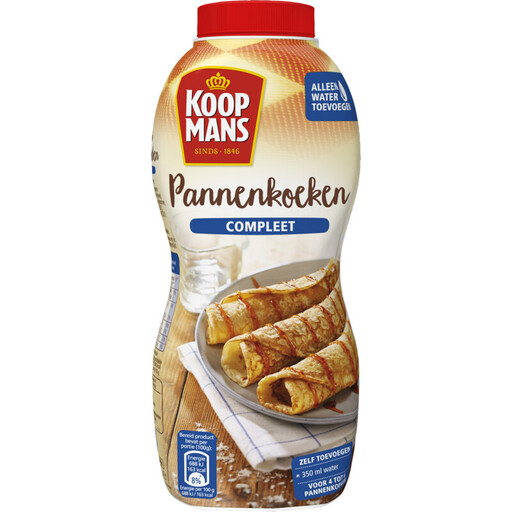 Image unavailable
For making batter with water, without bringing separate ingredients such as milk and eggs. The pack contains 210 g of mix; check the label for egg, milk and gluten if these are relevant to you.
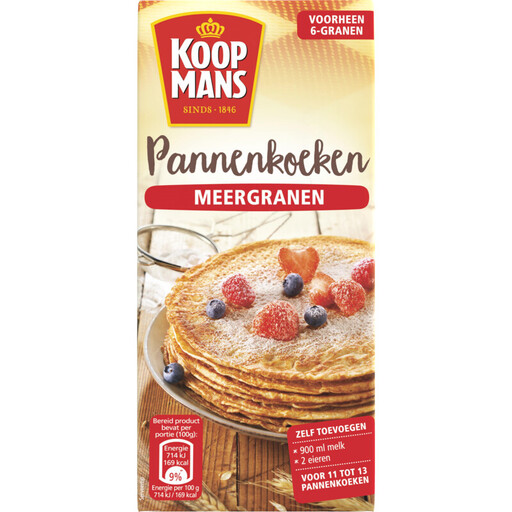 Image unavailable
An option to consider if you can bring milk and eggs and store them safely. The pack contains 400 g of mix; remember to factor in cooking fat or oil when planning your meal.
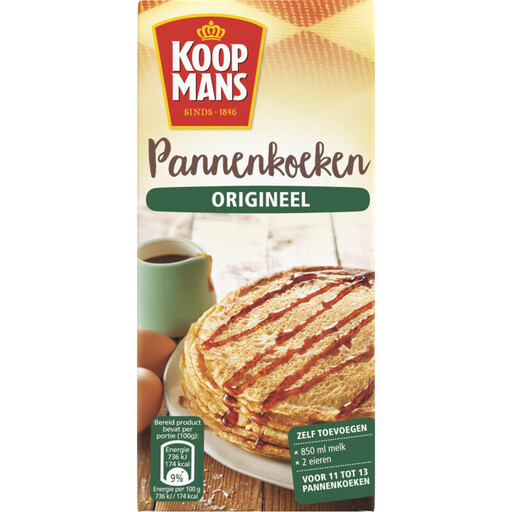 Image unavailable
An option if milk and eggs are already part of your camping meal and you can store them safely. The pack contains 400 g of mix; you’ll also need butter or oil to prepare it.
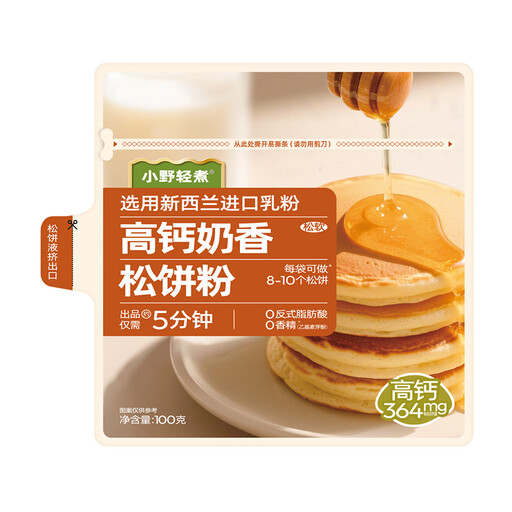 Image unavailable
For anyone who doesn’t want to bring milk as a separate ingredient but can use an egg and store it safely. The pack contains 100 g of mix, and the preparation instructions call for water and one egg; check the ingredients on the pack if you have dietary requirements.
Choose a complete mix whose instructions say to add only water to the batter. According to PLUS, PLUS Complete needs 700 ml of water; you’ll still need cooking fat or oil and a pan for frying. Check the instructions on the pack you buy.
No. The Netherlands Nutrition Centre says dry pancake mix is not suitable for freezing. Store the mix in a dry, tightly sealed container, following the label, and check the best-before date on the pack.
Only keep cooked pancakes if you can chill them promptly and put them in a sealed container in a fridge or freezer. The Netherlands Nutrition Centre says pancakes can be kept for two days in the fridge and three months in the freezer; without suitable refrigeration, it’s best not to save leftovers for later.
Read the current ingredients and allergen information on the packaging, even if the front says gluten-free. The Netherlands Food and Consumer Product Safety Authority explains that allergens must be clearly identifiable on the label; for these mixes, look out in particular for declarations of cereals containing gluten, milk and egg.