
Vandaag of morgen in huis

Kwaliteit gegarandeerd

Welkomstaanbiedingen ontgrendelen: GRATIS bezorging | Tot 80% korting | Gratis 30 dagen JoyPlus-proefperiode
Download de app
Buying a new pan seems simple, until you have to choose between a frying pan, casserole, cast iron pan, induction pan, wok or complete cookware set. Marketing copy often highlights terms such as “durable”, “non-stick” or “suitable for all heat sources”. But those words don’t always tell you how a pan will perform in your kitchen.
So the most important question isn’t which pan gets the most attention, but which features suit your hob, the dishes you cook and your cleaning routine.
An induction pan needs a magnetic base. Some aluminium pans aren’t suitable for induction on their own, so they’re fitted with a separate induction plate. Check the base diameter too. A 28 cm pan may have a smaller effective base than your induction zone, which can lead to less even heat distribution.
When choosing an induction pan, look for:
A non-stick pan won’t necessarily stay in the same condition for years. High temperatures, metal utensils, scouring pads and putting a hot pan straight under a cold tap can all put stress on the coating. Ceramic pans also need careful handling.
Product information from various brands, for example, refers to ceramic or other non-stick coatings. That’s a product specification, not a guarantee of a set lifespan. Where possible, use wooden, silicone or plastic utensils, and follow the manufacturer’s care instructions.
If you’re specifically looking for a PFAS-free pan, check the product page for a clear statement. A ceramic coating doesn’t automatically mean that the entire product is PFAS-free. According to the product information, the Brabantia Dusk pans feature a 100% PFAS-free ceramic coating.
A 28 cm frying pan offers plenty of cooking space, but it’s also heavier and takes up more cupboard space. A 16 cm saucepan with a capacity of around 1.5 litres is more practical for sauce, porridge or a small portion of vegetables than a large stockpot.
As well as the diameter, consider:
Aluminium heats up relatively quickly and is often lighter. It’s practical for everyday cooking, especially in a frying pan or wok. An aluminium pan usually needs a magnetic base to work on induction.
Stainless steel is suitable for intensive everyday use and is often used in multi-layer construction. According to the product description, the WMF Profi Resist has an aluminium core, a Cromargan 18/10 stainless steel interior and a chrome-plated exterior. The three layers are designed to distribute heat evenly.
Cast iron retains heat for a long time and is well suited to slow cooking, roasting and stews. The trade-off is that a cast iron pan is heavy. According to the product specifications, the 26 cm Le Creuset Signature Cast Iron Roaster weighs around 5,135 kg and has a capacity of 5.3 litres. That’s practical for family meals, but less suitable if you’re looking for a lightweight pan.
A non-stick pan is useful for eggs, pancakes, fish and dishes where you want to use less fat. Always check whether the pan is oven-safe, the maximum temperature it can withstand and whether it’s dishwasher-safe.
A ceramic pan usually has a ceramic non-stick coating. According to the product information, the 20 cm WMF Durado frying pan and the 28 cm WMF Durado grill pan both have a ceramic coating. Both models are suitable for induction, but the product pages say they should be washed by hand.
An uncoated cast iron pan or carbon steel wok needs different care. According to the product description, the WANGYUANJI wok has no chemical coating and needs seasoning before first use. After use, wash it by hand, dry it thoroughly and lightly oil it. It’s not a good choice if you mainly want to clean your pans in the dishwasher.
An oven-safe pan is only practical if you check the permitted temperature. Consider the pan itself, the handle, the lid knob and the lid. According to the product specifications, the WMF Vitalis steaming and roasting pan is oven-safe up to 180 °C with the lid on and 250 °C without the lid. The Brabantia Dusk range is oven-safe up to 200 °C, according to the product information.
Never use a pan above its stated temperature. For example, a plastic handle may not be suitable for oven use, even if the pan itself can withstand high temperatures.

Why it suits this profile: The set includes 20 cm and 24 cm pans for smaller households and everyday cooking. Both sizes are suitable for induction and other common heat sources.
The product information clearly states which heat sources the pans are suitable for, their oven limit of 200 °C and the recommendation to wash them by hand to help the coating last longer.
Two sizes, 100% recycled forged aluminium according to the product information, and a PFAS-free ceramic coating.
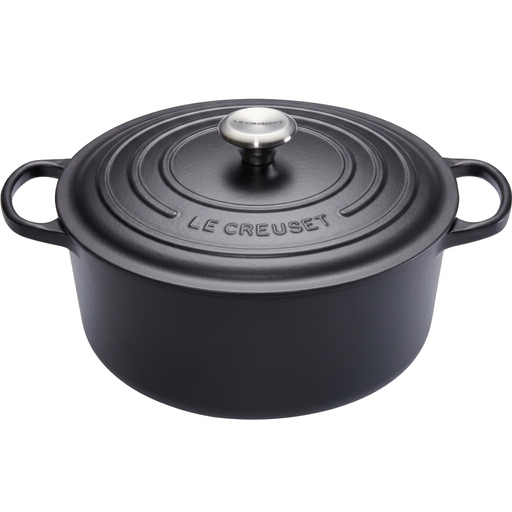
Why it suits this profile: This cast iron pan with lid is designed for casseroles, roasting, soups and oven cooking for several people.
Its 5.3-litre capacity and suitability for induction and oven use are clearly stated. Bear in mind, though, that it weighs around 5,135 kg.
Enameled cast iron, a lid and large handles; suitable for all heat sources according to the product description.
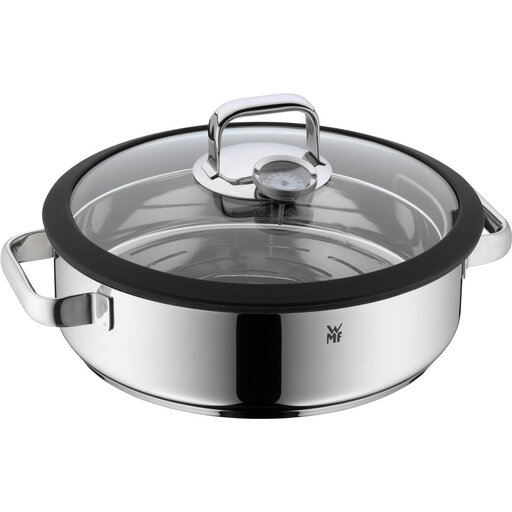
Why it suits this profile: For anyone who wants to steam, roast and cook in one pan. Its capacity of around 5 litres makes it suitable for family meals and more elaborate dishes.
The oven limits are listed separately for use with and without the lid. It also states that only the thermometer is not dishwasher-safe.
Stainless steel, a steamer insert, a glass lid with thermometer and suitability for induction according to the product information.
We’ve put together a complete, up-to-date list of products that meet these strict selection criteria and current European safety regulations.
Choose a pan that’s explicitly labelled as suitable for induction. Also check that the base is flat and makes good contact with the induction zone. A pan suitable for induction may also work on gas, electric or ceramic hobs, but check each product individually.
It depends on the material, how you use it and how you care for it. Avoid overheating, metal utensils and harsh cleaning. The manufacturer may say that a pan is dishwasher-safe, but hand-washing is often recommended to keep the coating in good condition for longer. Replace the pan if the coating starts to peel visibly or the pan becomes warped.
A cookware set can be practical if you need several sizes. Do check that you’ll use every piece and that the set suits your hob. For a small kitchen, one good frying pan, a saucepan and perhaps a casserole may be all you need. It’s better to choose a separate wok, grill pan or steamer based on what you actually cook.
