
Vandaag of morgen in huis

Kwaliteit gegarandeerd

Welkomstaanbiedingen ontgrendelen: GRATIS bezorging | Tot 80% korting | Gratis 30 dagen JoyPlus-proefperiode
Download de app
You usually notice the wrong nappy choice quickly: leaks during the night, red marks around the waist or a pack that runs out much sooner than expected. With Pampers nappies, the choice is not just about the price per pack. The size, fit, absorbency and materials all determine whether a nappy works well for your baby.
A monthly box may seem like good value, but it is not always the right purchase. Pay particular attention to these three common pitfalls:
Pampers uses sizes from size 1 to 8, but the exact weight range may vary between product lines. Newborn nappies are generally narrower, and some models have a notch for the umbilical cord. Always check the size information on the packaging and compare it with your baby’s current weight.
A nappy is probably too small when:
A nappy that is too large can cause gaps around the legs. If you are unsure, it is wiser to try a smaller pack than to buy a large monthly box straight away.
An absorbent nappy usually contains a core made from cellulose and superabsorbent polymers. According to the Pampers Premium Protection product description, this range contains more than 1,000 absorbent micropores. Pampers also describes a Stop & Protect pocket that helps limit leaks at the back.
According to its own product information, Pampers Baby-Dry focuses on an extra absorbent layer, stretchy sides and protective edges around the legs. Baby-Dry Pants also have a 360° flexible waistband and are designed for children who are very active.
When comparing products, look at:
For babies with sensitive skin, the materials may matter more than an extra print or promotion. According to the product information, Pampers Harmonie is described as hypoallergenic, with no perfume or lotion. According to Pampers, the range is dermatologically tested and has OEKO-TEX Standard 100 certification.
Pampers Premium Protection and Baby-Dry are also dermatologically tested according to their product descriptions and contain no EU fragrance allergens. This does not mean that every baby will react in the same way. Stop using the product if redness or irritation occurs, and consult a doctor or health visitor if symptoms persist.
A monthly box is most practical when you already know the right size and can estimate roughly how many nappies you use per day. Newborns often use several nappies a day, while consumption tends to decrease later on. So do not base your decision solely on the number of nappies; also take growth, childcare and night-time use into account.

Why it suits this profile: A manageable monthly box for parents who want to compare newborn nappies by quantity, size and skin-focused product features.
The packaging states 180 nappies and size 1 for approximately 2 to 5 kg. This lets you check the quantity and fit in advance.
According to Pampers: 0% perfume and lotion, a Stop & Protect pocket, wetness indicator and OEKO-TEX Standard 100 certification.
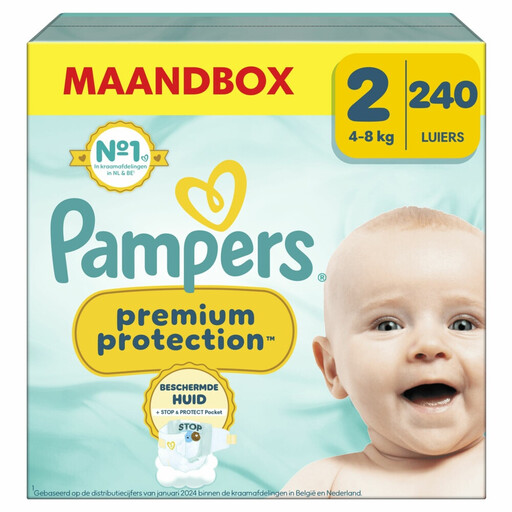
Why it suits this profile: Ideal for parents who know the right size and pay extra attention to soft materials, absorbency and protection at the back.
The product information lists the size, quantity of 240 nappies and an umbilical-cord-friendly notch. This makes comparison more specific than relying on advertising language alone.
According to Pampers: more than 1,000 absorbent micropores, ultra-soft materials, no EU fragrance allergens and dermatological testing.
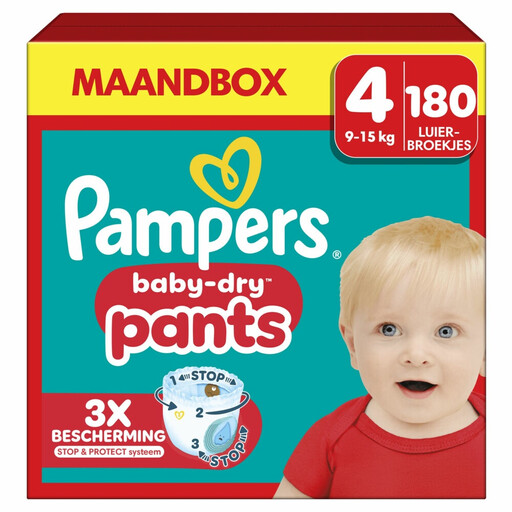
Why it suits this profile: Handy for active babies and toddlers whose traditional nappy shifts while walking, crawling or turning around.
The pants pull on in one easy movement. The sides can be torn open, making changes on the go simpler.
According to Pampers: a 360° flexible waistband, wider protective edges and an absorbent core claiming up to 12 hours’ protection.
We have compiled a complete, up-to-date list of products that fully meet these strict selection criteria and the applicable European safety regulations.
Check the following points before placing your order:
Pampers Baby-Dry is available in sizes 3 and 7, among others, according to the product information available. Pampers Premium Protection and Pampers Harmonie are available in various sizes and quantities. Always check the current product page for the contents, weight range and stock availability.
That depends on your baby’s age and daily usage. Newborns may need several nappies a day. Usage often decreases as babies and toddlers get older. Divide the number of nappies in the monthly box by your estimated daily usage to see how long the pack will last.
According to the product information, Pampers Harmonie and Pampers Premium Protection are described as suitable for sensitive skin. According to Pampers, Harmonie is hypoallergenic and, according to the description, contains 0% perfume and lotion. Always check the ingredients and stop using the product if irritation occurs.
Pampers nappy pants are practical when your child is very active or finds lying-down nappy changes difficult. Baby-Dry Pants have stretchy sides and can be pulled on like underwear. Choose the size based on your child’s weight and check that the waistband and leg edges fit snugly.
