
Vandaag of morgen in huis

Kwaliteit gegarandeerd

Welkomstaanbiedingen ontgrendelen: GRATIS bezorging | Tot 80% korting | Gratis 30 dagen JoyPlus-proefperiode
Download de app
A Pampers nappy monthly box may seem simple to choose: select a size, compare the number of nappies and place your order. In practice, choosing the wrong size, an unsuitable fit or buying too large a quantity can lead to unnecessary costs. Particularly with babies who grow quickly, a bulk pack is not always the most economical option.
The key question is therefore not just how many nappies you get, but also whether the nappy is suitable for your child’s weight, freedom of movement and skin. Below, you’ll find what to look out for when choosing Pampers Baby-Dry nappies, Pampers Premium Protection nappies, Pampers Harmonie nappies and Pampers nappy pants.
A box containing 240 nappies may seem attractive, but the number of nappies per size varies considerably. For example, a Pampers monthly supply may contain 117, 126, 144, 174 or more nappies. The price per nappy is more useful than simply looking at the total price.
Calculate:
price per nappy = box price ÷ number of nappies
Also take daily usage into account. Newborn babies generally use more nappies per day than toddlers who are already moving towards nappy pants.
Age is only a general guide. Always check the weight range on the packaging and pay attention to the fit around the waist and legs. Nappies from size 1 to size 8 are not available in exactly the same way across every product range.
A nappy that is too small can feel tight or cause leaks. A nappy that is too large may not fit securely, particularly around the legs. If you’re unsure, order a smaller pack first before buying a full monthly box of nappies.
Terms such as “leak-proof nappies”, “dermatologically tested” or “suitable for sensitive baby skin” do not mean that every baby will have the same experience. According to Pampers’ own product information, various ranges have been dermatologically tested and are free from EU fragrance allergens. This remains brand-provided product information and is not a guarantee that every child will avoid skin irritation.
Stop using the product if irritation occurs and consult a healthcare professional if symptoms persist.
Start by checking your baby’s weight. Examples from the range include:
You can recognise the right size by a smooth fit without deep red marks. Leaks at the back or around the legs may indicate that the size is unsuitable, but they may also mean that the nappy has not been put on correctly.
A standard nappy with adhesive tabs is convenient when changing a child who is lying down. Pampers nappy pants can be pulled on in one movement and are practical when your child is moving around or standing. The sides can be torn open for removal.
According to the brand’s own product description, Pampers Baby-Dry Pants feature a 360° flexible waistband, wider protective edges and an absorbent core. These features are particularly relevant for active babies and toddlers. Nappy pants are not automatically cheaper per change, so compare the number of items and the price per item.
Product ranges may differ in construction and materials:
OEKO-TEX Standard 100 is a verifiable certification indicating that the textile product has been tested for harmful substances in accordance with the relevant standard. Check the current packaging and product page for precise certification details. A certification does not mean that a nappy will work problem-free for every child.

Why this suits the profile: A generous box of 222 nappies is practical for parents looking to stock up on a commonly used size and compare the price per item.
You can compare the large number of items directly with the price, rather than focusing only on marketing claims about overnight protection.
222 nappies per box; extra absorbent layer; Stop & Protect pocket according to the product description.

Why this suits the profile: This box is suited to parents who prioritise soft materials, fit details and skin-related product information.
The choice is based on stated features such as absorbent micropores, overlapping fastening tabs and a Stop & Protect pocket, rather than a general claim that it ranks best.
174 nappies; no EU fragrance allergens according to the product information; OEKO-TEX-certified according to the stated specification.

Why this suits the profile: Suitable for active babies who roll, crawl or stand, and for whom quick changing is important.
The 360° waistband and wider protective edges are specific fit features; they do not replace checking that you have chosen the right size.
160 pants; pull on in one movement; sides can be torn open for removal.
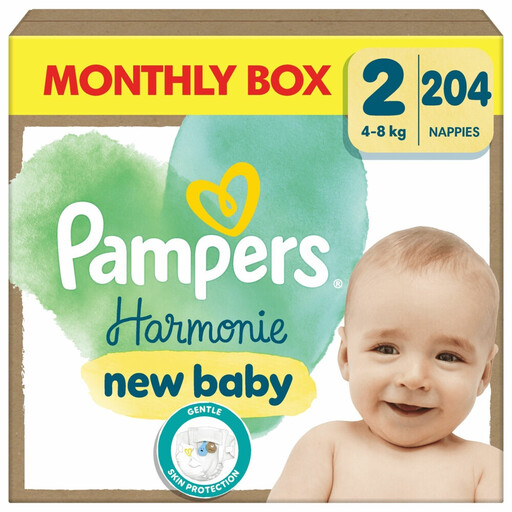
Why this suits the profile: An option for parents who value perfume- and lotion-free product information and find a wetness indicator useful.
The product information states 0% perfume and lotion. Nevertheless, check the ingredients and stop using the product if skin irritation occurs.
204 nappies; 0% perfume and lotion according to the product description; wetness indicator and Stop & Protect pocket.
We’ve put together a complete, up-to-date list of products that fully meet these strict selection criteria and the applicable European safety regulations.
Use your current usage as a starting point. Count how many nappies your child uses on average each day and multiply this by the number of days you want your supply to cover. Don’t add a large reserve if your child is nearly ready to move up to the next size.
When buying a monthly box, also consider:
Store unused nappies in a dry place away from heat. Do not use any that are torn or have been opened. Used disposable nappies belong in household waste and must not be flushed down the toilet.
This varies by size and product range. The selection includes boxes containing between 117 and 240 items, for example. Always check the exact quantity on the product page, then calculate the price per nappy.
Move up when the nappy is visibly tight, leaves red marks or leaks more frequently despite being changed correctly. Check the weight stated on the packaging, but also use the fit around the waist and legs as a practical guide.
Not necessarily. Nappy pants can save time with active children, but the number of pants per monthly box and the price per item vary. Compare both options based on ease of use, fit and cost per change.
