
Vandaag of morgen in huis

Kwaliteit gegarandeerd

Welkomstaanbiedingen ontgrendelen: GRATIS bezorging | Tot 80% korting | Gratis 30 dagen JoyPlus-proefperiode
Download de app
A Pampers nappy monthly box sounds convenient: one order and no worries about running out for a while. But a bulk pack can work out expensive if your baby quickly moves up a size, the fit isn’t right or you buy more nappies than you need. By checking a few key details, you can avoid waste and choose a monthly supply that suits your baby’s weight, skin and daily routine.
A box with lots of nappies may seem like good value. However, the price per nappy could be higher than for another monthly box. So divide the total price by the number of nappies. Also consider how many you use: newborns often need more changes a day than toddlers.
Age is only a rough guide. Babies of the same age may need different sizes. A nappy that’s too small can feel tight and leak more easily; one that’s too big may not fit snugly around the legs and back.
So always check the weight guide on the packaging. The Pampers range includes baby nappies in sizes 1 to 8. The exact weight ranges may vary between product lines.
Phrases such as “dry nights”, “leak-proof” or “extra absorbent” describe what a nappy is designed to do; they aren’t a guarantee for every baby. The fit, your baby’s position, their drinking pattern and how often you change them all affect the result. Focus on the specific features instead: stretchy sides, an absorbent core, leg cuffs and fastening tabs.
Start with your baby’s weight, then check the fit. The waistband should sit snugly without leaving red marks. The leg cuffs should be folded outwards. If the nappy leaks regularly even though the size matches your baby’s weight, a different product line or size may fit better.
For a newborn, practical features to look for include a navel-friendly cut-out and flexible fastening tabs. For active babies and toddlers, stretchy sides and a flexible waistband are important.
An absorbent nappy is particularly useful for longer stretches, such as overnight or when you’re out and about. For daytime use, a smaller pack or a more affordable line may be enough. Look for details about the absorbent core, moisture distribution and a protective back pocket.
A manufacturer might, for example, claim protection for up to 12 hours. Treat this as a claim in the product description, not a set wearing time. Change a nappy when it’s full or soiled.
When choosing nappies for sensitive baby skin, many parents check for fragrance, lotion and dermatological testing. Check what the product page or packaging actually says. According to the manufacturer, some Pampers lines are dermatologically tested and contain no EU fragrance allergens.
OEKO-TEX Standard 100 may also be listed on the packaging or product page. This is a verifiable certification reference, but it doesn’t mean every baby will have the same experience. Stop using the product if irritation occurs, and speak to a healthcare professional if skin problems persist.
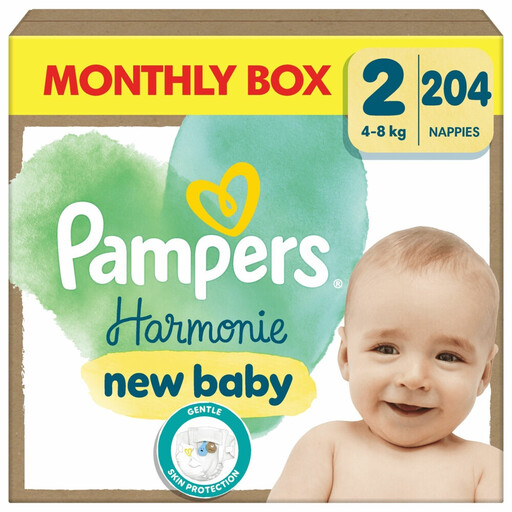
Why it suits this profile: A large pack in size 2 is practical if your baby is likely to stay in this size for a while. The wetness indicator can help you check whether a nappy is wet.
The product information states that it contains 0% fragrance and lotion, so you can compare these features in advance rather than relying on marketing claims alone.
204 nappies, an absorbent core, a Stop & Protect pocket and cellulose from FSC-certified forests that are responsibly managed according to the manufacturer.

Why it suits this profile: This option is designed for newborns and parents who are choosing their first nappies and prioritise soft materials, a good fit and a navel-friendly cut-out.
The product page lists specific features, such as overlapping fastening tabs, micropores and a Stop & Protect pocket, rather than making only a general claim about comfort.
180 nappies, dermatologically tested according to the product information, free from EU fragrance allergens and certified to OEKO-TEX Standard 100.

Why it suits this profile: A good choice for active babies who move around a lot during the day and wear a nappy for longer overnight.
Fit isn’t based on age alone: the product information lists stretchy sides and leg cuffs as specific design features.
204 nappies, an extra-absorbent layer, a ComfortTouch outer layer and a Stop & Protect pocket, according to the product description.
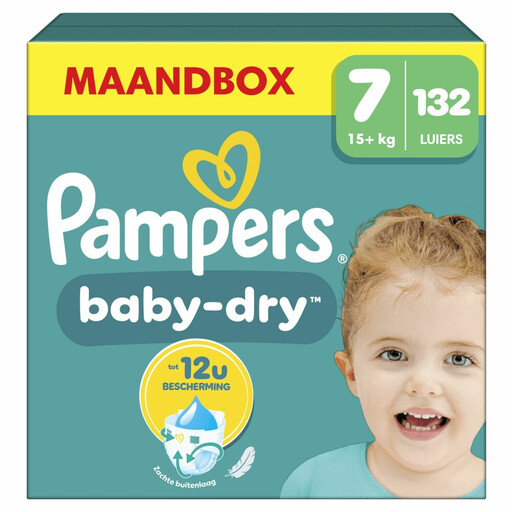
Why it suits this profile: Size 7 is designed for children who weigh more. Check the weight limit on the packaging before buying a larger supply.
The product details state that this size isn’t suitable for babies under 15 kg. This makes weight a clearer guide than age alone.
132 nappies, stretchy sides, an absorbent layer and leg cuffs, according to the product description.
We’ve put together a complete, up-to-date list of products that meet these strict selection criteria and the applicable European safety requirements.
A monthly box won’t necessarily last every child exactly one month. Take into account:
With newborn nappies, a smaller order may be wiser because babies grow quickly. For a size that’s likely to fit for a while, such as size 4 or size 5, a bulk pack of nappies may be more practical. Always compare the price per nappy and check the expiry or packaging information.
It depends on your baby’s age and routine. Newborns often need several nappy changes a day, while older babies generally need fewer. Divide the number of nappies in the box by your estimated daily use. If you’re trying a new size, consider starting with a smaller pack.
Use the weight guide on the packaging as your starting point. Then check that the waistband and leg cuffs fit snugly, without leaving marks or gaps. Regular leaks may mean the size is wrong, the fit isn’t right or you need a different product line.
It depends on your baby and the specific product line. Product information may state that a nappy is dermatologically tested or contains no EU fragrance allergens. According to the manufacturer, Pampers Harmonie also contains 0% fragrance and lotion. Stop using the product if redness or irritation occurs, and ask a healthcare professional for advice if needed.
