
Vandaag of morgen in huis

Kwaliteit gegarandeerd

Welkomstaanbiedingen ontgrendelen: GRATIS bezorging | Tot 80% korting | Gratis 30 dagen JoyPlus-proefperiode
Download de app
A Pampers nappy monthly box is convenient for parents who do not want to keep ordering individual packs. With one large pack, you have enough nappies at home for several weeks. However, a large box is not automatically better value. The wrong size, an unsuitable fit or a product range that does not suit your daily routine can actually lead to waste.
In this buying guide, you will learn what to look for when choosing Pampers monthly-box nappies, from weight range and number of nappies to absorbency, skin contact and the difference between standard nappies and nappy pants.
A pack containing more nappies may seem appealing, but the number varies by size. For example, a monthly box of Pampers size 2 nappies often contains more pieces than a box of size 6 nappies. This is because older babies and toddlers are changed less often on average, and the nappies are larger.
So do not compare the box price alone. Also calculate the price per nappy and estimate how quickly your child will move up to the next size. A large supply of size 3 nappies can be inconvenient if your baby will soon need size 4.
Age is only a general indication. Fit is mainly determined by weight, body shape and the shape of the waist and legs. Always check the size information on the packaging. The range includes size 1, size 2, size 3, size 4, size 4+, size 5, size 6, size 7 and size 8 nappies.
Signs that a size is not fitting properly:
Terms such as ‘up to 12 hours of protection’ or ‘leak-free nights’ are generally maximum claims or claims formulated by the brand. According to Pampers’ own product information, certain models can provide up to 12 hours of protection; the actual experience depends on the size, amount of moisture, movement and changing times.
Terms such as ‘hypoallergenic’ and ‘dermatologically tested’, as well as a certification mark, do not mean that every baby will react in the same way. Check the ingredients and stop using the product if irritation occurs. Always follow the changing instructions on the packaging.
First choose the correct weight range, then consider the fit. A good nappy fits snugly without feeling tight. For active babies, elasticated sides and protective edges around the legs can be particularly practical.
For newborns, a navel-friendly cut-out is important. Pampers Premium Protection states in its product information that it has a navel cut-out and overlapping adhesive tabs. These are verifiable product features, but they do not replace checking the individual fit.
If you are mainly buying a month’s supply of nappies for overnight use, pay attention to the absorbent core, moisture distribution and leak barriers. Pampers Baby-Dry states that it has an extra absorbent layer, elasticated sides and a Stop & Protect pocket at the back. These components are designed to absorb moisture and help limit leaks.
Pampers Premium Protection is described in the brand’s own product information as having more than 1,000 absorbent micropores. Treat this as a product specification from the brand, not as a guarantee for every usage scenario.
Parents looking for nappies for sensitive baby skin may want to look for:
According to the brand’s product information, Pampers Harmonie states that it contains 0% perfume and lotion, has a hypoallergenic composition and uses cellulose from FSC-certified forests and other controlled sources. Pampers Premium Protection and Baby-Dry also state that they have been dermatologically tested and contain no EU fragrance allergens. Always check the current packaging when buying, as product information may change.

Why this suits the profile: A large box of 222 size 3 nappies is practical when you need a substantial daily supply and expect to use this size for some time yet.
The size and total quantity are clearly stated, so you can match your supply to your baby’s weight rather than relying on age alone.
Extra absorbent layer, Stop & Protect pocket, elasticated sides and OEKO-TEX Standard 100 according to the product information.
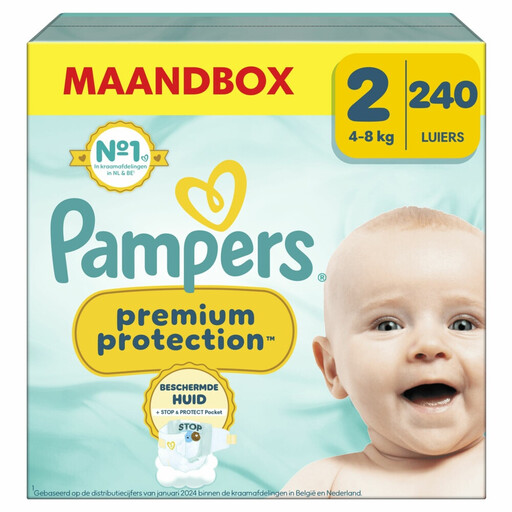
Why this suits the profile: This monthly box is aimed at parents who value soft materials, a navel-friendly fit and information about skin contact.
You can combine the large pack with a trial pack, allowing you to check the fit before buying a larger supply.
More than 1,000 absorbent micropores according to Pampers, soft materials, Stop & Protect pocket and no EU fragrance allergens according to the product description.

Why this suits the profile: Nappy pants are useful for active babies and toddlers who move around a lot or who make changing with adhesive tabs difficult.
The 360° elasticated waistband and wider protective edges are designed for movement, helping to prevent a static fit from feeling restrictive.
Pulls on in one movement, tear open the sides for removal, absorbent core and 0% EU fragrance allergens according to the product information.

Why this suits the profile: This option is suitable for carers who, when choosing size 3 nappies, pay attention to fragrance- and lotion-free specifications and additional information about materials.
The product description explicitly states 0% perfume and lotion, so you do not have to rely solely on general terms such as ‘soft’.
Hypoallergenic according to Pampers, wetness indicator, Stop & Protect pocket and OEKO-TEX Standard 100 according to the product information.
Pampers Baby-Dry Pants are nappy pants that you pull on rather than fastening with adhesive tabs. This can be useful for a child who wriggles, crawls or walks a lot. The range is available in sizes including size 4, size 5, size 6, size 7 and size 8. Pay particular attention to the waistband: it should fit securely without slipping down or pressing into the skin.
For a sleeping baby who is still lying calmly on their back, a standard nappy with adhesive tabs may be easier to check. The choice between Pampers Baby-Dry, Pampers Premium Protection and Pampers Harmonie therefore depends not only on absorbency, but also on activity levels and your changing routine.
We have compiled a complete, up-to-date list of products that fully meet these strict selection criteria and the applicable European safety regulations.
This depends on your child’s age, changing routine and whether they also spend time in other childcare settings. Divide the number of nappies in the box by the average daily usage. Bear in mind that young babies use more nappies, and do not immediately buy several monthly boxes if the size is likely to change soon.
A monthly box may offer a lower price per nappy, but always check the current total price, delivery costs and number of pieces. A larger pack is only better value if you use the entire contents within the recommended usage period and before moving up to the next size.
Store nappies in a dry, clean place away from direct sunlight. Check the information on the packaging for any expiry or recommended usage period. Do not use nappies with damaged packaging, tears or an unusual condition. Also follow the guidance on changing nappies regularly and disposing of them hygienically.
