
Vandaag of morgen in huis

Kwaliteit gegarandeerd

Welkomstaanbiedingen ontgrendelen: GRATIS bezorging | Tot 80% korting | Gratis 30 dagen JoyPlus-proefperiode
Download de app
A Pampers nappy monthly box may seem simple to choose: select a size, compare the number of nappies and place your order. In practice, an incorrect fit, excessive stock or unclear material claims can lead to unnecessary costs. Especially with babies who grow quickly, a large pack is not always the most economical option.
This buying guide helps parents and carers compare Pampers nappies, nappy pants and baby wipes based on verifiable criteria.
A large pack of nappies usually has a lower price per nappy, but that saving disappears if your baby moves up to the next size shortly afterwards. So check the recommended weight first, then compare the number of nappies. A box with 204 nappies sounds generous, but it is only practical if size 4 fits well for a longer period.
Brands use claims such as “up to 12 hours’ protection” or “up to 100% leak-free nights”. These are not guarantees for every baby. According to Pampers’ product descriptions, features including an absorbent core, flexible sides and a Stop & Protect pocket are designed to help limit moisture and leaks. Your actual experience also depends on the size, fit, movement and how often the nappy is changed.
“Soft”, “natural” or “skin-friendly” do not say much on their own. Look for specific information, such as 0% EU fragrance allergens, fragrance-free, lotion-free, dermatologically tested or OEKO-TEX Standard 100. According to Pampers’ own information, several ranges have been dermatologically tested. This does not mean that every baby will react in the same way. Stop using the product if redness or irritation occurs and follow the instructions on the packaging.
The right size is more important than the age stated on the packaging. Look out for:
The range includes Pampers nappies size 1, size 3, size 4, size 5, size 6, size 7 and size 8. For size 4, for example, there are both standard nappies and Pampers Baby-Dry Pants. Always check the current size information on the product page, particularly when your child is close to the weight boundary between sizes.
Tape-fastened nappies are useful for babies who still spend a lot of time lying down. Nappy pants can be pulled on in one movement and are practical for active toddlers who will not lie still. According to the Pampers Baby-Dry Pants product information, these pants have a 360° flexible waistband, wider protective edges and tear-away sides.
Nappy pants do not automatically offer a better fit. Choose according to your everyday needs:
The term “monthly box” does not mean that every baby will use exactly one box in a month. Work it out yourself:
price per nappy = total price ÷ number of nappies
Take the number of changes per day into account. Newborns generally use more nappies than older children. When moving to a new size, buy a smaller quantity first if you are not yet sure how the fit works with your baby’s skin and body.

Why it suits this profile: A generous monthly pack for families who already know that size 4 fits well and prefer not to order new packs as often.
The product information states the size, the quantity of 204 nappies and specific features such as flexible sides and a Stop & Protect pocket.
Extra absorbent layer, ComfortTouch outer layer and, according to the product description, 0% EU fragrance allergens.
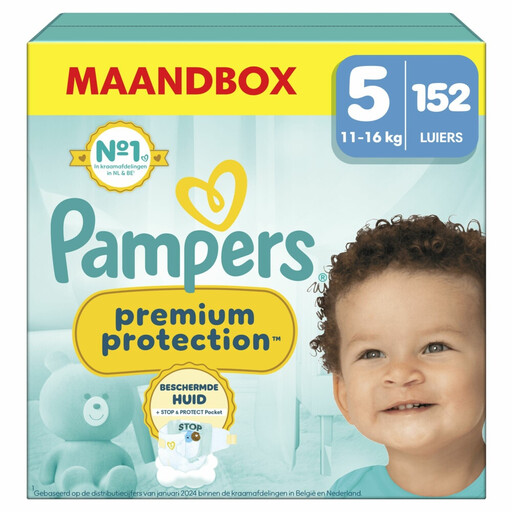
Why it suits this profile: Designed for parents who pay extra attention to soft materials, fit and information about use on sensitive skin.
You can base your choice on the quantity of 152 nappies, size 5, a Stop & Protect pocket and the stated skin and certification information.
The product description mentions more than 1,000 absorbent micropores, overlapping fastening tabs and no EU fragrance allergens.
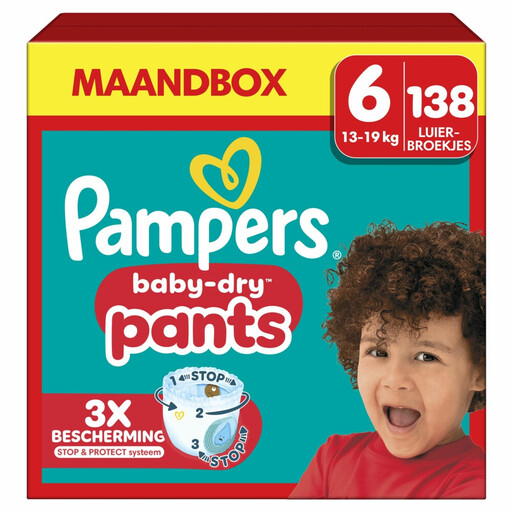
Why it suits this profile: Handy for active children who move around, stand or walk a lot and need quick changes.
You can avoid choosing the wrong type by deciding in advance whether a tape-fastened nappy or pants are better suited to how active your child is.
360° flexible waistband, absorbent core and tear-away sides for putting on and removing the pants.

Why it suits this profile: An option for parents who pay attention to fragrance, lotion and the source of the cellulose in the absorbent core.
The listing states 0% fragrance and lotion, hypoallergenic properties and OEKO-TEX Standard 100 certification. Check the packaging when it arrives.
Size 3, 186 nappies, a wetness indicator and cellulose sourced, according to the product description, from responsibly managed FSC-certified forests.
A supply of nappies is often supplemented with Pampers baby wipes. Pay attention to the difference between fragranced and fragrance-free varieties:
Do not flush baby wipes down the toilet, even if the packaging suggests that you can. Keep opened packs tightly sealed so that the wipes do not dry out.
We have put together a complete, up-to-date list of products that fully meet these strict selection criteria and the applicable European safety regulations.
That depends on your child’s age and the number of changes per day. Divide the number of nappies by your average daily usage. For example, a box of 204 nappies used at a rate of six nappies per day will last around 34 days. Bear in mind that young babies use more nappies and grow quickly.
Use the weight stated on the packaging as your starting point, and consider the fit as well. Size 1 is intended for small newborns, while sizes 7 and 8 are suitable for heavier children according to the relevant product information. Leaks, gaps or red pressure marks may indicate that you need a different size or model.
Not every Sensitive variant is the same. The product information for the “Sensitive Plastic Free” variant states that it contains 0% plastic and 100% plant-based fibres. Standard Pampers Sensitive baby wipes are described as fragrance- and alcohol-free, but always check the exact product name, ingredients and packaging before ordering.
