
Vandaag of morgen in huis

Kwaliteit gegarandeerd

Welkomstaanbiedingen ontgrendelen: GRATIS bezorging | Tot 80% korting | Gratis 30 dagen JoyPlus-proefperiode
Download de app
A Pampers nappy monthly box might seem easy to choose: pick the size, choose the number of packs and place your order. In practice, parents and carers often run into the same problems. A large value pack isn’t automatically good value if your baby is growing into the next size quickly. And a nappy that fits well during the day may not be as suitable at night.
With this practical buying guide, you can compare Pampers nappies by size, fit, absorbency, materials and when they’re used. That way, you can choose a monthly supply that suits your baby or toddler, rather than relying on marketing claims alone.
A box with lots of nappies may look like good value, but the price per nappy doesn’t tell the whole story. Also check:
Size can change quickly, especially for newborns. A smaller box may then be more practical than a large monthly supply.
Age is only a rough guide. Fit depends on your child’s build, tummy and freedom of movement. So first check the weight and size guidance on the packaging. Gaps around the legs, red marks or a nappy that leaks quickly may be signs that the size isn’t quite right.
Brands use phrases such as “dry nights”, “leak-proof nappies” and “up to 12 hours’ protection”. These aren’t guarantees for every child. According to Pampers’ product descriptions, these features are based on the product performance and test information described by the brand. In practice, the right size, fit, amount of moisture and how often you change the nappy all play a part too.
A monthly box is only useful if the nappy fits well. When putting it on, check that:
A nappy that’s too small may leak because the absorbent core doesn’t cover enough. A nappy that’s too large may leave gaps around the legs. Pampers’ range includes nappies in sizes 1 to 8, but the available quantities vary by product and size.
With an absorbent nappy, it’s not just the amount of material that matters. Check how it’s designed:
According to the product information, Pampers lists more than 1000 absorbent micropores for Premium Protection. Baby-Dry products are described as having an extra absorbent layer, stretchy sides and protective leg cuffs. You can check these specifications in the product description, but they don’t mean every nappy will remain completely leak-proof in all circumstances.
If you’re looking for nappies for sensitive skin, compare the information about materials and testing. The product information provided for various Pampers ranges mentions:
A certification or test claim isn’t a medical assessment and can’t prevent an individual skin reaction. Stop using the product if irritation occurs and follow the instructions on the packaging. It’s still important to change nappies regularly, even when a product claims to offer protection for longer.

Why it suits this profile: A generously sized box of 204 nappies for parents looking for a practical monthly supply in a popular size.
As well as the quantity, the product listing mentions an extra absorbent layer, stretchy sides and protective leg cuffs. First, though, check that size 4 is right for your child’s weight.
204 nappies; Stop & Protect pocket, according to the product description; ComfortTouch outer layer and OEKO-TEX Standard 100 listing.
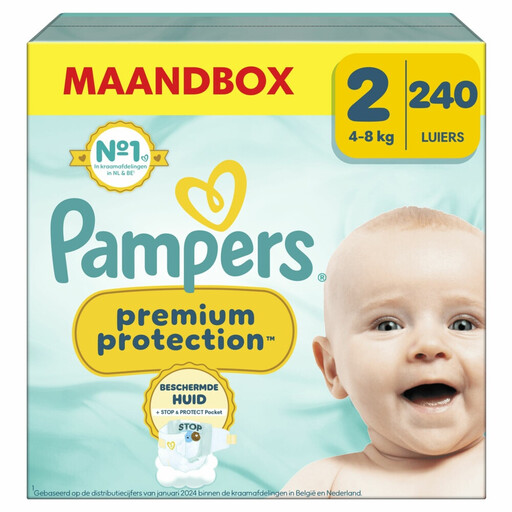
Why it suits this profile: Designed for parents of young babies who pay extra attention to softness, fit and product information for sensitive skin.
The product description mentions a belly-button-friendly cut-out and comfort-fit technology. This gives you more to compare than just the price per nappy.
240 nappies; more than 1000 absorbent micropores, according to Pampers; no EU fragrance allergens and an OEKO-TEX listing.
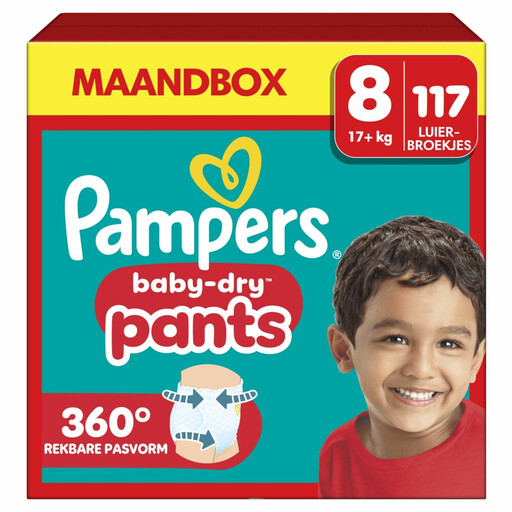
Why it suits this profile: Nappy pants are handy for active toddlers who are always on the move, or when changing them while out and about is more difficult.
Here, you’re choosing nappy pants rather than a taped nappy. According to the product description, the 360° waistband and wider protective cuffs are designed for movement.
117 nappy pants; easy to pull on in one go; tear-away sides and fastening tape for rolling them up; absorbent core, according to the product information.
We’ve put together a complete, up-to-date list of products that meet these strict selection criteria and the applicable European safety regulations.
Work out the price per nappy by dividing the total price by the number of nappies. Then compare only boxes of the same size and type. A Pampers monthly box with 240 nappies isn’t directly comparable with a box of 144 in a different size.
Also consider:
Store a box of nappies somewhere dry and out of children’s reach. Check the packaging before use and follow the usage and safety instructions on the label.
It varies depending on age, size and how often you change your baby. Newborns often use more nappies a day than older babies. Divide the number of nappies in the box by your estimated daily use. If your baby is growing quickly, it’s best not to buy several large boxes in the same small size straight away.
Follow the information on the packaging. Store unopened Pampers nappies in a cool, dry place, away from moisture, heat and direct sunlight. Don’t use a nappy that’s torn or opened, and keep packaging out of reach of babies and children.
According to the product descriptions, both ranges are designed to absorb moisture and provide protection overnight. How well they work in practice depends on the size, fit, position and amount of moisture. If the nappy leaks overnight, first check the size, pull the leg cuffs out properly and change the nappy when it’s saturated.
