
Vandaag of morgen in huis

Kwaliteit gegarandeerd

Welkomstaanbiedingen ontgrendelen: GRATIS bezorging | Tot 80% korting | Gratis 30 dagen JoyPlus-proefperiode
Download de app
A Pampers monthly nappy box is handy if you don’t want to keep ordering individual packs. However, a large pack can also turn out to be a waste of money. Babies grow quickly, so a box containing lots of nappies in the wrong size may go unused. Pampers Baby-Dry, Baby-Dry Pants, Harmonie and Premium Protection also differ considerably in how they’re used and their product specifications.
This buying guide helps you compare Pampers nappies in bulk in a practical way. You’ll find out what to look for, which common pitfalls to avoid and which monthly box might suit different family situations.
A box of 240 nappies may seem like good value, but the number alone doesn’t tell you much unless you also consider the size and how many you’re likely to use. A newborn typically uses more nappies a day than a toddler. What’s more, your child may quickly move up a size during a growth spurt.
So don’t just compare the price of the pack. Also check:
A monthly box doesn’t guarantee a month’s supply. Treat the number as a guide to how much you’ll have in stock, as usage varies from child to child.
Age is only a general guide. Always check the weight and fit. A nappy that’s too small can leave pressure marks and leak around the legs. If it’s too big, gaps can appear around the back or legs.
When checking the fit, look for:
For newborns, Pampers size 1 and Pampers size 2 are among the available options. Sizes then continue with 3, 4, 4+, 5, 5+, 6, 7 and 8. Exact weight ranges may vary by product range and pack.
Words such as ‘overnight protection’, ‘soft’ or ‘suitable for sensitive skin’ may sound appealing, but it’s better to compare specific product information. For example, check for a wetness indicator, an elasticated waistband, leg cuffs, material certification and whether the product is free from perfume or lotion.
When a brand makes a claim about how a product works, treat it as a brand claim. According to Pampers product information, several ranges offer up to 12 hours of protection. This doesn’t guarantee that every baby will stay dry in all circumstances. It’s still important to change nappies in line with the instructions.
Descriptions of several Pampers ranges mention an absorbent core and a Stop & Protect Pocket at the back. This pocket is designed to help reduce leaks at the back. Baby-Dry products also mention leg cuffs and, for the pants, a 360° elasticated waistband.
For overnight use, you can look for:
No nappy fits every child in the same way. If leaks keep happening, trying a different size or range may make more difference than buying a larger pack.
If you’re looking for hypoallergenic nappies or nappies without perfume, check the product description for each variant. According to the product information, Pampers Harmonie contains 0% perfume and lotion, is hypoallergenic and has been dermatologically tested. Baby-Dry Pants and several Baby-Dry nappies state that they contain 0% EU fragrance allergens.
Several variants also mention OEKO-TEX Standard 100. This certification relates to tested harmful substances in the certified product or material. It isn’t medical approval and doesn’t automatically prevent skin irritation in every child.
If redness or irritation occurs, it’s sensible to change the nappy. Stop using it if the symptoms persist, and consult a healthcare professional if needed.
Traditional nappies with fastening tabs are often handy for a baby who still spends a lot of time lying down. Pampers Baby-Dry Pants pull on in one easy movement. You can tear the sides open when changing your child, and the tape helps you roll up the pants for disposal.
Nappy pants are a good choice if your child is very active or changing them while they’re lying down is becoming difficult. Check that the waistband and leg openings fit well. Nappy pants aren’t automatically better value, so compare the number in the pack and the price per item.
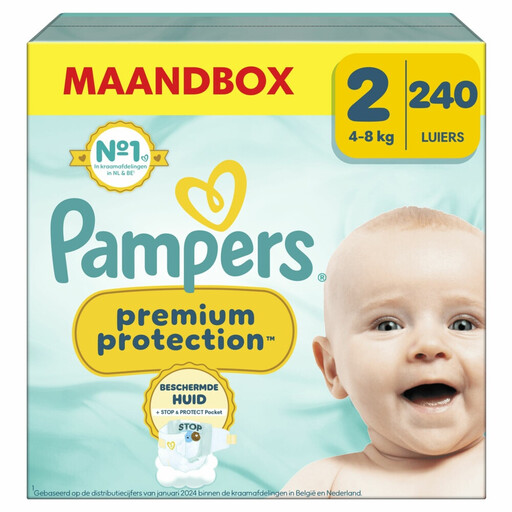
Why it suits this profile: The pack contains 240 size 2 nappies, making it a good choice for parents looking to stock up for a young baby.
The size and total number of nappies are clearly stated. Before ordering, check that size 2 is right for your baby’s weight.
240 nappies; according to the product information, features absorbent micropores, a Stop & Protect Pocket and OEKO-TEX certification.
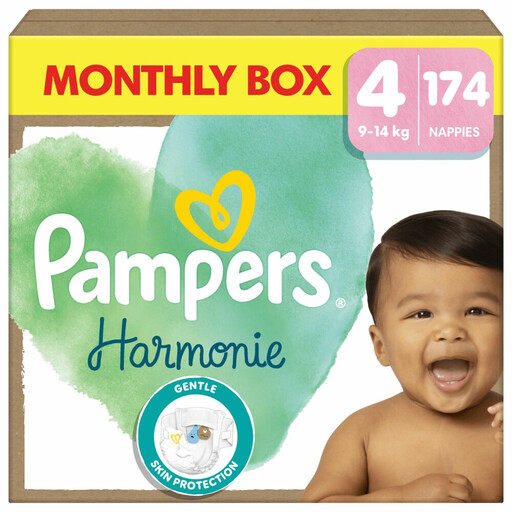
Why it suits this profile: According to the product description, Harmonie focuses on selected materials, 0% perfume and lotion, and a wetness indicator.
The choice is based on features you can check, rather than general claims about softness alone: no perfume or lotion, a wetness indicator and a Stop & Protect Pocket.
174 nappies; described as hypoallergenic in the product information; OEKO-TEX Standard 100 and FSC-certified cellulose in the absorbent core.
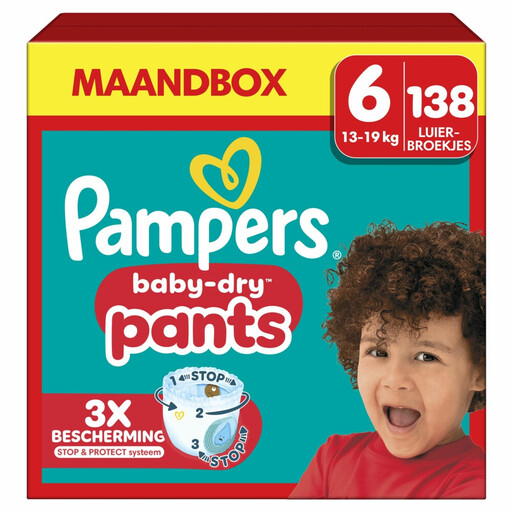
Why it suits this profile: These nappy pants are designed for active children who move around a lot and need quick changes.
The 360° waistband, wider leg cuffs and rear pocket address the common mistake of simply choosing a larger size to deal with leaks.
138 nappy pants; pull on in one easy movement; according to the product information, features a super-absorbent core and 0% EU fragrance allergens.

Why it suits this profile: Size 4+ and a pack of 198 nappies are worth considering if you’re looking for extra absorbency and a larger supply.
The product information mentions an extra absorbent layer, stretchy sides and leg cuffs. Make sure the size is right for your child’s weight.
198 nappies; size 4+; Stop & Protect Pocket; OEKO-TEX Standard 100 according to the stated product specifications.
We’ve put together a complete, up-to-date list of products that meet these strict selection criteria and the applicable European safety regulations.
It depends on your child’s age, how often you change them and whether you use nappy pants. A newborn often uses more nappies a day than a young toddler. Divide the number of nappies in the box by your expected daily usage to estimate how long your supply will last. Remember that your child may soon move up to the next size.
A larger pack may have a lower price per nappy, but always check the current price, pack size and delivery costs. A monthly box is most practical when you’re sure the size and range are a good fit. If your baby is growing quickly, a smaller pack may be the more economical choice.
Move up when the nappy looks tight, leaks frequently or no longer fits well around the legs and back. First, check the weight guidance on the pack. If your child is very active, it may also be worth switching from standard nappies to Baby-Dry Pants.
