
Vandaag of morgen in huis

Kwaliteit gegarandeerd

Welkomstaanbiedingen ontgrendelen: GRATIS bezorging | Tot 80% korting | Gratis 30 dagen JoyPlus-proefperiode
Download de app
A Pampers monthly nappy box is handy for families who don’t want to go to the shops every week. But a large pack isn’t automatically a good-value buy. Your baby may quickly grow out of the size, a particular type of nappy may not suit their stage of development, and marketing claims don’t always tell you what you need to know for everyday use.
Focus on your baby’s weight, the number of nappies, the fastening and the features that matter for your situation. Below, I’ve listed the main things to consider and matched them with practical choices from the range.
A pack of 200 nappies may look appealing, but how many days it lasts depends on your baby’s age and how often you change them. Newborns often need several nappy changes a day. At the same time, your baby may quickly grow into the next size.
So don’t just work out how many nappies are in the pack. Also check:
A monthly box is most practical when the size fits well and your baby isn’t likely to grow out of the pack quickly.
Pampers nappies in sizes 1 to 8 are designed for different weight ranges. Age is only a rough guide. A nappy that’s too small may feel tight or leak more easily; one that’s too large may not fit as snugly around the legs.
When checking the fit, look out for red marks, gaps at the edges and leaks at the back or sides. If your child falls between two sizes, their build may help you decide. Always check the size chart on the pack and the latest product page.
Pampers nappy pants are handy for active toddlers and children who don’t like lying still. You pull them on like underwear, and you can tear the sides open when it’s time for a change. For a newborn, regular nappies with sticky tabs are usually easier, especially for night-time changes.
So don’t choose based only on the brand or pack size. Think about how you’ll use the nappy too.
According to their product descriptions, Pampers Baby-Dry nappies and Baby-Dry Pants are designed for movement and use during the day and at night. Features listed include an absorbent core, stretchy sides and a Stop & Protect pocket at the back. The pants are also described as having wider protective cuffs around the legs and a flexible waistband.
These are technical product features, not a guarantee that every nappy will prevent leaks for every child. Fit, how much your baby wees and how often you change them all matter too. If you’re looking for leak-proof nappies, focus on the combination of waistband, leg cuffs and absorbent core.
When choosing nappies for sensitive baby skin, many parents look at fragrance, lotion and certifications. According to the product information, Pampers Harmonie is hypoallergenic and contains 0% perfume and lotion. The range also has a wetness indicator and a core containing cellulose from FSC-certified forests and other controlled sources.
The product page describes Premium Protection as dermatologically tested and states that it contains no EU fragrance allergens. Baby-Dry products are also described as dermatologically tested and free from EU fragrance allergens.
An OEKO-TEX Standard 100 certification means that the textile or material product has been checked for certain harmful substances in accordance with the certification criteria. It doesn’t guarantee that every baby will have the same experience. Stop using the product if redness or irritation occurs, and follow the instructions on the pack.
Use regular nappies with fastening tabs if you want to adjust the fit precisely around the tummy. Nappy pants are handy once your child is moving around a lot, standing or walking. For pants, also check how to take them off: the product description says you can tear open the sides and roll up the pants using the sticky tab.
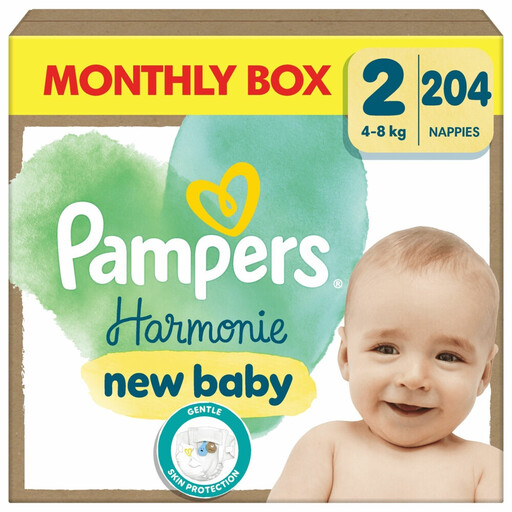
Why it suits this profile: A generous pack for parents looking to keep a regular supply in stock and who value a nappy without perfume or lotion.
The product information lists size 2, 204 nappies, 0% perfume and 0% lotion. First, check that your baby’s weight is right for this size.
Described as hypoallergenic, with OEKO-TEX Standard 100 certification and a wetness indicator.

Why it suits this profile: A good choice for parents who value a comfortable fit, soft materials and a generous monthly supply in a mid-size nappy.
The description mentions a Stop & Protect pocket, overlapping fastening tabs and a cut-out at the front. These features can help you check the fit, but they don’t replace choosing the right size.
174 nappies per box, OEKO-TEX certified according to the product information and dermatologically tested according to Pampers.

Why it suits this profile: Handy for active babies and toddlers who wriggle a lot during changes or are already standing and walking.
These are pants, not a nappy with fastening tabs. According to the product description, the 360° flexible waistband and wider protective cuffs are designed for children on the move.
160 pants per monthly box, easy to pull on and, according to Pampers, dermatologically tested and OEKO-TEX Standard 100 certified.
We’ve put together a complete, up-to-date list of products that meet these strict selection criteria and the applicable European safety requirements.
It depends on your baby’s age, how often you change them and whether you use disposable nappies during the day and at night. A newborn will generally use more nappies a day than a toddler. So a monthly box of 180 nappies may last one baby longer than another.
When working it out, take into account:
A large pack isn’t good value if some of it goes unused because the fit is no longer right.
It can be, but always compare the price per nappy. A large pack may have a lower price per nappy, while a smaller pack may be a better fit for a child who quickly changes size. Also check whether you’re buying nappies or nappy pants, as the number of items and how you use them may differ.
Store unused nappies according to the instructions on the pack, ideally somewhere dry and out of direct sunlight for long periods. Check the packaging for damage and follow any information provided about shelf life or use. It’s best to keep opened packs somewhere clean and dry.
According to the product description, Pampers Harmonie is available as a hypoallergenic option with 0% perfume and lotion. Premium Protection and Baby-Dry are described in the product information as dermatologically tested and free from EU fragrance allergens. Always check the full ingredient and product information on the pack. If skin irritation persists, it’s best to seek advice from a healthcare professional.
