
Vandaag of morgen in huis

Kwaliteit gegarandeerd

Welkomstaanbiedingen ontgrendelen: GRATIS bezorging | Tot 80% korting | Gratis 30 dagen JoyPlus-proefperiode
Download de app
A Pampers monthly nappy box may seem straightforward to choose: select a size, check the number of nappies and place your order. Yet parents regularly buy a box that does not suit their needs. A size that is too small can cause leaks and red pressure marks, while an overly large supply may go unused if your baby quickly outgrows it.
When choosing a month’s supply of nappies, therefore, do not look only at the price per box. The fit, number of nappies per pack, absorbency and material information all determine whether a product is right for your family.
Nappy sizes 1 to 8 are linked to recommended weight ranges, but children who weigh the same can have different body shapes. A nappy that fits well around the waist may still leave gaps around the legs. So, as well as checking the weight range, check the fit around the tummy and thighs.
A monthly box with a large number of nappies is particularly useful when your child has been wearing the same size for some time. With a newborn baby, a large box of size 1 or size 2 nappies may be less practical because their size can change quickly.
Packaging sometimes includes claims such as protection for up to 12 hours or a “leak-free night”. According to Pampers’ product descriptions, these statements refer to the intended performance under certain conditions of use. They are not a guarantee for every child, sleeping position or amount of moisture.
That is why you should focus mainly on the technical features: an absorbent core, stretchy sides, protective edges and, where applicable, a Stop & Protect pocket at the back. Change a nappy when it is wet through or dirty.
A large box of nappies can reduce the price per nappy, but only if the size is actually used up. Estimate consumption based on the number of changes per day. A box containing 204 nappies could last around 29 days at seven changes per day, but actual usage varies from child to child.
Also consider the difference between standard Pampers nappies and nappy pants. Pants are practical for an active child, while a traditional nappy with adhesive tabs may be easier to use with a baby who spends most of their time lying down.
Use the weight range on the packaging as your starting point. The range includes:
It is usually time to move up a size when the adhesive tabs barely reach the middle of the nappy, the edges press into the skin or leaks become more frequent despite changing the nappy correctly.
A standard absorbent core may be sufficient during the day. At night, an extra absorbent layer, flexible sides and protective leg cuffs are useful specifications to look for. Pampers Baby-Dry product descriptions mention an absorbent core, ComfortTouch outer layer and Stop & Protect pocket.
According to the manufacturer, Pampers Premium Protection features more than 1,000 absorbent micropores and a navel-friendly cut-out. These are verifiable product features, but the actual experience depends on the size, fit and frequency of changing.
If you are looking for nappies for sensitive skin, look out for terms such as dermatologically tested, hypoallergenic, 0% perfume or no EU fragrance allergens. These terms do not all mean the same thing. “Dermatologically tested” indicates that testing has been carried out; it does not mean that skin irritation is ruled out for every child.
According to the product description, Pampers Harmonie features 0% perfume and lotion, a hypoallergenic formulation, and cellulose from FSC-certified forests and other controlled sources. Several Pampers ranges also mention OEKO-TEX Standard 100 certification. Always check the current packaging and stop using the product if irritation occurs.

Why this suits the profile: A large box in size 3 is practical when your baby has been wearing this size consistently and you want to order nappies less often.
The pack of 222 makes it easier to calculate the price per nappy. First check that size 3 fits properly.
Extra absorbent layer, stretchy sides, protective edges and OEKO-TEX Standard 100 according to the product description.
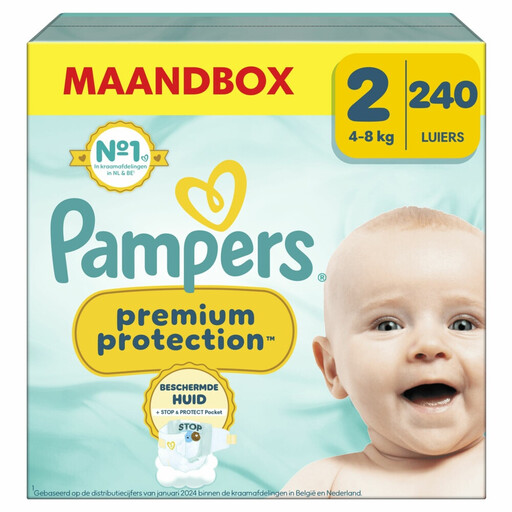
Why this suits the profile: This monthly box is aimed at parents of young babies who pay particular attention to softness, fit and information about skin contact.
The size choice and navel-friendly cut-out help provide a good fit from the start; check the recommended weight range on the packaging.
240 nappies, soft materials, Stop & Protect pocket, more than 1,000 micropores according to Pampers and OEKO-TEX certification.
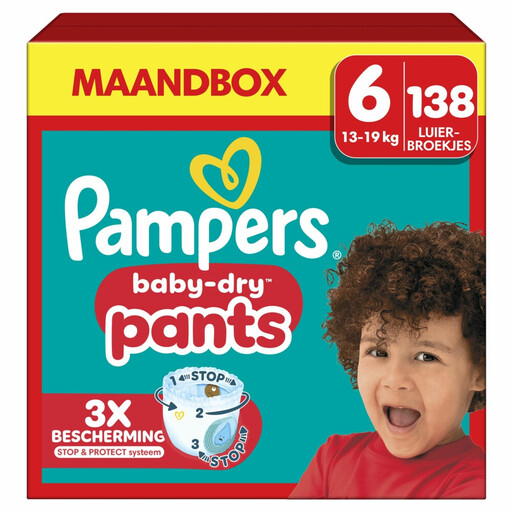
Why this suits the profile: Nappy pants are ideal for active babies and toddlers who move around a lot or are difficult to change.
The 360° waistband and flexible fit follow movement better than a fixed fastening; leak protection still depends on the size and how the pants are used.
138 pants, easy to pull on, tear-away sides and an absorbent core with protection for up to 12 hours, as stated by Pampers.
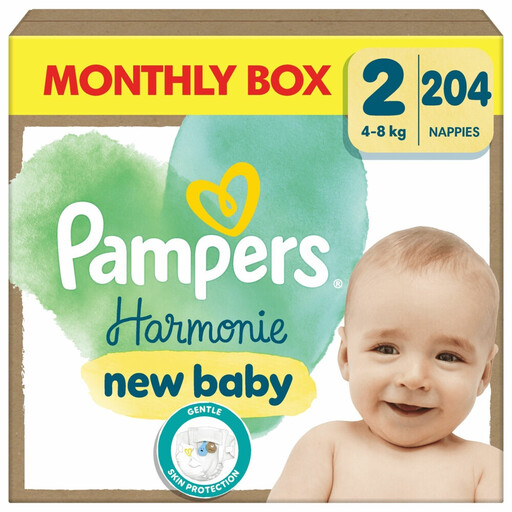
Why this suits the profile: A considered choice for carers who want to compare the composition of baby nappies carefully.
The product description states 0% perfume and lotion, so you do not have to rely solely on general terms such as “soft”.
204 nappies, wetness indicator, Stop & Protect pocket, hypoallergenic positioning according to the product information and OEKO-TEX Standard 100.
We have put together a complete, up-to-date list of products that fully meet these strict selection criteria and the applicable European safety regulations.
That depends on your baby’s age and changing routine. With young babies, expect several changes a day and multiply that number by around 30 days. Compare this estimate with the number of nappies in the box, such as 180, 204, 222 or 240. Keep a small reserve, but do not buy too far in advance if your child is likely to move up a size soon.
Use the recommended weight range on the packaging and check the fit. Size 4+ nappies are intended as an intermediate step when size 4 is becoming tight but size 5 does not yet fit properly. Repeated leaks, marks around the legs or adhesive tabs that do not fasten properly are signs that you should reassess the size or style.
Both product ranges list features for night-time use, such as absorbent layers and protective edges. According to the product descriptions, Pampers Baby-Dry is designed for movement and long-lasting moisture absorption, while Premium Protection focuses on soft materials, rapid absorption and fit. Choose based on your child’s body shape, size and individual experience; no nappy prevents leaks in every situation.
