
Vandaag of morgen in huis

Kwaliteit gegarandeerd

Welkomstaanbiedingen ontgrendelen: GRATIS bezorging | Tot 80% korting | Gratis 30 dagen JoyPlus-proefperiode
Download de app
By the Joybuy Product Recommendation Officer
A Pampers diaper monthly box may seem straightforward: choose a size, order a multipack and you should have enough stock for the foreseeable future. In practice, parents often buy too many diapers in one size, unknowingly pay more per diaper or choose a design that does not suit their child’s changing and sleeping routine.
This buying guide helps you buy Pampers diapers based on verifiable product information. You will find key considerations for diapers per month, size selection, sensitive skin, overnight use and Pampers diaper pants.
The number of diapers required varies according to age, eating habits, sleep patterns and the number of changes. A baby may use several diapers a day, while a toddler may need changing less frequently. So do not focus solely on the term “monthly box”; pay particular attention to:
A box containing 204 diapers may be more than enough for one family, yet run out sooner than expected for another.
The right size primarily depends on your child’s weight and body shape. A diaper that is too large may leave gaps around the legs or back. A diaper that is too small may feel tight and become saturated more quickly.
Always check the weight range on the product page and packaging. Also look for red marks, gaps around the legs and a fit that shifts when your child moves.
Terms such as “up to 12 hours of protection”, “leak-free nights” and “extra absorbent” are based on the brand’s product information. According to Pampers’ product information, various Baby-Dry and Premium Protection designs feature an absorbent core, elasticated sides and a Stop & Protect pocket. This describes the design, but the result may vary depending on the child, size, position and amount of moisture.
Use these claims as a basis for comparison, not as a guarantee. Change a diaper when it is soiled or full, and follow the instructions on the packaging.
Pampers diapers are available in sizes 1 through 8, depending on the product line. Size numbers do not correspond exactly to the same body shape across every brand or product type. Therefore, check:
Examples from the range include Pampers Premium Protection sizes 1, 2, 3, 4, 5 and 6, as well as Pampers Baby-Dry sizes 3 through 8. For an active toddler, Pampers Baby-Dry Pants may be more practical than diapers with adhesive tabs.
Always compare monthly boxes by price per item. A box containing fewer diapers may seem attractive because of its lower purchase price, but it may work out more expensive per diaper.
Examples of available pack sizes include:
Also check whether you are comparing standard diapers or diaper pants. Pants can be convenient for an active child, but they have a different price per item and require a different changing method.
With absorbent diapers, the core construction matters more than a prominent claim on the packaging alone. According to Pampers’ product information, Baby-Dry diapers contain an extra absorbent layer and a ComfortTouch outer layer. For Premium Protection, the manufacturer refers to more than 1,000 absorbent micropores and a Stop & Protect pocket.
For diapers for sensitive baby skin, look for:
A certification or test statement says something about the product and the assessment method used, but it cannot prevent skin reactions in every child. Stop using the product if irritation occurs and follow the advice on the packaging.
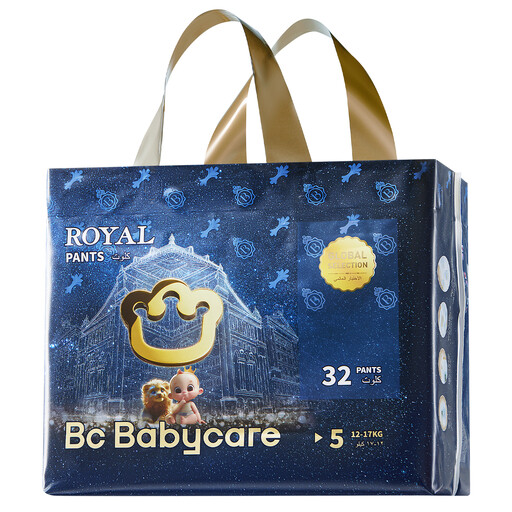
Why it’s a good fit: A smaller pack is convenient if you want to try a different type first or your child is moving quickly between sizes.
You are not immediately committed to a large monthly box if size 5 does not fit properly or your child is not yet ready for pants.
According to the product description, these size 5 pants offer 360-degree leak protection, an absorbent core and a pH 5.5 surface.
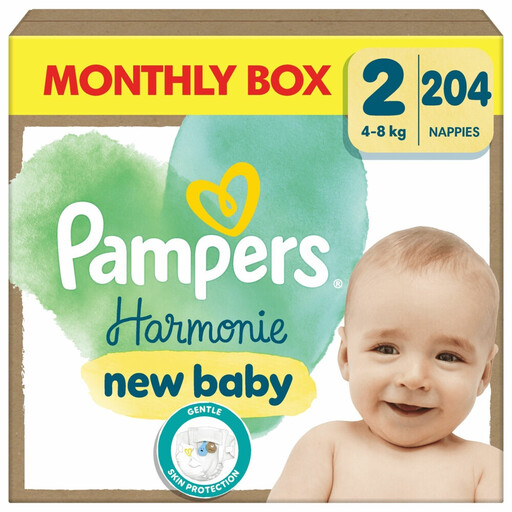
Why it’s a good fit: This variant is designed for parents who prioritise perfume- and lotion-free materials for everyday use.
You choose based on specific product features rather than broad claims about softness or sensitive skin.
According to Pampers, Harmonie contains 0% perfume and lotion, is hypoallergenic according to the product information and includes a wetness indicator.

Why it’s a good fit: A practical choice for parents looking for a generous supply for daytime and overnight use, provided size 4 matches the child’s weight.
The comparison focuses on quantity, size, absorbent layers and protective barriers—not just the promise of dry nights.
According to Pampers’ product information, Baby-Dry features an extra absorbent layer, elasticated sides, protective barriers and a Stop & Protect pocket.
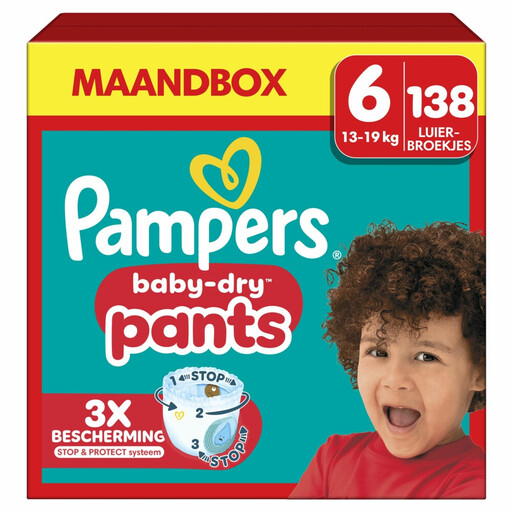
Why it’s a good fit: Pull-up pants are ideal for children who twist and turn during changes or are already walking independently.
You choose a changing format suited to an active child rather than selecting standard diapers based solely on pack size.
According to Pampers, these pants feature a 360-degree waistband, wider protective barriers and a super-absorbent core.
Browse our current selection of diapers and compare sizes, quantities, designs and product features for your family.
That depends on your child’s age and the number of changes per day. Divide the number of diapers in the box by your estimated daily usage. Allow for growth spurts and a change of size. For a first purchase, consider ordering a smaller pack before stocking up on several monthly boxes.
Not necessarily. Compare the total price, number of items, any delivery charges and promotions. The key calculation is: total price ÷ number of diapers. Make this calculation separately for standard diapers and diaper pants.
Check the weight range on the packaging, but pay attention to the fit as well. Moving up a size may make sense when the adhesive tabs barely overlap, clear marks appear or leakage returns despite correct changing. A larger size is not automatically necessary simply because your current supply is nearly gone.
