
Vandaag of morgen in huis

Kwaliteit gegarandeerd

Welkomstaanbiedingen ontgrendelen: GRATIS bezorging | Tot 80% korting | Gratis 30 dagen JoyPlus-proefperiode
Download de app
As a Joybuy Product Recommendation Officer, I see parents searching for convenience and value every day. A Pampers monthly box seems like a logical choice: a large supply of diapers from a trusted brand, delivered directly to your door. However, a few pitfalls can turn a good deal into a costly mistake.
Before you click a Pampers deal into your shopping cart, it's wise to consider the most common mistakes:
This guide will help you avoid these pitfalls and make a choice that suits your child and your budget.
To find the right diaper monthly box, it's helpful to check three key points. These are the specifications that truly make the difference between a dry night and unnecessary laundry.
The weight range on the packaging is a guideline, not a law. A good fit is crucial to prevent leaks.
Start with a smaller pack when trying a new size, like Pampers size 1 for the little ones. Once you're confident about the fit, you can purchase a monthly box of, for example, size 4 diapers with peace of mind.
Pampers offers several lines, each with specific features. The choice depends on your child's age, activity level, and skin.
Modern diapers have smart features to prevent leaks. Look for product features that Pampers highlights, such as:
By checking these specifications, you're not just buying a box of diapers, but the right solution for your situation.
To help you get started, we've matched some popular choices with specific needs.

Why it's a match: A newborn's skin is extremely sensitive. This diaper is designed with softness as a priority and is a popular choice in maternity wards in the Netherlands.
Avoids the 'wrong type' pitfall by specifically focusing on the needs of the very young, with ultra-soft materials and an umbilical-friendly notch.
According to Pampers, the diaper contains over 1000 absorbent micropores and a Stop & Protect pocket to keep skin dry and prevent leaks.

Why it's a match: Once your child starts to crawl and walk, changing becomes a challenge. Diaper pants offer a quick and easy solution for active toddlers.
This type tackles the 'wrong type' problem. The flexible fit is made for movement, where a standard diaper can shift and leak.
The 360° flexible waistband adapts to your child's body. Easy to pull on and tear at the sides for a quick change.
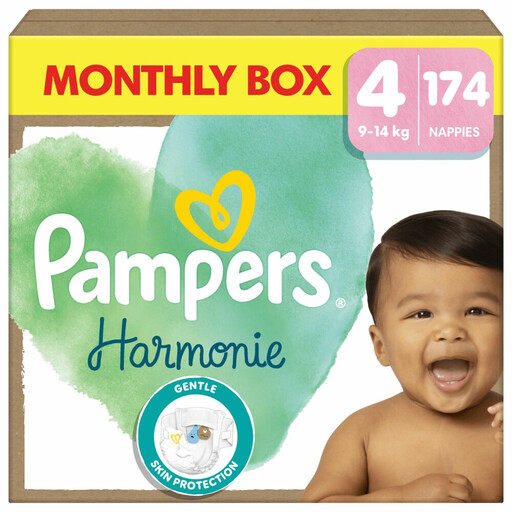
Why it's a match: For babies with very sensitive skin or parents who prefer products with fewer additives, the Harmonie line offers a targeted solution.
This is the solution for the 'wrong type' pitfall if your child is prone to skin irritation. A standard diaper might be unsuitable, even if the fit is good.
This diaper contains 0% perfume and lotion and is hypoallergenic. The absorbent core is made with cellulose from responsibly managed forests.
Whether you're looking for the right diaper or already preparing for the next stage, it's important to choose the right products. We have compiled a complete, up-to-date list of products that meet strict selection criteria and EU safety regulations.
Check the weight class on the packaging, but pay special attention to the fit. Are there red marks on your baby's skin? Then the diaper is too small. Do you see gaps at the legs or tummy? Then it's too big. If you're hesitating between two sizes, it's often better to choose the larger size for more absorption. Never buy too much stock of one size.
Standard diapers have adhesive strips on the side. You lay your baby down to change them. This is ideal for newborns and babies who don't move much yet. Diaper pants are pulled on like underwear and are perfect for active toddlers who stand, crawl, or walk. They make changing a wriggly child much easier.
In many cases, the price per diaper in a Pampers monthly box is lower than in smaller packs. The biggest advantage, however, is convenience: you have a supply for about a month and need to go to the store less often. To be sure if a Pampers deal is truly a bargain, divide the total price by the number of diapers in the box. This allows you to compare the cost per diaper.
