
Vandaag of morgen in huis

Kwaliteit gegarandeerd

Welkomstaanbiedingen ontgrendelen: GRATIS bezorging | Tot 80% korting | Gratis 30 dagen JoyPlus-proefperiode
Download de app
A Pampers monthly box can be practical: you’ll have a supply of Pampers nappies at home and won’t need to reorder as often. But a large pack isn’t automatically better value. The wrong size, an unsuitable type or a stockpile that turns out to be too big can cost you money and space.
So the key question isn’t just how many nappies you get, but also: does the style suit your child’s weight, activity level and skin?
A monthly box with lots of nappies may seem appealing, but the quantity varies considerably by size. For example, a size 4 Pampers Baby-Dry Pants monthly box contains 180 nappy pants, while size 8 contains 117. Babies also grow at different rates.
So work out the price per nappy and check whether the size is likely to fit for long enough. If your baby is going through a growth spurt, it’s best not to buy more than you need.
Age guidance is only a rough guide. Weight and the fit around your baby’s tummy and legs matter more. A nappy that’s too tight may leave marks, while one that’s too loose can leak.
Always check the size on the packaging. The range includes nappies in sizes 2 to 8, depending on the product type.
Terms such as ‘overnight protection’, ‘sensitive skin’ and ‘leak protection’ describe product features, but they aren’t a guarantee for every child or situation. According to Pampers’ own product specifications, some models have an absorbent core, stretchy sides or a Stop & Protect pocket. Performance can vary from child to child depending on their build, movements and how the nappy is used.
So look for verifiable features such as the materials listed, fastening, weight range, pack size and certifications.
Start with the recommended weight. A size 2 Pampers Premium Protection monthly box is designed for young babies, while sizes 6 and 7 are suitable for babies in a higher weight range. The exact weight limits are shown on the product page and packaging.
When checking the fit, look for:
Pampers Baby-Dry nappies have sticky fastenings and are handy when changing your baby while they’re lying down. Pampers nappy pants pull on like underwear. They’re especially practical for active babies and toddlers who move around a lot.
With nappy pants, check that your child is within the stated weight range. According to the product description, the sides can be torn open; you can then roll up the pants and dispose of them using the sticky tape.
For parents looking for nappies for sensitive baby skin, the ingredients and certifications are more useful than a general advertising claim. The available product specifications list features including:
A certification relates to the certified components or substances, but it doesn’t guarantee that every child will tolerate the product without problems. If redness or irritation occurs, stop using the product and follow the instructions on the packaging.

Why it suits this profile: A large pack in size 4 can be handy if your baby already wears this size and their usage is fairly steady.
The size and pack quantity are clearly stated, so you can compare the price per nappy rather than looking only at the pack.
198 nappies, an extra absorbent layer according to the product description, and a Stop & Protect pocket.
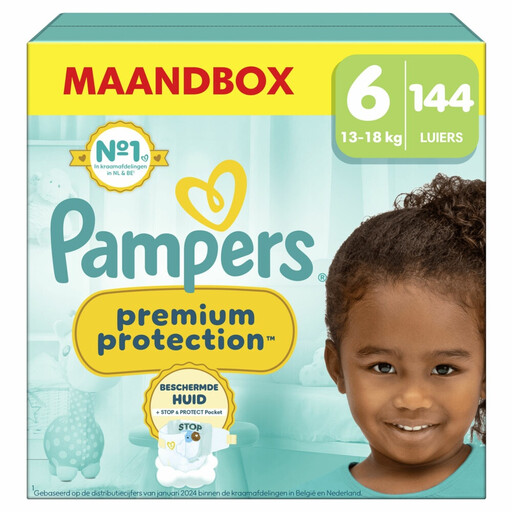
Why it suits this profile: A good choice if you value a soft outer layer, thoughtful fit details and features designed with sensitive skin in mind.
You can base your choice on specific features, such as the navel-friendly cut-out, sticky fastenings and OEKO-TEX certification.
144 nappies, a Stop & Protect pocket and dermatological testing, according to the product specifications.
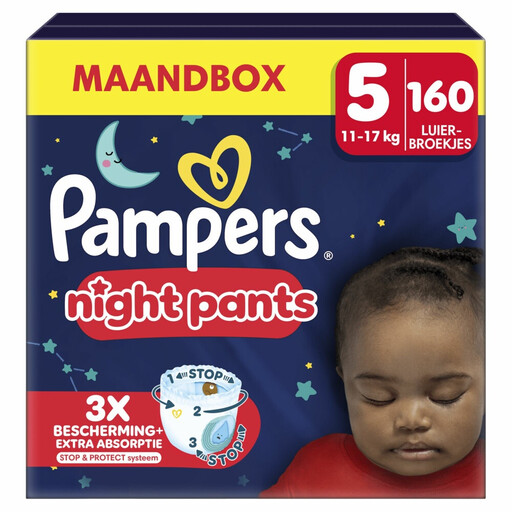
Why it suits this profile: A sensible choice for active children who need extra freedom to move at night.
The pull-on design means you don’t have to deal with sticky fastenings during a wriggly nappy change.
160 size 5 nappy pants, a 360° waistband and an absorbent core for overnight use, according to the product description.

Why it suits this profile: A good fit for parents who look for perfume- and lotion-free options and check for materials such as cellulose from FSC-certified forests.
The product information lists specific features rather than relying only on a general claim about softness.
186 nappies, 0% perfume and lotion according to the specifications, plus a wetness indicator.
A month’s supply isn’t just about nappies. Pampers baby wipes can come in handy at home, when you’re out and about, and for quick changes. Check the differences between pack options:
According to the product information, several varieties are free from alcohol and perfume. Always check the ingredients list and pack closure to help prevent the wipes from drying out. Use baby wipes externally only and don’t flush them down the toilet.
We’ve put together a complete, up-to-date list of products that meet these strict selection criteria and the applicable European safety requirements.
That depends on how many nappies you use each day, your baby’s age and the type of nappy. Divide the number of nappies by the average number of changes per day. Use this as a rough estimate and allow for growth spurts or extra changes.
Not always. Compare the price per nappy and check whether your child is likely to stay in that size for long enough. A smaller pack may make more financial sense if you’re about to move up a size.
This can’t be guaranteed in advance. According to the product information, Pampers Harmonie nappies contain no perfume or lotion, while Pampers Sensitive baby wipes are listed as alcohol- and perfume-free, among other features. Check the ingredients and stop using the product if irritation occurs. If symptoms persist, consult a healthcare professional.
