
Vandaag of morgen in huis

Kwaliteit gegarandeerd

Welkomstaanbiedingen ontgrendelen: GRATIS bezorging | Tot 80% korting | Gratis 30 dagen JoyPlus-proefperiode
Download de app
Stocking up on a Pampers monthly box seems like a smart move: it saves time, the hassle of carrying them, and often money. However, the wrong choice can lead to a closet full of unusable diapers. If you buy the wrong size or type, you're stuck with a supply that causes your child discomfort or that they've already outgrown. Before you jump on a Pampers deal, it's wise to know the most common pitfalls.
Many parents make one of these three mistakes:
By taking a moment to consider a few basic principles, you can ensure your monthly box is a smart purchase instead of a waste of money.
Before you make a choice, there are two key specifications that make the difference between convenience and frustration.
A diaper's size is based on your child's weight, not their age. The weight ranges often overlap, which can be confusing. A general guideline: if the diaper frequently leaks or leaves red marks on the skin, it's time for a larger size. Is there a lot of space around the tummy and legs? Then the diaper might still be too big.
Popular sizes like size 4 diapers, size 5 diapers, and size 6 diapers are used the longest, making a monthly box a safer bet for these than for smaller sizes. If you're in doubt, it's better to buy a small pack of the new size first.
The choice between a traditional diaper and a diaper pant depends entirely on your child's developmental stage.
Many Pampers lines, such as Pampers Premium Protection and Pampers Baby Dry, are available in both versions. Furthermore, most products are certified according to STANDARD 100 by OEKO-TEX, which indicates they have been tested for a list of harmful substances.
To help you find the right Pampers monthly box, we've matched some popular choices to different situations.

Why it's a match: Young babies have extra-sensitive skin. This line is designed with soft materials and is dermatologically tested. According to the manufacturer, this is the #1 choice in Dutch maternity wards.
Avoids the pitfall of skin irritation by focusing on softness and protection rather than just price. The materials are selected for sensitive skin.
The Stop & Protect pocket at the back helps prevent leaks from runny stools, a common issue with young babies.

Why it's a match: Once your child no longer wants to lie still, changing becomes a challenge. These diaper pants can be pulled on quickly while your child is standing, saving time and frustration.
This is the solution to the 'wrong type' pitfall. It makes changing a wriggly toddler significantly easier than with traditional tab-style diapers.
The 360° flexible waistband adapts to your child's movements, ensuring a snug fit and helping to prevent leaks during playtime.
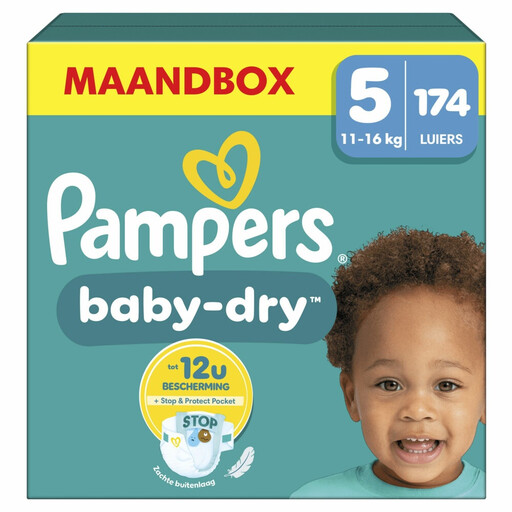
Why it's a match: This line focuses on long-lasting dryness. According to the manufacturer, the super-absorbent core can lock in moisture for up to 12 hours, which is ideal for nighttime and can reduce the total number of diapers used.
Tackles the 'you get what you pay for' pitfall. A reliable, absorbent diaper prevents extra costs from leaks, such as additional laundry and skincare products.
The focus on long-lasting dryness ensures more peaceful nights for both parent and child. The stretchy sides provide a secure fit to minimize leaks.
Good preparation doesn't stop at diapers. Make sure you always have a stock of baby wipes and a practical diaper bag on hand for when you're on the go.
A good diaper deal is about more than just a low price. It's about the right combination of size, fit, and type for your child.
Look for a few clear signs:
Pampers Premium Protection is primarily aimed at sensitive skin, featuring Pampers' softest materials. This line is often recommended for newborns. Pampers Baby-Dry focuses on maximum absorption and long-lasting dryness, aiming to keep your child dry for up to 12 hours, which is especially practical at night.
The number of diapers in a monthly box depends on the size. Generally, the smaller the size, the more diapers are in the box. For example, a size 2 monthly box might contain 240 diapers, while a size 6 box might have around 144. This is because smaller babies are changed more frequently. Always check the exact count on the packaging.
