
Creator filming a reflective puzzle
Films shiny puzzle pieces or packaging and wants to change the lighting without losing detail. Canon Europe and Adobe offer practical advice on lighting products and reducing reflections.


A ring light suits a compact puzzle setup if you can suspend the camera above your work and the light doesn’t cause distracting reflections. Choose a separately positioned LED panel if you want to adjust the light independently of the camera position. Before buying, check the mounting options, the space available for your hands and the footage from a test recording: specifications can’t predict exactly how your puzzle will look on camera.
Films shiny puzzle pieces or packaging and wants to change the lighting without losing detail. Canon Europe and Adobe offer practical advice on lighting products and reducing reflections.
Wants a stable camera and lighting setup that leaves room to demonstrate the puzzle. The setup needs to suit your table and the overhead view you want; a phone holder isn’t automatically an overhead arm.
Wants colours and whites to look consistent between recordings, so pays attention to both the lighting and the camera’s white balance. Adobe explains that white balance helps determine how colours appear in video.
A good fit if: you want a compact setup and a test recording shows both the puzzle and your hands clearly.
Bear in mind: light positioned around the camera can reflect visibly off shiny puzzle pieces.
A good fit if: you want to move the light independently of the camera to change its angle.
Bear in mind: you may need separate mounts for the light and camera; also check that a desk clamp will fit your workspace.
For a puzzle demonstration, reflections, keeping your hands free, colour consistency and a suitable camera setup are the main factors in choosing practical lighting.
| What to consider | What to look for when buying | Who does this matter most to? |
|---|---|---|
| Clear details without reflections | Make a test recording with your own puzzle and compare different light positions or a tilted light. | If I want to show shiny pieces clearly without distracting glare, I prioritise being able to control the angle of the light. Around 33% of consumers rank reflections and visible details as their top priority. |
| Camera above the work, hands free | Check that the holder fits your device and that the tripod, tilt and stability allow for an overhead view. | If I want to demonstrate the puzzle with both hands, the camera needs to stay above the table without blocking my workspace. Around 27% of consumers prioritise a stable, hands-free overhead setup. |
| Colours that look true to life | Check the settings on the exact light model and compare test footage with a fixed white balance on your camera. | If I want colours to look consistent across portfolio recordings, I pay attention to both the lighting and the camera’s white balance. Around 20% of consumers prioritise consistent puzzle colours. |
| A practical setup and power supply | Check what’s included, what power supply is needed and whether the tripod or clamp will fit your table. | If I want to get started without missing mounts or power components, I check the complete kit and my workspace. Around 20% of consumers prioritise a practical kit with a suitable power supply. |
A holder may work for a standard phone setup, but that doesn’t automatically put the camera directly above the puzzle. Check whether the actual arm, tilt and tripod position will reach your table.
Before choosing a kit, compare the dimensions of your workspace with the holder’s range of movement and the tripod’s reach.
If the supplied holder doesn’t reach your work surface, you may need a separate overhead arm or camera mount.
Even with even lighting, a shiny puzzle piece can reflect the light source. Adobe explains that a matt surface can help reduce unwanted reflections from the background, but it won’t make shiny pieces themselves matt.
Make a test recording and change the light position before deciding whether a ring light works for your puzzle.
A different colour setting or a CRI specification alone can’t guarantee how colours will look in the final video. Adobe also highlights the effect of the camera’s white balance; the NEEWER RL-18 achieves its stated light colours using filters.
Check how the colour controls work on the exact model and compare the recording with the real thing.
The LR150 is a ring light to consider if you’re looking for a compact setup with adjustable lighting.
The RL-18 is a larger ring light kit to consider if you have room for a tripod around your workspace.
Compare the Ring Light with the separately positioned Key Light panel if you’re weighing up where to place the light and camera.
The DVR-384DVC is a ring light to compare if you’re considering a separate studio tripod.
These Joybuy products are ring lights for smartphone filming. For a puzzle video, check separately whether the phone holder or mount can position the camera above your work surface.
 No image available
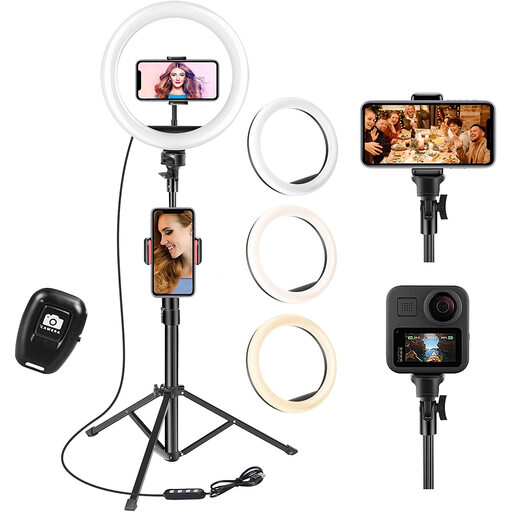
The phone holder and tripod are useful if you’re filming with a smartphone and want to keep both hands free; check whether the holder can extend above your work surface.
The product title lists a 10-inch ring light, a 63-inch tripod, a remote control, 3 colour modes and 10 brightness levels.
 No image available
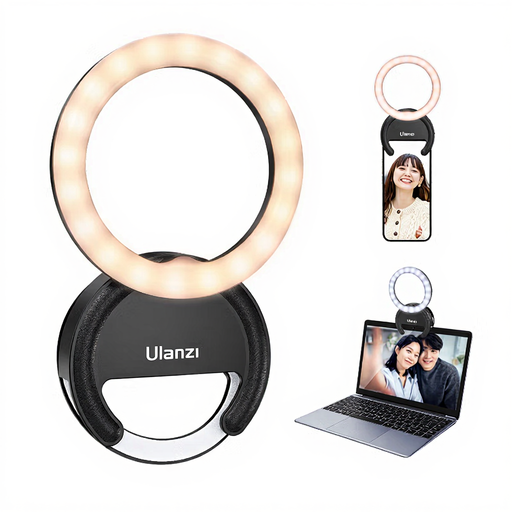
This phone ring light is designed to be used with a smartphone; to film directly above the puzzle, you’ll also need to position the camera appropriately.
The product title lists 3 colour temperatures from 3000 K–7000 K and 5 brightness levels.
No, it depends on the framing you want and the mount supplied with the specific kit. Check whether the holder and its tilt allow for an overhead view; you may need a separate mount to position the camera directly above the puzzle.
Check the reflections in a test recording using your own puzzle and try tilting or moving the light. If the glare is still distracting, you could position a diffused panel separately from the camera. A matt background can help reduce reflections from the surface, but it won’t make shiny pieces matt.
Keep the lighting settings and your camera’s white balance as consistent as possible, and compare test footage. Adobe explains that white balance helps determine how white and other colours appear in video; a CRI specification alone can’t control the final look of your recording.
If you buy from a business, contact the seller in the Netherlands if the product doesn’t meet reasonable expectations. The Dutch government states that there is no fixed statutory guarantee period for this. When you buy online from a business, you also have a 14-day cooling-off period in many cases; check whether it applies to your purchase.
No. According to the European Commission, CE marking is only required for products covered by specific harmonised EU rules. The rules for electrical equipment also depend on the product and voltage range concerned, so check the information for both the specific lamp and any mains adapter.